


Air Compressor Measurement by Industry: Why Different Applications Need Different Metrics
March 4, 2026
Why Your Old Unit Won’t Make a Good Backup Air Compressor
March 18, 2026Compressor Upgrade Benefits vs. the Hidden Costs of Waiting
By Israel Hearn, Senior Tech Support Representative | March 11, 2026 | Uncategorized
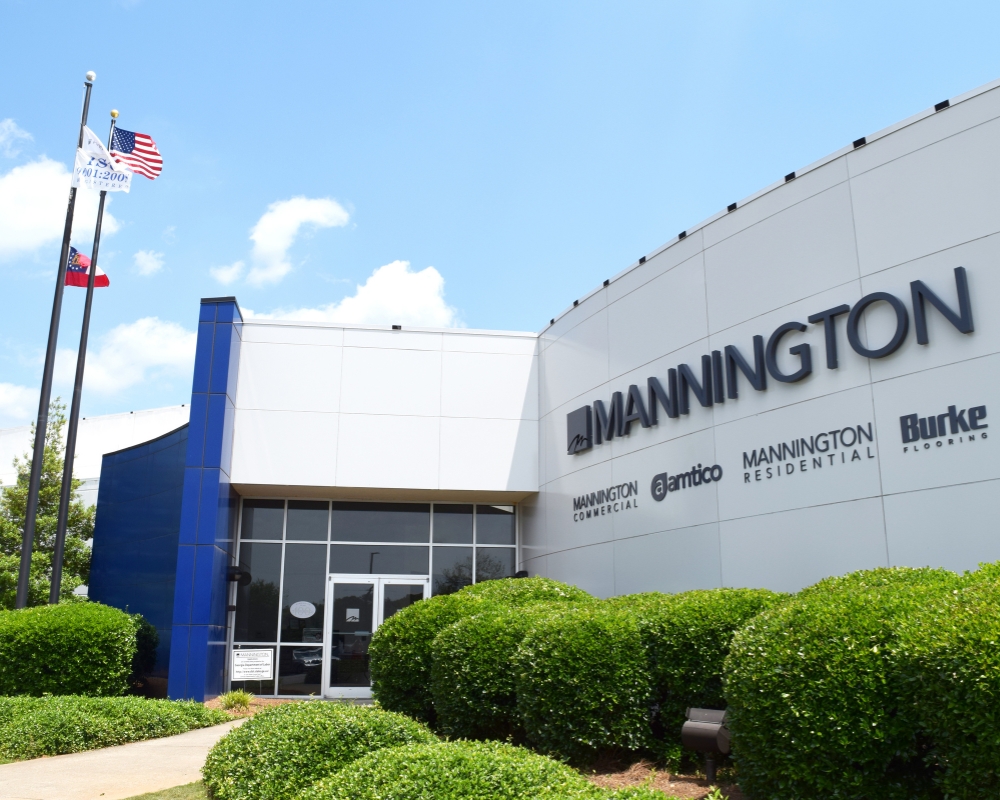
Compressor downtime cost Mannington Mills’ carpet backing facility in Calhoun, GA, $10,000 per hour, and maintenance costs were “outrageous.” A new compressor prevented the downtime and saved $1,500 per month in electricity costs. Eliminating downtime, reducing maintenance and achieving energy savings with new compressors are all compressor upgrade benefits.
My job brings me in contact with dozens of compressed air users every month. Probably hundreds in a year.
The discussion often starts with a complaint that a compressor is not providing enough pressure. Increasing its energy usage. Or delivering poor air quality.
But in most cases, the discussion ultimately comes down to one thing: whether the customer should consider an upgrade.
The first question I ask is the compressor's age. If it’s more than ten years old, the situation is straightforward. It’s time for an upgrade.
Is Your Compressor Future-Ready?
If your compressor is into its second decade, we know it’s ready for the past. It probably has analog or outdated controls. If they need to be replaced, the old boards may no longer be available. And replacement could run ten times the cost of the original controller, 10% to 20% of the cost of a new compressor.
In addition, your old compressor may not be able to maintain a constant pressure. And, boy, is it ever chewing through electricity.
Since your older model was manufactured, things have changed. There are new industrial air compressor efficiency standards, control strategies, monitoring software and integration with plant automation systems.
So, if your compressor is more than 10 years old, it’s time to get your compressed air system ready for the future. And even if it’s less than 10 years, it may be time for an upgrade. We’ll cover that situation in a moment.
The key point: today’s compressors are a whole different animal. They give you longer equipment life. Less downtime. Better air quality. Tighter tolerances. And they provide solid data to support decision-making.
Let’s discuss the compressor upgrade benefits those advances provide, starting with energy savings with new compressors.
Energy Savings with New Compressors
Today’s cutting-edge compressors usually can deliver energy savings of at least 20% and as much as 40%, compared to the aging units they are replacing.
And remember that energy savings far outweigh initial cost in any calculation of lifetime costs.
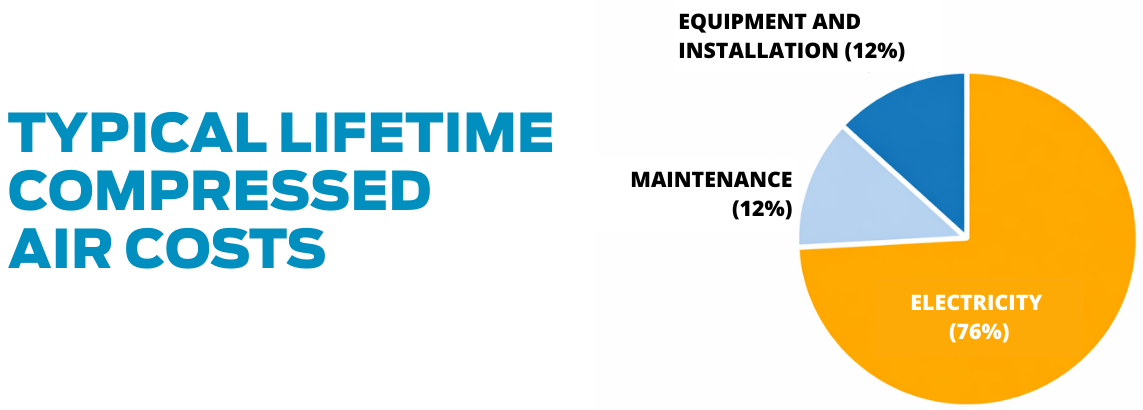
While you may be reluctant to invest in a compressor, remember that energy savings dwarf equipment in any calculation of lifetime costs.
Some specific advances include:
- Variable-frequency and variable-speed drives. When equipped with VFDs and VSDs, today’s rotary screw compressors easily adjust power to meet demand. For more on VFDs and VSDs, link to our blog post, “When To Use a VSD on a Rotary Screw Air Compressor.”
- Two-stage compressors. Two-stage compressors split the workload into two stages, delivering greater energy efficiency and even allowing smaller units to service the same system as a larger single-stage unit.
- New motor designs. New motor designs, such as permanent magnet motors, exceed the power density efficiency of more traditional induction units.
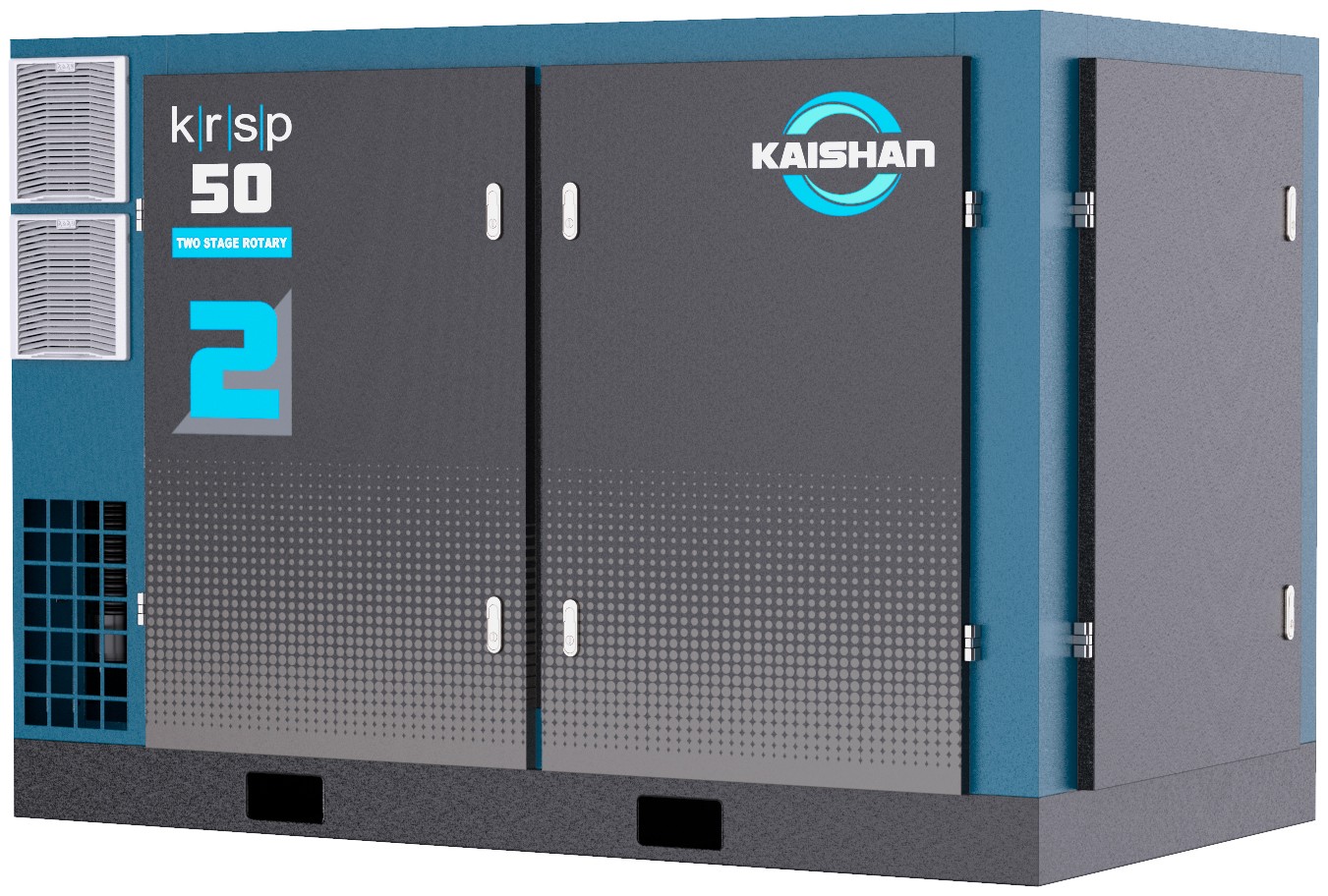
Equipped with cutting-edge PM motors, our 30-HP to 100-HP KRSP2 premium two-stage rotary screw compressors are the smallest two-stage units on the market. They have a smaller footprint and are often used to power nitrogen generation.
- Heat recovery. Compressed Air Best Practices says you can recover up to 90% of the waste heat from the compression process and use it for space heating or process heating.
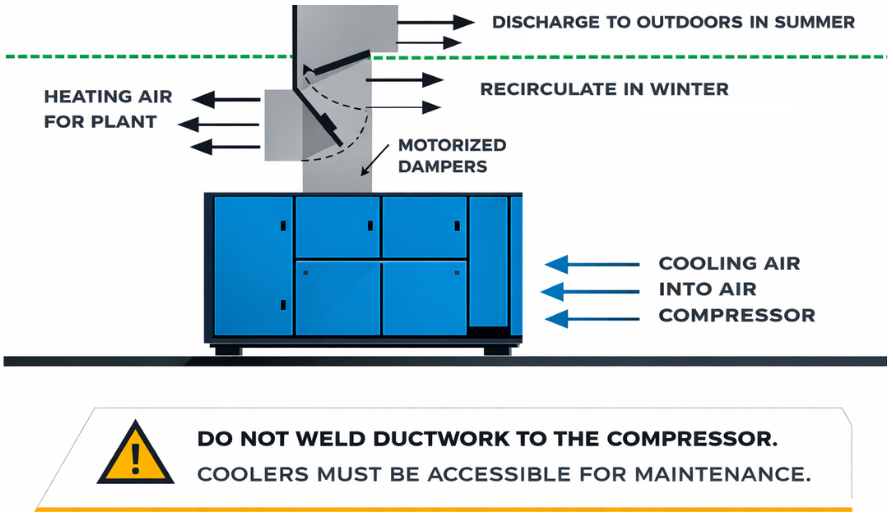
At least 70% to 80% of the energy used to compress air becomes waste heat. It’s possible to recover most of that heat, using it for space heating, preheating boiler water, water heating or even process heating (like drying).
Next, new compressors offer some impressive performance advantages over older units.
Better Performance
- Greater industrial air compressor efficiency. As a compressor ages, you may not notice that its output is declining. Newer models consume less energy to produce the same amount of power.
- Better air quality. Improved air quality. In addition to improving efficiency, recent developments in airend and filter designs allow units to deliver air of higher quality.
- Improved downstream performance. Today’s compressors are better at reducing or eliminating oil and water carryover or the presence of contaminants, allowing downstream equipment to operate more effectively.
- Lower pressure band. Because new equipment allows tighter pressure control, you may be able to reduce header pressure and achieve significant savings.
- More flexibility. When equipped with VFDs or VSDs, new compressors offer a wider turndown range, allowing you to adapt to a broader demand range, expansions, shifts or production schedules.
- Sustainability. We’ve found that older compressors usually don’t comply with newer regulations on oil carryover. And could result in EPA fines for oil content in wastewater.
- Better fit. If your processes or equipment have changed, you may be able to match your needs more closely.
In addition, newer compressors also provide much more visibility into their operation.
Greater Insight
- Improved visibility. New systems have alarms and digital control systems, providing you with data to optimize the operation of your entire system.
- Better decision-making. Having a closer tie to plant automation, centralized control and energy management systems gives you solid data to act on.
That visibility helps owners of new compressors get a better sense of when it’s time to maintain their systems.
Better, Easier Compressed Air System Maintenance
- Predictability. Newer units give you the opportunity to move away from costly reactive maintenance to predictable, proactive maintenance.
- Proactive maintenance. You’ll have better data monitoring and tracking, helping you avoid the high-stress crises you’ve faced in the past.
- Remote monitoring. Alerts remind you when it’s time for routine maintenance, like oil and filter changes.
Visibility and corrective maintenance often help users of new compressors identify issues. Before they become problems. And result in downtime.
Less Unplanned Downtime
- Fewer breakdowns. Older systems are more prone to breakdowns as they age.
- Fewer work stoppages. Avoiding even one day of downtime could more than pay for a new compressor.
- Fewer emergency calls. No more calls at 4 a.m. telling you that work has stopped because your compressor went down.
- Fewer equipment rentals. Having to rent a diesel portable stinks. Literally.
Better industrial air compressor efficiency, improved performance, better insight and control, easier compressed air system maintenance and less downtime go right to the bottom line. Lowering the costs of providing compressed air throughout your facility.
Lower Costs
- Reduced electricity costs. Reductions in energy use and improved kW/100 ACFM performance allow you to do the same (or more) work for less cost.
- Longer equipment life. Today’s compressors outlast their predecessors, thanks to better designs and the use of more durable materials and components.
- Lengthened service intervals. Use of better lubrication practices (such as oil sampling) may allow you to move to predictive maintenance for compressors and to schedule service when required.
- Lower total cost of ownership. The combination of benefits lowers total cost of ownership and makes a compressor upgrade an attractive investment for most companies.
So, how do you know when it’s time to replace a compressor? And, more importantly, how do you justify the expense to your bosses?
Key Indicators: Best Practices for Compressor Upgrades
- Age. If it’s over 10 years, it’s probably worth replacing. No question at 15 years. Technology has moved too far.
- High percentage of unloaded hours. If your compressor’s unloaded hours are more than half the run hours, it’s probably oversized. And that will cause a wide range of problems that will increase cost, wear and downtime. You’ll save by right-sizing to a new compressor.
- Inconsistent system pressure. Many companies find their aging compressors can’t deliver the steady system pressure their end-use applications need.
- Multiple failures. It’s already failed several times. You’re having compressor overheating. Blowing fuses or tripping breakers. It won’t stop. Or start. It’s making loud noises. In short, it’s telling you something.
- Warranty protection. If you’re beyond your manufacturer’s warranty coverage, you should probably upgrade.
- Standards compliance. If your unit no longer complies with current environmental or energy-consumption standards, upgrading may prevent a host of compliance and liability issues. And an upgrade may make you eligible for rebates from utility companies or state or local governments.
- Parts availability. You can’t get the parts. Or find techs who know how to work on an older unit.
If you’re noticing even a few of these issues, it’s time.
We understand. You want to make the most of your company’s resources. But enough is enough.
Still not sure? We walk through the entire decision process in our blog post, “Repairing vs. Replacing an Air Compressor.”
Hesitation Is Natural
Unfortunately, many users are discouraged by the upfront costs of replacement. In fact, Plant Engineering’s recent survey of 142 pump and compressor users found that initial cost (23%) was the largest barrier to adopting new technology.
Because of the significant energy savings, however, advanced air compressors often qualify for rebates from local utilities and governments at the state and federal levels, as well as some municipalities.
And remember the impact of the improved energy efficiency:
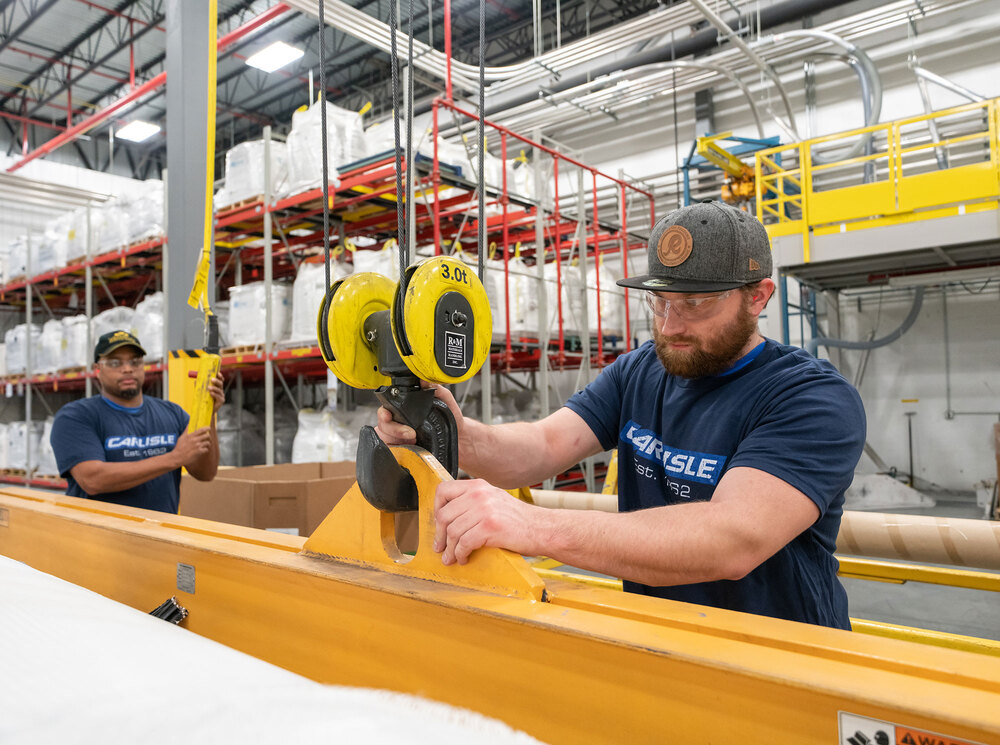
PPL Electric Utilities awarded Carlisle Construction Materials in Carlisle, PA, an $11,000 rebate to offset its capital expense for two 250-HP two-stage KRSP2 compressors equipped with VSDs. Rebates are just one of many compressor upgrade benefits.
A cost-benefit analysis often enables most companies to see the benefits of an upgrade, with most achieving a payback in two years or less.
Your local compressed air professional can help you compile that information and is the logical place to start.
Help in Pulling the Trigger on an Upgrade
The choices you make about whether (and how) to upgrade your compressed air system could well determine your company’s success in achieving broader objectives such as reliability, energy efficiency and cost efficiency.
That’s why it’s well worth your while to work with an expert who can help you analyze your system, identify potential savings and determine whether you can benefit from rebate programs.
Key Reasons to Upgrade
- Energy savings from technology advances like VFD/VSDs, two-stage compressors, new motor designs and heat recovery.
- Better performance, including improvements in air quality, downstream performance, header pressure, flexibility and sustainability.
- Greater insight and better decision-making because of the improved visibility into system operation.
- Easier compressed air system maintenance that is predictable and proactive, avoiding the high-stress, crisis-based reactive maintenance of the past.
- Less downtime because you’ll have fewer breakdowns, work stoppages, emergency calls and equipment rentals.
- Lower costs, from energy savings, better performance, greater insight, easier maintenance and less downtime.
Help in Future-Proofing Your Compressors
Knowing when and how to upgrade is critical to the operation of your system and to the processes that rely on it. We can help. Kaishan USA works with a nationwide network of independent distributors, who can provide on-site help and consultation as needed. Or, feel free to contact us directly.
Frequently Asked Questions
Listen to the Podcast Version



The Hidden Cost of “Running It One More Year”
You’re listening to The Big Dog Podcast. I’m Jason Reed, and today we’re talking about that classic move a lot of plants make with their compressor: “let’s just run it one more year.”Yeah, and that “one more year” somehow turns into five… or ten. Meanwhile, the maintenance team’s living on coffee and prayer.
Exactly. Let’s put some real numbers on this. There’s a carpet backing facility, Mannington Mills down in Calhoun, Georgia. When their compressor went down, it was costing them about ten thousand dollars an hour in lost production. Ten. Thousand. An hour.
And on top of that, their maintenance costs were described as “outrageous.” That was the word. They finally upgraded, and the new compressor not only stopped the downtime, it cut about fifteen hundred bucks a month off their electric bill.
So when somebody says, “We can’t afford a new compressor,” my shop-floor brain goes, “Can you afford ten grand an hour when it quits at the worst possible time?”
Let’s talk about why this sneaks up on people. A lot of the systems you see out there are ten, fifteen years old. On paper, they’re “still running.” But once a compressor’s past that ten‑year mark, the game really changes.
Yeah. First thing I ask when someone calls with a pressure or energy complaint is, “How old is it?” If they say more than ten years, it’s pretty straightforward: you’re living on borrowed time. Controls are usually analog or just flat-out outdated, and if a board dies, that replacement might be ten times what the original controller cost—like ten to twenty percent of a whole new machine.
And those old controls usually aren’t great at holding a tight pressure band. So you see systems that are hunting up and down, compressors loading and unloading like crazy. That’s more wear, more heat, more energy burned for the same air.
Plus, as that machine ages, it starts slipping on efficiency. You don’t notice it day to day, but over years, it’s quietly chewing through electricity. You’re paying more and more per CFM without realizing it.
And we should hit the maintenance side. Older machines are harder to work on: parts get harder to find, techs who actually know the model retire or move on, and suddenly every “little” issue turns into a big invoice.
Let’s lay out some warning signs for folks who are wondering if they’re in that danger zone. First one: the compressor can’t hold pressure like it used to. You’re seeing the header pressure sag under load, or operators are complaining machines starve for air on certain shifts.
Second sign: when you look at the run data—if you have it—you’ve got a high percentage of unloaded hours. If more than half your run time is unloaded, that usually means the machine’s oversized for the demand profile. You’re burning money just spinning that motor and not making useful air.
Third: the “nickel and dime” failures. It starts with a sensor, then a contactor, then another trip on over-temp. Each one on its own is “manageable,” but you zoom out, and you’re slowly building an unreliable system.
And don’t forget creeping air quality problems. More oil carryover, more moisture showing up downstream, filters clogging faster. That’s not just annoying—that can mess with your processes and your downstream equipment.
Yeah, so if you’re chasing pressure, babysitting the machine, and your energy bill keeps climbing, that “one more year” is already costing you. You’re just not calling it an upgrade cost yet.
And in Mannington’s case, the moment they stopped rolling the dice, they got rid of the ten‑thousand‑an‑hour risk and picked up fifteen hundred a month in savings. That’s what we mean by hidden cost—because it looks like “free” to keep running… until it doesn’t.
How New Compressors Pay for Themselves (Without the Sales Pitch)
Alright, let’s get into the money side, minus the cheesy sales pitch. People see the price tag on a new compressor and freeze up, but the sticker is only a sliver of what you actually pay over its life.There’s a stat from U.S. Department of Energy studies that gets used a lot: over a compressor’s lifetime, roughly three‑quarters of your total cost is electricity. About seventy‑six percent. Equipment and installation? Around twelve percent. Maintenance? Another twelve.
So if you’re obsessing over the purchase price but ignoring the power bill, you’re missing the big number. Energy dwarfs everything else. That’s why efficiency is where the real money is.
And this is where modern machines shine. Today’s compressors can typically deliver at least twenty percent, and up to about forty percent, energy savings compared to the older units they replace. That’s not marketing fluff; that’s based on the tech that’s actually in them.
Let’s break down where those savings come from. First, variable‑frequency or variable‑speed drives—VFDs and VSDs. Instead of running full tilt and dumping air, they ramp speed up and down to match demand. You’re not wasting energy making air nobody needs.
Then you’ve got two‑stage rotary screw designs. They split the compression into two steps instead of one big jump. That makes the process more efficient, and in some cases, a smaller two‑stage can cover what used to take a bigger single‑stage machine.
And motors have gotten smarter too. Permanent magnet motors, for example, can beat traditional induction motors on power density and efficiency. You’re getting more useful work out of every kilowatt the utility sells you.
Don’t sleep on heat recovery either. In most plants, seventy to eighty percent of the energy you dump into compressing air shows up as heat. With the right setup, you can recover a big chunk of that—up to around ninety percent in some cases—and use it for space heating, preheating boiler water, process heating, that kind of thing.
So instead of paying for electricity once to make air and then again to run separate heaters, you’re reusing what you already paid for. That’s like found money on top of the compressor’s direct efficiency gains.
Now, beyond the tech itself, there are these “bonus levers” that make the payback even faster. One is rebates. Carlisle Construction Materials, for example, put in two 250‑horsepower two‑stage compressors with VSDs and picked up an eleven‑thousand‑dollar rebate from their utility to offset the capital cost.
And then you’ve got standards and compliance. A lot of older compressors don’t line up with today’s environmental or energy‑consumption requirements, especially around oil carryover and wastewater. That opens you up to potential EPA issues or missed incentive programs.
Right. When you upgrade, you’re not just saving energy; you’re reducing compliance risk and sometimes unlocking utility or government programs that help pay for the project. All of that shortens the payback window.
I always tell folks: run a simple cost‑benefit. Factor in your current energy use, maintenance spend, downtime risk, and any rebate or incentive money on the table. In a lot of cases, you’re looking at payback in about two years or less.
And again, that’s without trying to “sell” anything—just looking at where your cash is actually going over time. Once you see electricity eating three‑quarters of the pie, the upgrade starts to look a lot more like a financial decision than a shiny new toy.
From Firefighting to Future-Proofing Your Air System
So we’ve talked about hidden costs and how upgrades pay for themselves. Let’s shift to what life looks like on the other side—when you’re not firefighting your compressed air system every week.This is where modern controls and monitoring really change the game. New compressors come with digital control systems, alarms, and data logging that actually tell you what’s going on instead of just tripping a light and shutting down.
Yeah, instead of running blind, you’ve got visibility: temps, pressures, run hours, load/unload profiles. You can see trends, which is what you need for predictive maintenance. You move from “Oh no, it failed” to “Hey, something’s drifting—let’s plan a service before it bites us.”
And when those controls tie into plant automation or centralized monitoring, you’re not waiting for the operator to notice a weird noise. You’re getting alerts for things like filter changes, oil change intervals, or out‑of‑range conditions.
Which means far fewer of those 4 a.m. “the line is down, the compressor died” calls. I don’t miss those days.
Alright, let’s give people some concrete “repair vs. replace” triggers. So, number one, age: if your compressor is over ten years, it’s strongly in replacement territory. Fifteen years? The technology gap is huge—efficiency, controls, compliance, all of it.
Next: unloaded hours. If more than half of your run time is unloaded, that’s a big red flag that the unit’s oversized. You’re racking up cost, wear, and heat for very little productive air.
Third, inconsistent pressure. If the system can’t keep a tight band and end users are feeling it—tools choking, equipment alarms—that’s a serious performance issue, not just an annoyance.
Fourth, repeat failures: overheating, nuisance trips, blowing fuses, tripping breakers, odd noises. If it keeps coming back, that machine is telling you it’s done playing nice.
Then you’ve got warranty and standards. If you’re out of warranty, you’re fully exposed on big component failures. And if the unit doesn’t meet current environmental or energy standards, you could be one inspection away from a problem—or missing rebates you’d otherwise qualify for.
Last one: parts and service. If you’re struggling to get OEM parts or find techs who even know the machine, that’s a sign you’re propping up a legacy unit past its useful life.
If you’re seeing a couple of those triggers, it’s time to at least run the numbers on an upgrade. So let’s give a simple playbook for folks who are ready to get serious about it.
Step one: gather data. Grab your last 12 months of power bills, your compressor run hours—especially loaded vs. unloaded—and any maintenance records: parts, labor, and any downtime events.
Step two: document the pain. Note every pressure complaint, air quality issue, or production hit tied to the compressor. If you’ve got anything like that Mannington Mills situation—high downtime cost per hour—write that number down.
Step three: bring in a compressed air pro. Someone who can do a system assessment, help you right‑size equipment, and estimate realistic energy savings and potential heat recovery. That’s where a manufacturer’s distributor or local specialist really earns their keep.
And step four: build a short internal case. Not a novel—one or two pages, tops. Current costs, identified risks, estimated savings, and any rebate or incentive opportunities. Show payback, not just price.
You can also frame it in terms of reliability and future‑proofing: fewer breakdowns, better air quality, easier compliance, and a system that can adapt as your plant changes.
If you’re still on the fence, there are resources out there on the whole “repair vs. replace” decision for compressors that walk through this logic. But honestly, if your unit’s older, struggling, and expensive to keep alive, you probably already know which way the wind’s blowing.
Yeah, at some point “one more year” becomes the riskiest and most expensive option in the room. Calling time on that old machine is usually about protecting production and cash, not just buying shiny hardware.
Alright, let’s land this. If you’re listening and thinking, “This sounds like my plant,” start with the data, get a good air expert involved, and see what the numbers say. You might be closer to a justifiable upgrade than you think.
We’ll keep digging into compressed air, reliability, and all the other unglamorous stuff that actually keeps plants running. Lisa, thanks for the chat.
Always fun. Thanks, Jason.
And thanks to all of you for tuning in to The Big Dog Podcast. We’ll catch you next time.