



Four Ways Engineered Compressed Air Systems Can Add Value in Your Operation
November 26, 2025
Polymer Industries
December 4, 2025Water: The Compressor Killer
Kaishan USA | December 3, 2025 | Uncategorized
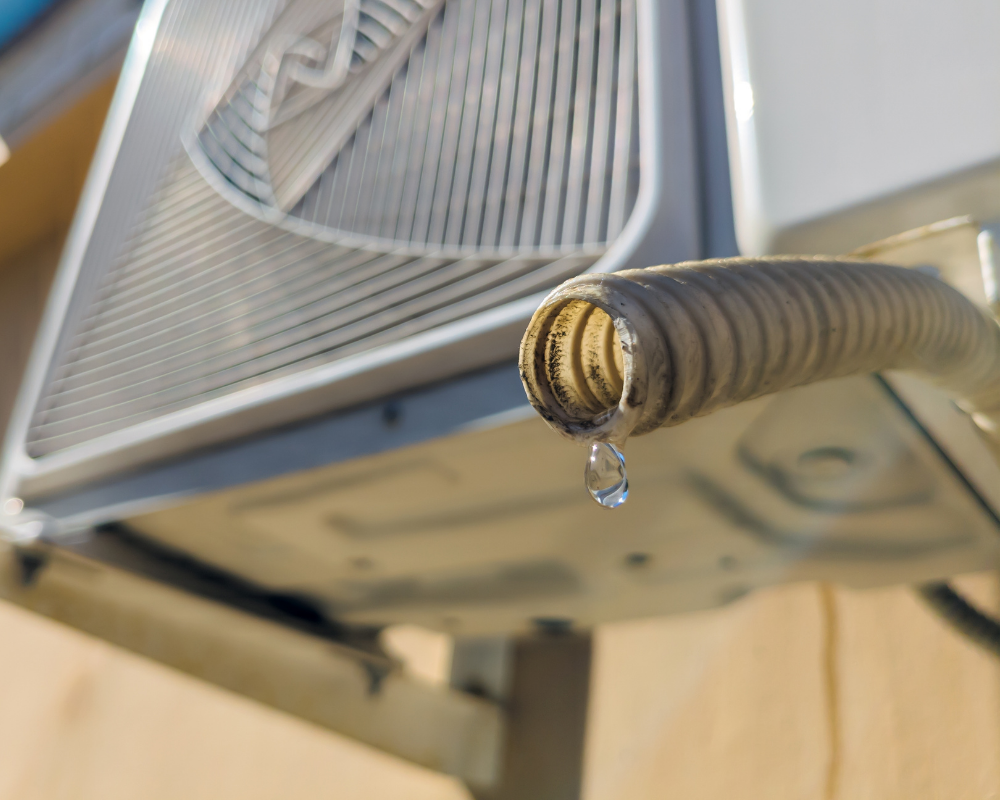
Water, like condensate, can cause air compressor water damage, such as lubricant loss, oil degradation, formation of emulsification “jelly,” loss of capacity, rust, clogs, bearing damage and impeller damage. So, removing it is critical.
Water issues are a natural part of the compression process, of course, as water in the ambient air condenses out as the air pressure increases. Essentially, the water is in the incoming air in vapor form, then condenses into a liquid as the air is compressed.
But it’s a compressor killer, causing rust, damage and contamination throughout your machine.
We’ll start by listing the ways moisture gets into your compressor.
How Water Gets In
There are several ways water gets into a compressed air system, some more obvious than others:
- In the air. Unless you have scientific equipment with an incoming air purification and chilling circuit, your compressor will ingest the humidity in the ambient air. In most cases, that’s enough to do damage. A lot.
- Unprotected outdoor installations. Unless your compressor is under a roof and shielded on at least three sides, water can get into your unit.
- Poor interstage moisture separation. If you don’t remove the water with a floating drain that discharges into an open reservoir, it can get sucked back into the downstream stages of a two-stage or three-stage compressor and then become entrained in the air. That’s especially a problem with the interstage cooling of a two-stage oil-free compressor or a multi-stage centrifugal compressor.
- Cracked heat exchangers. Water can enter the airstream or the oil stream if there’s a failure in your water or air cooler.
Liquid-Based Cooling Systems
Liquid-based cooling systems, whether open-loop or closed-loop, are generally more efficient than air-based systems. That’s why almost all centrifugal air compressors, as well as oil-free units, use them to dissipate large amounts of heat.
There are several different kinds:
- Open-loop systems source water from a municipal water system, then dump it back into a lake, pond or even the city’s sewer system. If you’re cooling an oil-flooded compressor, you must treat the water before dumping it into a body of water or the city sewer system, as it may contain oil residue.
- Closed-loop systems circulate liquid in a closed system that may include cooling towers or other heat exchangers that dissipate heat into the atmosphere.
- Semi-closed systems circulate water through a cooling tower that has a basin open to the atmosphere at the bottom. Unfortunately, you will pick up dead animals, bugs, plant materials (cottonseed is the worst) and other unmentionables, making it imperative to have good cleaning and filtering systems.
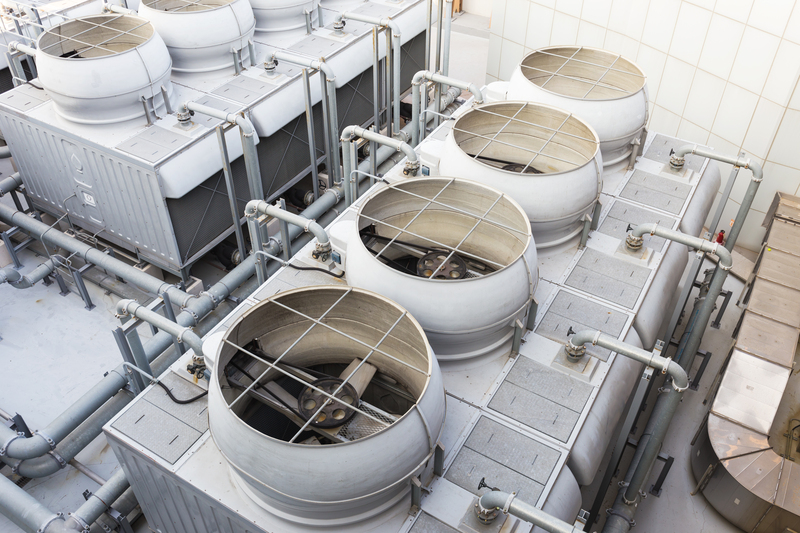
Many compressors are cooled by closed-loop systems that may include outdoor cooling towers.
What Water Does to Your Air Compressor
We avoid some of the problems associated with corrosion, freezing, wear and heat exchanger failures by using a glycol mixture rather than pure water in our liquid-based, closed-loop cooling systems. Glycol, however, is not as effective as water at heat exchange, so you must size glycol cooling system compressors slightly larger than pure water-based systems.
As a result, preventing moisture entry and removing it are critical parts of operating an air compressor.
Glycol vs. Water
Once water is in your compressor, all hell breaks loose. There are several ways water impacts your compressor.
- Lubricant loss. Water washes away lubricants, increases wear and reduces efficiency.
- Oil degradation. As the water mixes with the oil in your compressor, it begins to degrade.
- Emulsification “jelly.” As the water is dispersed throughout the oil, a process known as emulsification, it forms a jelly that causes a variety of problems. How will I know if emulsification jelly is forming? See the next point.
- Loss of capacity. The jelly can cause blockages that reduce capacity, blocking aftercoolers, oil coolers, coolant passages, oil-injection passages, scavenger lines and even small pilot lines. Additionally, wet air is heavier, resulting in increased pressure drops throughout the system.
- Rust and corrosion. If you’re not draining your compressor adequately, all of the internal carbon steel components start to rust. That’s a special problem when your compressor is shut down for any reason: overnight or between shifts. Or for planned maintenance. And while oil-free units have protective coatings, they don’t last forever.
- Clogs. If you start to have corrosion, rust will flake off. Those fragments then join with other particles to obstruct air flow throughout the compressor, clogging the insides of coolers, for instance. It may not happen immediately, but it will occur over time.
- Bearing damage. The water entrained in your oil can cause bearing damage and possibly bearing failure, depending on the lubricant you're using.
- Impeller damage. Because of the high speeds at which a centrifugal compressor operates, even a small amount of water can cause significant damage.
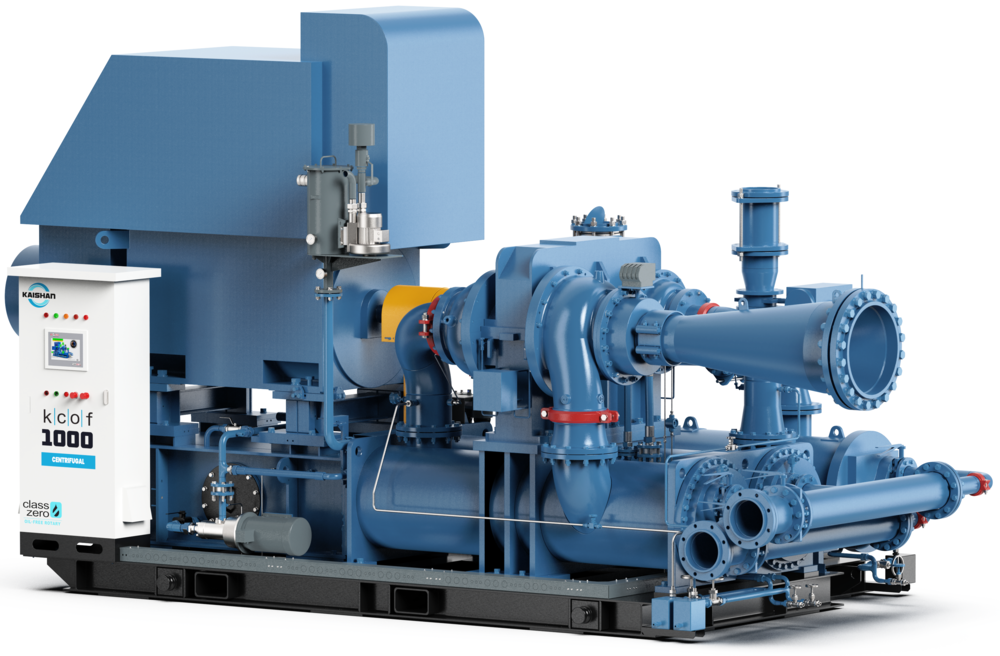
Because of the importance of eliminating water and other impurities from the air flow, Kaishan’s KCOF centrifugal air compressor offers coolers made of stainless steel, with epoxy coatings on the water passages and housings to protect against corrosion. It is also equipped with zero-loss drains.
Needless to say, there are many additional opportunities for water to cause problems throughout your entire compressed air system, not to mention the quality issues and damage to your products or workpieces that occur downstream.
And while we may think that oil-free compressors would be exempt from such issues, they still draw in ambient air. They usually are two-stage units, and many are liquid-cooled. So there are many ways for water to enter an oil-free system.
Many of these sources of water infiltration can go undetected. That’s one reason why all compressor manufacturers require oil sampling to detect air compressor water damage.
Oil Sampling Uncovers Air Compressor Water Damage
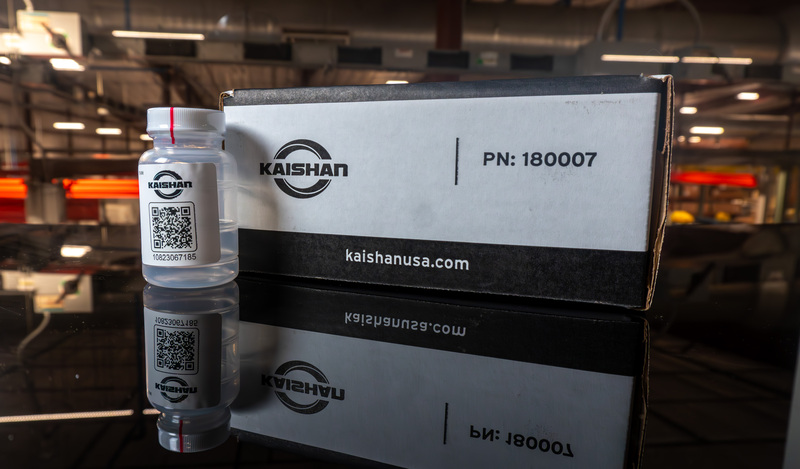
To maintain warranty eligibility, Kaishan USA requires that you collect an oil sample and have it analyzed every 2,000 hours or every 1,000 hours for food-grade applications.
Oil sample testing usually does not measure for the presence of water in the sample. Instead, two key measurements may be your first indication that water is getting into your compressor:
- Acid number. Water in your system will raise the acid number, which measures the amount of acid in your sample. It indicates that the oil’s additives have been depleted, leading to acid buildup.
- Wear metals. Iron particles indicate that steel parts, such as bearings, gears or rotors, are experiencing wear. Bearing failure may also indicate a high moisture content.
Next, we’ll discuss how to remove water from your air compressor.
Removing Water from Your Compressor
Drains are among the most obvious tools for compressed air moisture removal, so we strongly recommend testing them daily. Or have a drain alarm notifying you of a drain failure.
As mentioned, a centrifugal air compressor is even more sensitive to moisture than a rotary screw compressor so we use zero-loss drains with alarm and test capabilities on our KCOF.
Water, Water, Everywhere. And Your Local Professional Can Help.
Ensuring your compressor produces dry and clean air is crucial for compressor longevity and for all the end uses your compressed air system supports. Water, after all, is everywhere around your compressor. And there are so many ways it can get in.
Your local compressed air professional can help. Our nationwide network of independent distributors can provide the on-site help and consultation you need. They deal with water issues in compressors and compressed air every day. And they have the expertise and equipment to help you solve any moisture issue. They have factory-trained technicians and a deep understanding of industrial applications, helping maximize efficiency and minimize downtime.
We partner with these independent, local distributors because it’s the best way to make sure you have the help you need, when and where you need it. These factory-trained air compression experts can service your air compressor system without a problem. And they have staff members who are skilled in advanced technology.
Unlike large corporate suppliers, there's no red tape here; our distributors offer expert guidance, faster response times and personalized support tailored to your needs. They don't just sell compressors—they build relationships, ensuring you get the right system, reliable service and quick access to parts when you need them most.
So, when you buy through Kaishan, you're getting more than a product—you're getting a local partner who cares about your business and wants it to succeed.
Key Takeaways
- Water can enter an air compressor through incoming air, unprotected outdoor installations, cracked heat exchangers and poor interstage moisture separation.
- Water causes a wide range of problems, including lubricant loss, oil degradation, creation of “jelly,” loss of capacity, rust and corrosion, clogs, bearing damage and impeller damage.
- Oil sampling is a crucial rotary screw air compressor maintenance step because it may be the first indication that air compressor water damage is occurring.
- Drains are among the most obvious ways you can remove water from your compressor.
Let Us Help
Preventing water problems in your compressor is crucial to the operation of your compressed air system and all the processes that rely on it. If you need help diagnosing water issues, get in touch with the experts at Kaishan. Contact us today.
Listen to the Podcast Version



How Water Gets In
Alright, welcome back to The Big Dog Podcast. Today’s episode is a big one. We’re talking water—the absolute compressor killer. And I mean, it gets everywhere if you’re not paying attention.Yeah, you know, when folks think about compressor issues, they usually blame the component or maybe the oil, but I swear, water is that silent troublemaker nobody looks for until it’s too late. Let’s start with the big question—how does water actually get into the system in the first place?
First off, you can’t really avoid ambient air. Unless you’ve got some laboratory-grade air purification and chilling right at the intake, your compressor’s pulling in humidity every time it cycles on. Humid day? Well, congratulations, that moisture comes in with the air, and once it’s compressed, all that vapor just turns into liquid water inside your compressor.
I think a lot of people miss just how much water is in the air already. It’s not just a little mist in the morning—it’s always there, and compressors pull it in whether you’re running in Arizona or you’re drowning in Gulf Coast humidity.
Speaking of Gulf Coast—here’s one for you. I worked with a facility down there that kept their rotary screw units basically just sitting out in the open. No roof, no shielding, nothing. Every time the weather shifted, you’d get water sneaking in. They had so much downtime chasing weird failures, but really it all traced back to moisture. Unprotected outdoor installs are a huge deal and honestly, so easy to avoid with a little planning.
That’s brutal. And there are so many other easy-to-miss entry points. Like, people always forget about poor moisture separation between stages. If you’ve got a two-stage or a multi-stage centrifugal compressor and your drains aren’t working, you might just send all that water downstream. The coolers basically sweat out water at each stage—if you don’t get it out right then, it’s staying in the system.
Yeah, and cracked heat exchangers are another sneaky one. One little crack, and suddenly you’ve got water mixing into not just the airflow but the oil circuit too—turning everything into a mess. These are the problems you don’t see until you get, well, catastrophic results down the line.
So the main ways—ambient air brings in the humidity, outdoor installs leave you wide open, poor moisture separation sends water further into your compressor, and cracked coolers or heat exchangers are like an open door. Did I miss anything big?
Nah, that pretty much covers the top culprits. I’ll just add—liquid-based cooling systems are meant to help, but they’re not magic. If those systems aren’t maintained or filtered, unwanted water can get picked up and circulated too, especially with open or semi-closed loop setups.
Exactly. And all this just underscores how relentless water is—it doesn’t care if you planned perfectly. If you leave an opening, it’ll find its way in.
The Damage Water Causes
Alright, so let’s say the water’s in. What happens next is where things get scary, right? I always think about that call—maintenance guy freaking out because the oil had literally turned into jelly. I’m talking sticky, grey mess clogging up the entire cooler bank. They almost lost the whole line for that shift. It’s wild just how fast water can wreck things.Yeah, it’s ugly. Water does not play around. First, you lose lubrication—water basically washes oil off the parts. That means way more wear and your efficiency tanks. Then you’ve got oil degradation. Once water mixes in, oil starts breaking down, losing its ability to, you know, protect your compressor.
That ‘jelly’—the emulsification—man, that’s the one people never forget. Water and oil start blending and next thing you know, you’ve got this goop plugging up aftercoolers, coolant passages, scavenger lines. Your compressor loses capacity, everything backs up, and airflow gets gnarly. I mean, the stuff literally blocks oil and air passages. Wet air’s heavier, too, so pressure drop goes up, everything gets harder for the system.
Don’t get me started on rust and corrosion. Internal carbon steel parts are kind of sitting ducks if water builds up, especially when the unit is shut down overnight and the oil’s not coating everything. You come back next shift and suddenly, nothing spins right, everything’s squeaking, chunks of rust floating around.
Let’s not forget, once you’ve got rust, it throws off these flakes and those create clogs down the line. Now the coolers and passages are packed up—plus, if you’re running oil-free units, those protective coatings only last so long against constant moisture.
And then bearings. Water in your oil means you’re risking bearing damage—or even a flat-out bearing failure. Centrifugals, especially, are spinning crazy fast and even a bit of water is enough to chip an impeller or toast a bearing way before its time. I might be ranting here, but I’ve seen more bearings go out from moisture than any other single cause.
You’re not overselling it. I mean, yeah, glycol systems help. Using a glycol mix in closed-loop cooling can reduce corrosion and freezing, but there’s a tradeoff—glycol’s not as good at heat exchange as water. So you end up needing a bigger, more robust system to keep up with the same cooling jobs.
It’s always about the tradeoffs, right? Nothing’s perfect, but like we said—water left unchecked can quickly take you from “running smooth” to “plant at a standstill” if you aren’t vigilant.
And it’s not just the compressor. The water, rust, and oil junk can move downstream, cause product quality problems, and even damage your end equipment. So you’re fighting fires on a few fronts all from some water nobody noticed at the start.
Detecting and Removing Water
So, knowing all that, let’s talk defense. How do you actually catch and get rid of water before the wheels fall off?The single most important thing—oil sampling. Every 2,000 hours for standard, 1,000 for food-grade. Not every test checks for water directly, but rising acid levels or a bump in wear metals—especially iron—are screaming signs you’ve got moisture sneaking in.
And you know, people love to skip this step or “do it later,” but that’s just an invitation for expensive surprises. Once those acid numbers go up or you see iron in the results, something’s breaking down inside. That’s your warning signal to dig deeper.
Zero-loss drains are your best friend here. The second you let drains fail or they get clogged, all that water starts to pool. That’s why some units—like Kaishan’s KCOF centrifugals—have stainless steel coolers and epoxy coatings, plus zero-loss drains with alarms. Those alarms are priceless, honestly. Regular draining isn’t just nice to have, it’s 100% critical, rotary screw or centrifugal, both.
I’d say, too, don’t try to tough it out alone. Your local compressed air pro or a factory-trained distributor—they deal with this stuff daily. They’re not just there to sell you something; these folks can spot the subtle signs, help you tune your drains, do thorough diagnostics, and keep you running. And they move quicker than the big guys, less red tape—if you’ve got water trouble, you want a real partner who knows your system, not a corporate helpline that puts you on hold.
Absolutely. It’s like, you wouldn’t ignore an oil leak in your car, right? So don’t ignore oil sampling, drain alarms, or regular check-ins on your compressor. Do those things, lean on the people who know the systems, and water loses a lot of its bite.
Could not have said it better. Water’s just waiting for you to slip up, so you’ve got to stay sharp. That’s the episode for today—let’s keep those compressors bone dry. Lisa, always good to have your take on this stuff.
Right back at you, Jason. Thanks to everyone listening—keep those questions coming, and check in next time for even more ways to keep your air system running strong. Take care!
See you next time, folks!