



Air Compressor Reliability: What Readings Should You Be Watching?
February 11, 2026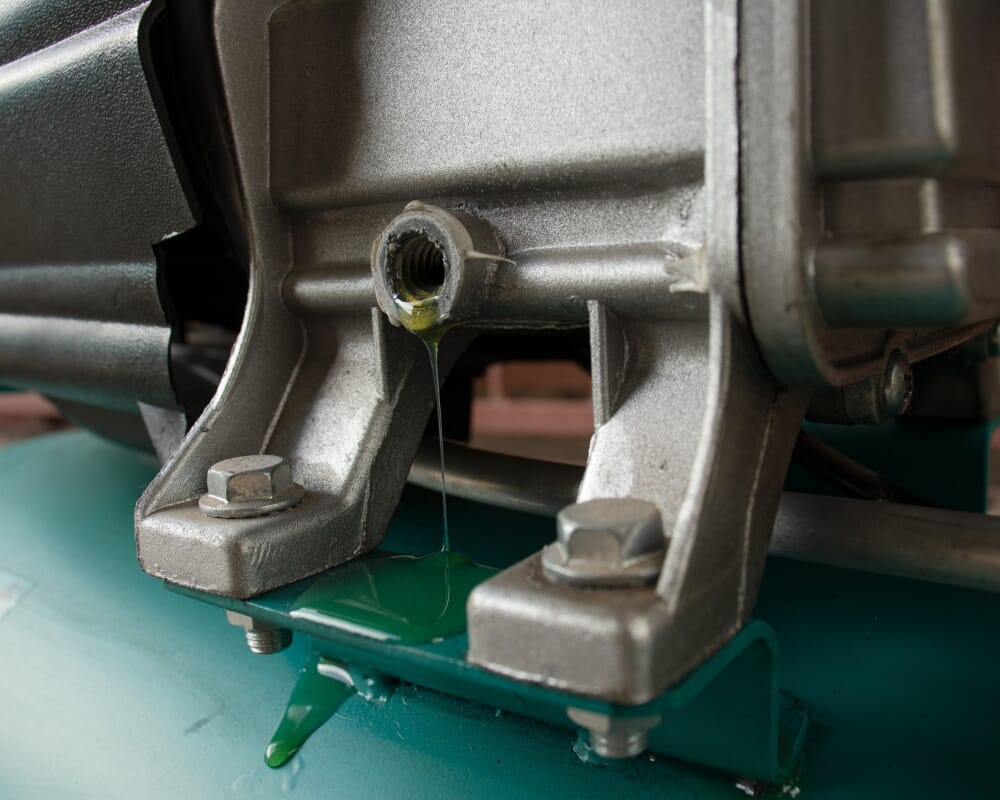
What Stats Should You Be Monitoring to Ensure Air Compressor Longevity?
February 25, 2026What Readings Tell You It’s Time for Air Compressor Maintenance?
By John Wilkerson, Technical Training Manager | February 18, 2026 | Uncategorized

Certain measurements are critical in identifying when it’s time to maintain your compressed air system.
The benefits of maintaining your compressed air system are well-documented. With a good maintenance program, you can:
- Save money.
- Cut downtime.
- Boost reliability.
- Reduce energy use.
- Extend equipment life.
- Maximize your equipment investment.
- Enhance employee safety.
By optimizing the performance of their systems, some companies even find they can build competitive advantage. Especially compared to companies that adopt a “fix-it-and-forget-it” approach to compressed air maintenance.
So compressed air users will want to stay on top of their systems and act promptly when maintenance issues arise.
The good news? Your compressed air system often gives you clear signals when it’s time for maintenance, providing key indicators that it needs some TLC.
Let’s review a few of those metrics, starting with operating hours.
Key Metrics for Air Compressor Reliability
| Metric | Key Idea |
|---|---|
| 1. Operating Hours | One of the most obvious and important ways to assess the status of your compressed air system. |
| 2. Oil Level, Condition | Oil is the lifeblood of your compressor. |
| 3. Pressure Differentials | A significant drop in pressure differential indicates blockages, worn-out components or issues with your air supply. |
Measurement No. 1: Operating Hours
Operating hours are among the most obvious and important air compressor maintenance indicators. And help you know when maintenance is advisable.
Most manufacturers provide a recommended maintenance schedule based on operating hours. This schedule often includes routine checks, oil changes and filter replacements.
A few key general guidelines for stationary, oil-flooded rotary screw air compressors:
- Change oil filters every 2,000 hours.
- Draw an oil sample every 2,000 hours.
- Inspect air filters every 4,000 hours and replace them if necessary.
- Change compressor oil every 8,000 hours (4,000 hours for food-grade lubricant).
- Change the oil separator and lubricant every 8,000 hours.
- Sample oil every 2,000 hours (1,000 hours for food-grade lubricant).
Of course, these estimates may change, based on your environment and on the findings in your oil sampling report. Consult your owner’s manual for your manufacturer’s specific recommendation.
For a full maintenance checklist, download our white paper, “Air Compressor Maintenance: Ultimate Guide and Checklist.”
Measurement No. 2: Oil Level, Condition
Oil plays an important role in the life of your compressor, especially if it’s an oil-flooded rotary screw compressor, the most commonly used compressor type in industry today.
In fact, we call oil the lifeblood of an oil-flooded rotary screw machine. It reduces friction among all moving parts, reduces heat buildup, removes impurities and seals the space between the rotors.
Your compressor’s oil supply requires maintenance over time, as droplets get absorbed into the compressed air stream and either escape through or are removed by the air/oil separator filter and condensate system. That’s why you should:
- Check the oil level before starting your compressor each day, using either the dipstick or sight glass.
- Replace what’s been consumed by normal operation. If you notice an increase, it may be a sign of an undiagnosed issue.
- Inspect its condition. Any oil begins to break down and needs to be changed. Does it smell bad? Or give off a burnt, tangy or rotten, organic odor? Oil sampling, of course, is the most accurate way to diagnose oil condition and ensure you maintain your factory warranty.
- Change the oil if it appears dark or contains obvious impurities.
- Follow your compressor manufacturer’s recommendations about routine oil changes.
Excessive oil use may indicate a problem: oil might be leaking somewhere. Or the operating temperature may be too high.
If you suddenly find your compressor is using more oil than normal, you may need to seek expert help.
For more detail, read “Four Key Steps to Extend the Lifespan of Your Rotary Screw Compressor with Proper Lubrication” and “Air Compressor Oil Filtration: Preserving Air Quality and Prolonging Equipment Life.”
Measurement No. 3: Pressure Differential (ΔP)
An essential measurement that indicates how well your compressor or a component is functioning, the pressure differential (or ΔP) measures the difference between the incoming and outgoing pressures.
Most compressed air systems incorporate pressure switches to track the differential pressure on a number of different devices.
A significant increase in pressure differential indicates blockages, clogs, worn-out components or issues with your air supply.
If your compressor shows a high ΔP, then, suddenly, a low reading, typically, that means your filter or element ruptured. At that point, you are past the point of service. Most manufacturers have safety devices in place to shut down their machines before the element gets to this point. But safety devices can fail or can be bypassed.
Most manufacturers measure ΔP on their compressors’ oil filters. A Kaishan compressor’s control system monitors the pressure differential in its intake air filter and oil filter and notifies you of any problems.
Finally, let’s discuss a few other considerations that you should keep in mind as you maintain your compressed air system. We’ll start with using parts from original equipment manufacturers.
Use OEM Parts
Use only quality OEM parts when repairing your compressor. Failing to do so may void your warranty.
Using our recommended industrial air compressor parts will help improve the life expectancy and reliability of your compressor. Genuine Kaishan parts are engineered and manufactured specifically to support and enhance the performance of your compressor. That longevity extends not only to the compressor but to its components and the end-use tools it serves.
They conform to stringent specifications and performance standards and undergo the same quality-control testing as our compressors. That’s absolutely critical in delivering the high-quality air expected in industries such as food processing, semiconductor and electronics.

OEM parts help maintain the high air quality needed in key industries, such as electronics.
Almost all compressor manufacturers, including Kaishan, require that you use their original OEM parts to maintain your warranty eligibility and ensure that your air compressor system operates at the expected performance level and safety. Using generic or aftermarket parts/fluids can sacrifice quality and void your warranty.
Any perceived short-term savings you realize by purchasing aftermarket parts could ultimately raise your lifecycle costs, resulting in higher energy use, increased downtime and more frequent replacements. As Compressed Air Best Practices notes, “The money you save by purchasing generic parts is often the most expensive money you will ever save.”
For more information on the importance of using genuine OEM replacement parts, visit our parts and services page. Or read our blog post, “How to Maintain Your Air Compressor with Genuine Spare Parts."
Using the Right Oil Pays for Itself
Kaishan worked with an expert global developer of industrial lubricants to formulate the air compressor oil we install in our compressors. Our KTL-8000 air compressor oil is a hydrologically stable synthetic with ester chemistry additives.
KTL-8000 has been specially formulated for Kaishan’s rotary screw air compressors, enabling them to overperform in any industrial setting. We strongly encourage every customer to use it in their Kaishan machines. For more information, download the KTL-8000 safety data sheet. We also offer food-grade lubricants and a PG (polyglycol) alternative for high-humidity conditions.
Kaishan’s KTL-8000 lasts twice as long as mineral-oil-based products. From an environmental standpoint, you’ll use less oil and have less oily waste. We’ll also consume less energy manufacturing it, which benefits the environment.
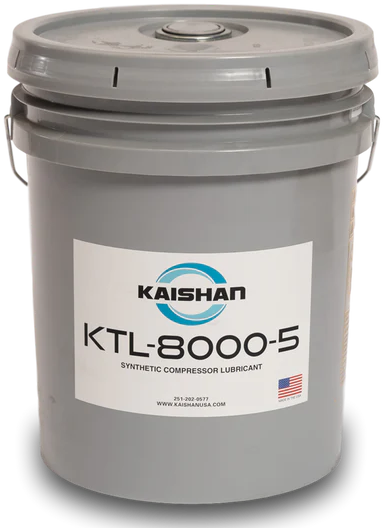
Kaishan’s KTL-8000 air compressor oil.
In addition to using OEM parts and monitoring the readings we’ve discussed, you’ll want to adopt a consistent maintenance plan.
Adopt a Consistent Maintenance Plan
Regular maintenance checks will help you stay ahead of potential issues. Following a consistent air compressor maintenance plan will ensure that you deliver high-quality compressed air, save money and prolong the life of your air compressor and the other components in your compressed air system. It may even extend the service life of the equipment you’re powering.
Early Intervention Is Crucial
Addressing minor issues before they escalate into major problems can save you time, money and headaches. You’ll want to act quickly if any of the readings change rapidly or are beyond the manufacturer’s established limits.
Unfortunately, many companies are finding that they no longer have the expertise in-house to handle the complexities of today’s advanced equipment, such as compressed air systems.
That’s why having a relationship with an air compressor maintenance professional is so important. Someone with the most up-to-date equipment and a lot of experience using it. We strongly advise companies to seek outside help when issues arise to avoid serious problems and to bring in a professional anytime you see a drop in performance you can’t explain.
We encourage you to work with your local independent air compressor consultant rather than agree to an all-inclusive air compressor maintenance contract offered by some factory-direct outlets. We’ve always found that your local consultant will give better service at a more reasonable rate, especially when you establish a relationship.

Having a skilled professional assist you in developing an air compressor maintenance program is one of the most cost-effective steps you can take to ensure the reliability and long service life of your compressed air system.
Finding A Local Consultant
We work with a nationwide network of independent distributors, who can help you set up an air compressor maintenance program that will meet your needs.
We partner with independent, local distributors because it's the best way to serve you. Unlike large corporate suppliers, there's no red tape here; our distributors offer expert guidance, faster response times and personalized support tailored to your needs. They don't just sell compressors—they build relationships, ensuring you get the right system, reliable service and quick access to parts when you need them most.
With factory-trained technicians and a deep understanding of industrial applications, they help maximize efficiency and minimize downtime. So, when you buy through the Kaishan distributor network, you're getting more than a product—you're getting a local partner who cares about your business and wants to see it succeed.
Three Key Metrics for Air Compressor Reliability
1. Operating hours. An obvious way to assess the status of your compressed air system
2. Oil level, condition. Remember that oil is the lifeblood of your compressor.
3. Pressure differentials. A drop indicates blockages, wear or issues with your air supply
Let Us Help
Maintaining your rotary screw or centrifugal air compressor is critical to the operation of your compressed air system and all the processes that rely on that system. If you need help identifying and capturing the right metrics to know when it’s time to maintain your system, get in touch with the experts at Kaishan. Contact us today.
Frequently Asked Questions
Listen to the Podcast Version



Why Readings Matter More Than Gut Feel
Welcome! This is episode number 60 of The Big Dog Podcast, and I’m not gonna lie, I’m pretty damn proud of that!Sixty! That feels big. We should’ve brought a cake into the studio or something.
Yeah, but then we’d get crumbs in the mixer and that’s not on any preventive maintenance schedule I’ve ever seen.
Fair. But seriously, if you’ve been with us for all 60, or you’re just jumping in now, thanks for hanging out with us. Let’s make this one useful for your plant, today.
Alright, let’s get to it. Today we’re talking about when your air compressor is telling you, “Hey, I need some love,” and how to read that before it turns into overtime, downtime and safety reports.
And we’re gonna push a little bit on something we both see a lot: that “run it till it dies” mindset.
Yeah. The old “we’ll fix it when it breaks.” Look, I get where that comes from. You’re slammed, you’re short on techs, production is yelling right now, not six months from now. So you keep the thing running and hope it hangs in there.
But the bill for that usually shows up later, and it’s ugly.
Exactly. When you only touch the compressor after it fails, you’re paying in three places: repair cost, downtime and risk. Parts and emergency service are more expensive, your line’s down while you scramble for air, and if something really lets go—ruptured filter, high temps, oil where it shouldn’t be—you’ve got a safety issue.
And compressed air is usually not optional. If that rotary screw is down, you don’t just lose the compressor, you lose paint, packaging, tools, controls… whatever you’ve got tied to that header.
Right. Preventive maintenance isn’t about being fancy. It’s about staying ahead of the ugly surprises. And the nice thing with compressed air is, the system gives you some really clear readings that say, “It’s time.”
So let’s name those up front. If you’re a maintenance manager, plant engineer, plant manager—what should be on your short list?
Three big ones. One: operating hours. Two: oil level and oil condition. Three: pressure differential—ΔP—across key components like filters.
And the nice thing is, those three don’t require you to be a compressor guru. You’re not reverse‑engineering the control logic. You’re just looking at run hours, checking the “lifeblood” of the machine, and watching for pressure drop.
Exactly. If you get disciplined about those, you’re way ahead of the “run it ‘til it breaks” crowd. Now, a lot of folks ask, “Okay, what’s normal? When should I be changing what on a rotary screw?”
And just to be clear, we’re talking stationary, oil‑flooded rotary screw compressors. That’s what most industrial plants in the U.S. are running.
Yup. Now every manufacturer’s got their own manual, so always go there first, but typical guidance looks like this: oil filter change around every 2,000 operating hours, pull an oil sample around every 2,000 hours, air filter inspection at about 4,000 hours, oil change in the 8,000‑hour range—cut that to about 4,000 if you’re on food‑grade lube—and oil separator and lubricant swap around that same 8,000‑hour mark.
So if you’re running a single‑shift, five‑day operation, that 8,000‑hour oil change might be, what, roughly every two years. If you’re running that compressor hard, three shifts, seven days, you’re hitting those hours a lot faster.
Exactly. Duty cycle matters. A machine that loafs along 40 hours a week in a clean room is not the same as a machine eating dust 24/7 in a hot, dirty environment. Heat, humidity, airborne junk—those all shorten the real‑world interval, even if the hour meter says the same number.
So the takeaway for this first chunk: don’t rely on “it sounds okay” or “it’s always been fine.” Shift to what the readings are telling you—hours, oil, pressure differential—and then adjust based on how hard and where that machine is actually working.
Yeah. Your gut is great for knowing when something’s off. The readings are how you prove it and decide what to do next.
Operating Hours and Oil – The Lifeblood Checks
Let’s dig into how to actually use operating hours. Because they’re more than just a number on the controller.Right. Think of hours as your compressor’s odometer. You don’t change oil in your truck because it “feels” like time—you look at miles. Same idea here. Hours tell you when to schedule inspections and part changes before things go sideways.
So how would you lay that out in a simple way? If I’m a maintenance manager with a couple of rotary screws, how do I use those hour readings?
Alright, keep it practical. At roughly every 2,000 hours, you plan on an oil filter change and an oil sample. That’s your recurring health check. Around 4,000 hours, you’re at least inspecting the air filter and replacing it if it’s loaded. Around 8,000 hours, you’re doing the big step—oil change, oil separator, and lube swap, again unless your manufacturer says otherwise.
And the controller usually makes this easy. A lot of machines will prompt you—“2,000‑hour service due” or similar. The trick is building that into your work orders instead of just clearing the alarm and hoping no one notices.
Yeah, don’t be “clear alarm guy.” Use those hours as a trigger to schedule the work while it’s convenient. Nights, weekends, planned downtime—whatever works for your plant. It’s way cheaper than reacting to a surprise shutdown.
Now, hours are kind of the calendar. Oil is like the blood test. Let’s walk through daily oil checks, because that’s something you can do even if you’re not the compressor specialist.
Totally. For an oil‑flooded rotary screw, oil really is the lifeblood. Every day before you hit start, you—or whoever owns that machine—should be checking level with the sight glass or dipstick. Is it within the correct range? Not low, not way overfilled.
And that’s a quick, two‑minute thing.
Yeah. While you’re there, look at the oil. It should be relatively clear for that product, not pitch‑black sludge, and definitely not full of visible junk. If it looks dark and nasty, or you see obvious contaminants, that’s telling you it’s breaking down or it’s picking up garbage from somewhere in the system.
What about smell? Because I’ve heard folks say, “If it smells burnt, you waited too long.”
Smell matters. If the oil’s got a burnt, tangy, or just rotten, organic smell, that’s a red flag. Oil degrades over time—heat, air, contaminants all beat it up. When it breaks down, it stops protecting the machine. That’s when you start scoring bearings, cooking seals, and so on.
And if you’re suddenly topping off way more than usual, that’s not just “oh, it’s thirsty.”
Exactly. Excessive oil consumption is the machine waving its arms. You could have a leak, you could be running too hot, or there might be another issue that needs a closer look. That’s when bringing in an expert is smart instead of just dumping more oil in it.
Let’s hit oil sampling, because that’s one people sometimes skip. Why bother sending oil to a lab when it still looks okay in the sight glass?
Because your eye can’t see everything. Pulling an oil sample every 2,000 hours—sometimes even 1,000 if it’s food‑grade—is how you really know what’s happening inside. The sample can tell you about wear metals, contamination, breakdown of the additive package. That helps you catch problems early and it’s also important for protecting your warranty with the manufacturer.
Yeah, that “oil sampling to protect the warranty” point is big. If you’ve got a major failure and they come back and say, “Show me you maintained this thing,” having those samples and records is gold.
Right. Now, let’s talk what’s actually in the machine—lubricant choice. Not all oil is created equal, and “whatever’s cheapest on the shelf” is not a strategy.
Kaishan, for example, spec’d their KTL‑8000 synthetic for their rotary screws. It’s formulated specifically for those compressors, with additive chemistry tuned for that environment. And it lasts about twice as long as mineral‑oil‑based products, so you’re not just dumping and hauling as much waste oil.
Yeah, and there’s food‑grade options and polyglycol options for high‑humidity conditions too, depending on what you’re doing. The key is: use the oil type and filters the OEM calls for. Those genuine filters and lubes are engineered to match the clearances, temps, and air quality requirements of that machine.
There’s also the downstream side. In food, semiconductor, electronics—those industries need really clean, consistent air. If you cheap out on non‑OEM fluids or filters, you’re gambling with air quality and maybe with product contamination.
Yeah. People look at the invoice and say, “This aftermarket filter is half the price.” But then it plugs faster, or it sheds media, or it doesn’t filter as fine. Next thing you know, the compressor’s working harder, you’re burning more energy, or something fails early. That “savings” turns into a high lifecycle cost real quick.
So hours tell you when to look, oil checks and sampling tell you what’s going on inside, and the right OEM‑spec lubricant and filters give you a shot at long life, good air and fewer headaches.
Exactly. You take those seriously, you’ve already handled half the battle on compressor reliability.
Pressure Differential, OEM Parts and Calling in Backup
Alright, let’s move to that third big metric: pressure differential, or ΔP. This one scares some people because it sounds technical, but it’s really just “pressure in versus pressure out,” right?Yep. Differential pressure is just the drop across a component. You measure pressure on the inlet side and the outlet side—difference between those two numbers is your ΔP. Most systems have switches or sensors watching that on things like intake air filters and oil filters.
So what are we looking for? Let’s say I’ve got a display that shows filter differential. What’s that telling me over time?
If that pressure differential is slowly rising, that usually means the element is loading up—dust, oil, contaminants building in the media. It’s doing its job, but you’re getting closer to the point where it’s a restriction. The compressor has to work harder to pull or push the same air or oil through.
So a rising ΔP is basically the system saying, “This filter’s clogging. Plan a change.”
Exactly. Now, the scary one is a sudden drop after it’s been high. If you’ve been seeing high ΔP and then, boom, it drops way back down, that can mean the element ruptured. In other words, it tore or failed. Now you’ve got unfiltered air or oil going downstream.
That’s the “you’re past the point of service” moment.
Yeah. A lot of manufacturers build in safety shutdowns so you don’t get to that point. But safety devices can fail or get bypassed. That’s why watching those readings is so important—you don’t wanna find out your filter ruptured because the machine’s full of debris or your air quality suddenly tanked.
And this is where ΔP ties right back to using OEM filters. If the media isn’t built for the machine, maybe it doesn’t hold up, or it behaves differently as it loads.
Exactly. OEM elements are designed and tested for that compressor’s flows, pressures, temperatures. They go through the same quality control as the machine itself. Especially in industries like food and beverage, semiconductors, electronics—you need to trust that filter to perform and not shed junk into the system.
And there’s the warranty angle too. Most compressor OEMs, including Kaishan, require genuine parts and fluids if you wanna keep that warranty in good standing.
Right. You might “save” a few bucks buying generic, but if that part fails early, or it helps cook your oil, or it leads to a bigger failure, that’s expensive money. More downtime, more energy, more replacement parts. As one industry group put it, the generic parts you buy are often the most expensive money you’ll ever save.
So let’s pull this together into something simple people can actually use as a maintenance plan. If you’re listening in your car right now, mentally build this checklist.
Yeah, let’s keep it straightforward. One: Daily or shift checks—look at oil level and oil appearance, glance at any alarms or warnings on the controller, listen for weird noises, feel for abnormal heat. Two: Based on operating hours—use 2,000‑hour increments to schedule oil filter changes and oil sampling, 4,000‑hour checks on air filters, and that 8,000‑hour level for oil and separator changes, unless your manual says otherwise.
Three: Keep an eye on pressure differential readings where you have them. Rising trend? Plan a filter change. Sudden drop after a high reading? That might be a ruptured element—shut it down and investigate, don’t just restart and hope.
Four: Stick with OEM parts and OEM‑spec fluids so you’re not gambling with your warranty or your air quality. That means genuine filters, and the right oil—like the KTL‑8000 synthetic Kaishan formulated for their rotary screws, or food‑grade and specialty products where your process needs them.
And five: Know when to raise your hand and call in backup. Because the reality is, a lot of plants don’t have deep compressed air expertise in‑house anymore.
Yeah, and that’s okay. You’re juggling a lot. There’s a point where guessing your way through an issue is more expensive than getting help. If your readings—hours, oil condition, ΔP—start changing fast, or you see performance drop you can’t explain, that’s the time to pull in a pro.
Kaishan works through a nationwide network of independent local distributors, and I like that model. Those folks aren’t just order‑takers; they know the plants in their area, they know the environments, and they can help you build a maintenance program that fits how you actually run.
Yeah, your local independent usually gives you better service and response than some giant, centralized contract. Factory‑trained techs, quick parts access, and you can literally call a person who’s been in your compressor room before. That relationship is worth a lot when you’re trying to keep downtime off the board.
So if you’re listening and thinking, “We’re kind of in that fix‑it‑when‑it‑breaks camp,” maybe this is your nudge to tighten things up—start tracking those hours, put daily oil checks on a simple sheet, and ask your local compressed air consultant to help you watch pressure differential and pick the right OEM parts.
Yeah. You don’t have to build some massive program overnight. Start with the three readings we talked about—hours, oil, ΔP—and build from there. That alone will save you money, reduce downtime, and keep your people safer around that equipment.
Alright, that’s a wrap on episode 60. Jason, always good to nerd out about maintenance with you.
Same here. For folks who want more detail, Kaishan’s got checklists, white papers and local distributors who can help you dial in a plan that makes sense for your plant.
We’ll keep bringing you more compressed air conversations in the next episodes. Jason, thanks, and thanks to everyone listening.
Appreciate you all. Stay safe out there, keep an eye on those readings, and we’ll catch you next time on The Big Dog Podcast.