



Taking a Systems Approach to Compressed Air: The Whole Really Is More Than the Sum of Its Parts
May 6, 2026Three Ways Compressed Air Optimizes Air Tool Performance Downstream
By Israel Hearn, Senior Tech Support Representative | May 13, 2026 | Uncategorized

The purity of products in the food, pharmaceutical and chemical industries can be compromised by impurities, including oil, in the ambient air.
We often focus on the operation of our air compressors and supporting equipment, such as dryers, storage tanks, filters and other components of our compressed air system.
And that’s a good thing.
But we don’t want to lose sight of our ultimate goal: providing a stable source of clean, dry air to our end users. That requires that we focus our efforts on optimizing air tool performance downstream.
An air compressor doesn’t directly pass along efficiency to downstream equipment, just by operating more efficiently itself. But there are a variety of ways an efficient air compressor helps optimize the efficiency of the end uses it serves. Cutting electricity costs. Enhancing reliability. Lengthening equipment lifespans.
There are three critical ways to ensure your air compressor and compressed air system do that: delivering high-quality air, ensuring pressure stability and maintaining your system.
We’ll start with air quality.
1. Delivering Air Quality
The ambient air we breathe contains millions of small particles and contaminants. If those pollutants are allowed to enter an air compressor, they get more concentrated. And that’s a problem for downstream equipment. The main culprits:
- Oil. Oil from the ambient air (as well as from the compression chamber of an oil-flooded air compressor) compromises the purity of pharmaceutical, food and chemical products.
- Moisture. Moisture in the air causes rust and corrosion in any metal parts it contacts.
- Particulates. Small dust particles can ruin semiconductor chips, mar finishes and even contaminate items intended for human consumption.
Beyond their impacts on end products, oil, moisture and particulates shorten the life of valves, actuators and pneumatic equipment.
Fortunately, there are several ways to maintain and enhance the quality of compressed air for end users.
Oil-Free Compressors to the Rescue
Oil-free compressors, such as Kaishan’s KROF two-stage, oil-free, rotary screw air compressor can help.
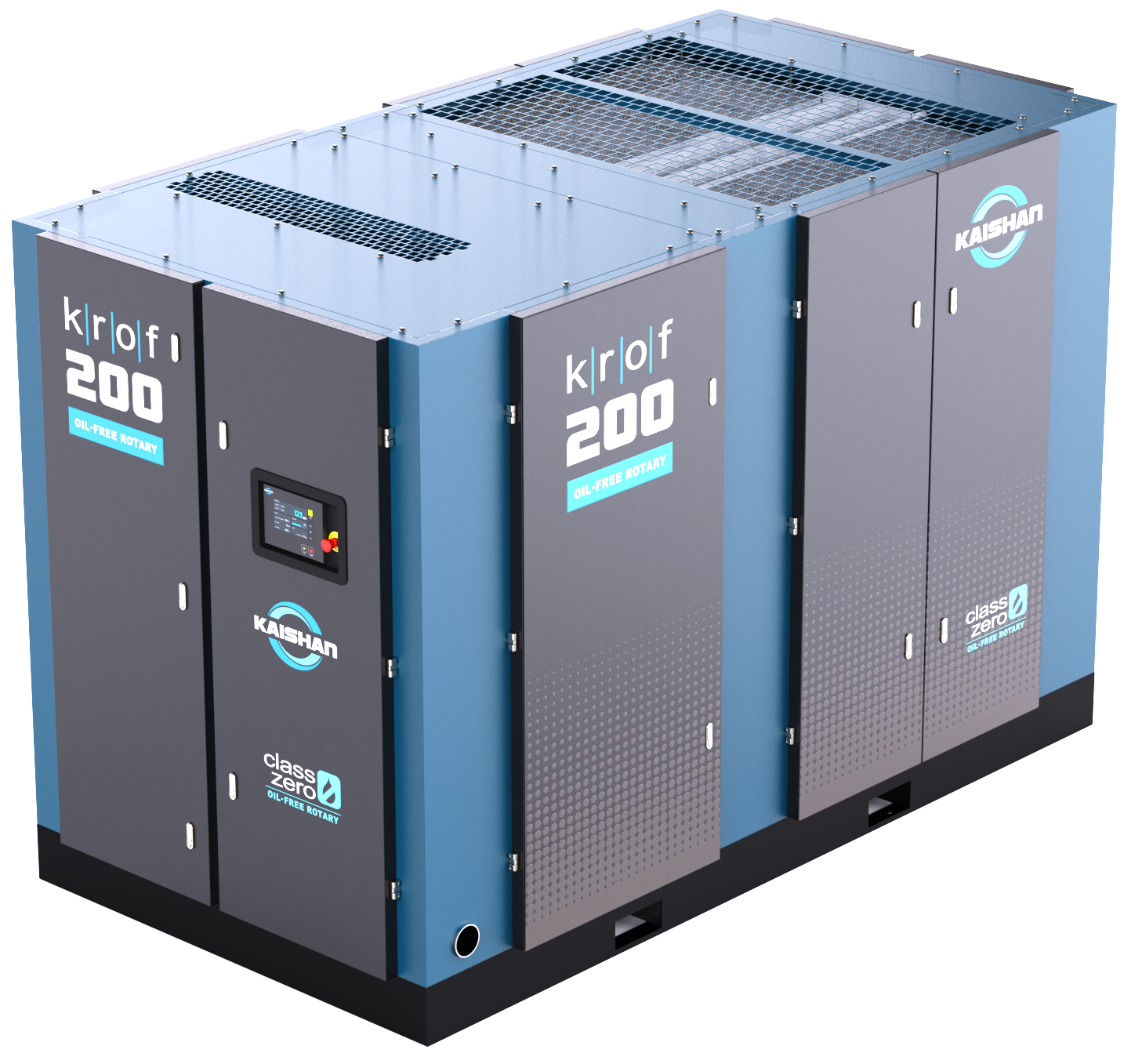
Kaishan’s KROF two-stage oil-free compressor is an excellent choice for medical and healthcare facilities that need dry, clean compressed air.
Unlike traditional, oil-lubricated compressors, oil-free machines do not introduce oil into their compression chambers. So, none of that oil must be removed from the air stream.
However, using an oil-free compressor does guarantee the clean, dry air that many sensitive applications require. Oil-free units still draw in atmospheric air, which can contain oil, water vapor, dirt, microorganisms, rust and pipe scale. So those contaminants will remain in the air unless they are removed.
Therefore, even an oil-free compressor needs dryers to remove moisture. Filters to remove particulates and oil from the ambient air entering your unit. And, most of all, they require maintenance. More on this later.
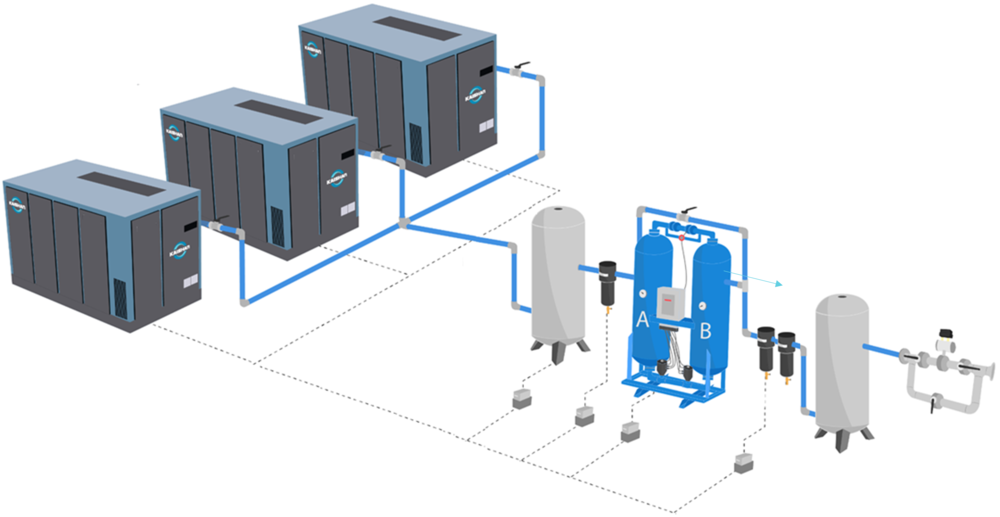
Air-tool performance downstream relies not only on an oil-free compressor like Kaishan’s KROF two-stage, oil-free, rotary screw air compressor, but also on filters, dryers, piping and adequate storage.
While not every application requires oil-free equipment, the number of oil-free applications continues to grow at a combined annual rate of 5%, according to Grand View Research.
It’s easy to see why: more industries are purchasing production machines featuring advanced electronics, most of which need clean, dry compressed air. How many companies have fewer machines with electronic controls today than they had five years ago?
For more on how oil-free compressors can help you deliver clean, high-quality air, download our white paper, “Oil-Free Air Compressor Buyers’ Guide: Cracking the Code on Class 0 Compressed Air.”
While the air should be clean, downstream equipment also benefits from pressure stability.
2. Ensuring Pressure Stability
Pneumatic tools need stable air pressure to achieve repeatable air tool performance downstream. After all, it’s hard for end-use tools to be reliable if the compressed air flow isn’t. Compressor breakdowns not only cause you heartburn, but they can also shut down an entire plant if key processes require compressed air.
Short of shutdowns, unstable pressure can result in faults, product loss and damage to robotics, actuators and packaging equipment. Often happening unpredictably.
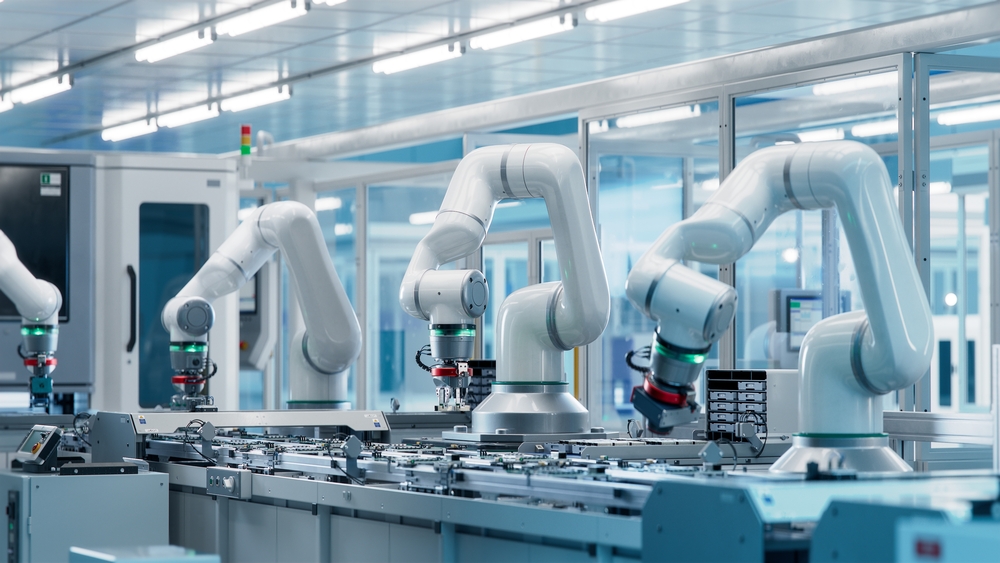
Unstable pressure makes any type of electronic controls, including robotics and pneumatics, work harder to maintain timing and accuracy. Long term, that reduces the lifespan of that equipment.
And your compressor is not the only variable. It may be running like a champ, but if you have leaks or some unauthorized uses (artificial demand), the air flow will be unpredictable at best. Learn more about “Reducing Compressed Air Demand.”
With unstable pressure, pneumatic equipment must work harder to maintain timing and accuracy, reducing efficiency. Long term, that reduces the lifespan of that end-use equipment.
There are several steps you can take to ensure pressure stability.
Two-Stage Compressors
Two-stage units like Kaishan’s KRSP2 two-stage rotary screw air compressor help provide the stable, consistent pressure that today’s advanced equipment needs.
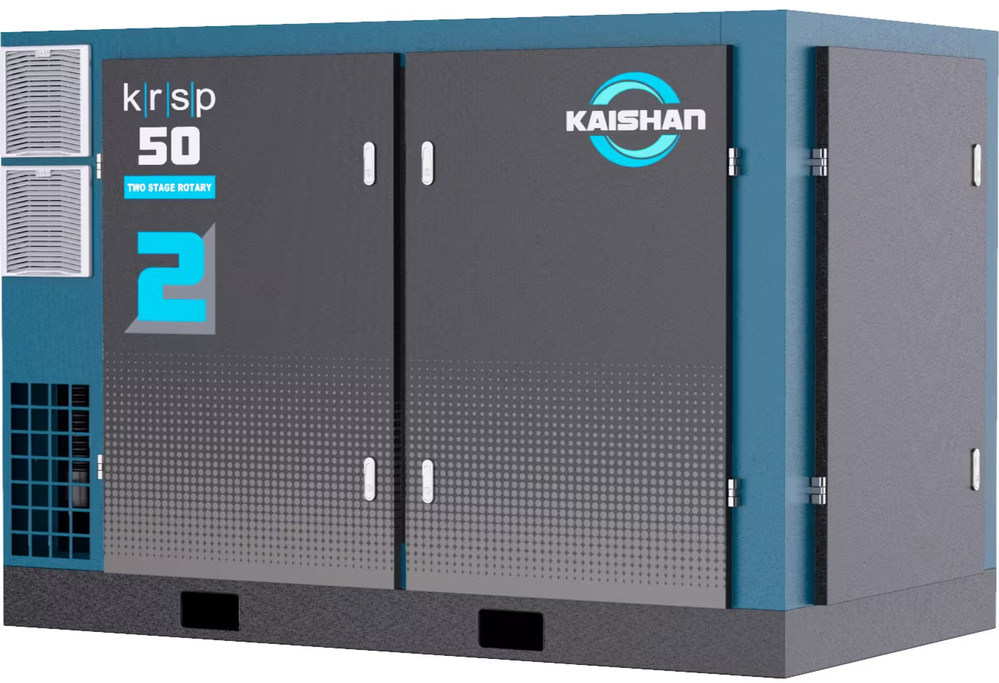
In addition to providing the stable, consistent pressure that today’s advanced equipment needs, Kaishan’s KRSP2 two-stage rotary screw air compressor is one of the most energy-efficient machines on the market.
But, once again, you need to take a systems approach, ensuring the system has the controls and storage needed to achieve maximum efficiency. It’s like having a hot sports car but not being able to take it out for a spin because you don’t know how to drive a stick shift. It’s just an expensive paperweight.
We also recommend a multi-compressor approach.
Multi-Compressor Systems
To ensure stable pressure, we often propose using multiple compressors operating in rotation, with system controls and adequate storage to buffer load changes.
Multi-compressor systems usually have base-load, trim and backup compressors, working within their most efficient ranges, tested under load, with hours balanced across the fleet. Usually, each unit is sized to carry the entire load on its own.
Configured this way, multi-compressor systems also reduce maintenance costs, save electricity, avoid emergency service, maintain pressure stability and extend equipment life.
We discuss multiple compressor configurations in greater detail in our blog post, “How a Multi-Compressor System Can Help You Reduce Compressor Downtime.”
Finally, doing regular maintenance on your system plays an important role in ensuring downstream equipment performance.
3. Maintaining Your System
I once was called to a plant where the air tools were inconsistent during peak production. The problem? A clogged drain in a storage tank. I opened the drain, let out 30 gallons of water and the system was soon back to normal. Similar situations in which users neglect routine maintenance occur almost daily.
So, you’ll want to cover the basics:
- Monitor and replace filters. Clogged filters will impede and eventually block airflow, causing unnecessary and avoidable energy loss. In addition, a clogged filter reduces your compressor's efficiency, increases pressure drop and forces your compressor to work harder than necessary. That extra work generates heat and makes it harder for your dryer to remove moisture, which means contamination reaches your downstream equipment. So you’ll need to replace filter elements regularly. How often? A lot depends on the quality of the supply air and how many hours you operate your system. One approach is to replace the filter elements every few months. A better choice is to install differential pressure sensors, which will detect any change in pressure between a filter's supply and output.
- Clean condensate traps and drains daily. Dirt and debris often accumulate in drains, causing them to become clogged. So, you’ll need to inspect the moisture trap and the drains in all your tanks, filters and dryers. You’ll want to remove any scale, rust, dirt or other solids from condensate traps and drain points daily.
- Check your inlet valve and filters. LA inlet valve is one of the most important and complicated parts of a rotary screw compressor. Inlet valves significantly impact a compressor’s overall efficiency and energy savings, regulating how much air gets into the airend and how much oil. Inspect your inlet valve regularly, making sure the inlet is clean, and you’re not drawing in dusty or humid air.
Beyond those system-level tasks that directly impact downstream air, you’ll want to follow your manufacturer’s guidelines on compressor maintenance, including oil and filter changes, oil sampling and cleaning condensate traps and drains. For more on compressor maintenance, read our post, “What You Need to Know About Rotary Screw Compressor Maintenance.”
In summary, the goal for your air compressor is not simply producing compressed air efficiently, but delivering air that supports the stable, reliable performance of the equipment that depends on it.
That’s tough to do without expert help from a compressed air professional, who can tour your facility and help you identify ways to improve compressed air delivery to enhance downstream equipment performance.
Local Help in Optimizing Compressed Air Downstream Equipment Performance
It’s often difficult for facility managers to identify some of the problems that rob downstream tools of the air quality, consistent pressure and reliability they need.
That’s why Kaishan USA works with a nationwide network of independent distributors, who can provide on-site help and consultation as needed.
Because they are in different plants each day, they get to see a wide range of problems that arise in compressed air systems. As a result, they are skilled at identifying and correcting compressed air issues.
Find a compressed air professional near you. Or contact us directly.
Key Takeaways
- Compressors may not be able to “pass along” energy efficiency, but there are a variety of ways an efficient air compressor helps optimize the efficiency of the end uses it serves.
- Oil, moisture and particulates can compromise product quality and shorten the life of valves, actuators and pneumatic equipment.
- Unstable pressure can result in faults, product loss and damage to robotics, actuators and packaging equipment.
- It’s hard for end-use tools to be reliable if the compressed air flow isn’t. Compressor breakdowns not only cause you problems but also can shut down an entire plant if key processes require compressed air.
Further Reading
“How to Choose the Right Air Compressor for Your Business.” For help in selecting the right compressor.
“Demystifying Air Compressor Sizing.” More details on sizing, the most important decision you make when you’re buying a new air compressor.
“How a Multi-Compressor System Can Help You Reduce Compressor Downtime.” We discuss the advantages of multiple compressor configurations in greater detail.
“What You Need to Know About Rotary Screw Compressor Maintenance.” We provide a list of the top 10 maintenance requirements, including changing air filters, cleaning condensate traps and changing the oil separator.
“Oil-Free Air Compressor Buyers’ Guide: Cracking the Code on Class 0 Compressed Air.” A review of the issues involved in providing Class 0 compressed air for sensitive applications.
Frequently Asked Questions
• The key is monitoring filter condition rather than just following a calendar schedule. A clogged filter reduces your compressor's efficiency, increases pressure drop and forces your compressor to work harder than necessary. That extra work generates heat and makes it harder for your dryer to remove moisture, which means contamination reaches your downstream equipment.
• If you're not sure about your filter replacement interval, check with your compressor manufacturer or have your service technician evaluate your specific conditions.
• High-humidity environments are particularly challenging. If your facility is in a humid climate or has high-moisture conditions (near water sources or outdoor intake locations), you need robust drying capacity to protect your downstream equipment.
• The solution involves two strategies: first, locate your compressor intake in the cleanest, driest location possible. Second, ensure your compressed air dryer is properly sized for your facility's humidity conditions. An undersized dryer can't remove enough moisture, and contaminated air reaches your downstream equipment.
• Multi-stage compressors compress air in multiple steps, which provides several advantages: more consistent pressure, better energy efficiency, lower heat generation and improved air quality. For facilities that run compressors continuously, a multi-stage design is worth the investment.
• The decision should be based on your actual operating conditions and the specific problems you're trying to solve. If pressure fluctuations are damaging your downstream equipment or energy bills are excessive, the ROI from upgrading to a multi-stage design can be significant.
- Intermittent equipment failures: Equipment works sometimes but fails unpredictably.
- Rust or corrosion inside pneumatic cylinders: Indicates moisture in compressed air.
- Clogged filters in downstream equipment: Suggests particulate contamination from the compressor.
- Pressure gauge fluctuations: Shows the compressor isn't maintaining a stable pressure.
- Excessive heat generation: Indicates the compressor is working harder than normal.
- Unusual noises or vibration: Suggests internal compressor wear.
• If you're seeing these symptoms, have your compressed air system professionally evaluated. A technician can measure air quality, test pressure stability and identify whether your compressor is the actual problem. This prevents you from wasting money fixing downstream equipment when the real issue is upstream.
• Here's what to calculate:
- Energy consumption: Run the numbers on electricity costs for different compressor models operating in your facility. An efficient compressor often costs more upfront but saves money in energy bills.
- Maintenance costs: Factor in scheduled filter changes, fluid replacement, professional servicing and expected repair costs based on the manufacturer's historical data.
- Downtime risk: What's the cost of unexpected failure? A reliable compressor prevents costly production stoppages.
- Lifespan: How long will different models last in your specific operating conditions?
• A compressor with a higher purchase price but superior energy efficiency and reliability often delivers better total cost of ownership than a cheaper unit that consumes more energy and requires frequent repairs.
• Inefficient compressors waste energy in several ways: they run hotter than necessary (wasting cooling capacity), they cycle inefficiently (especially oversized units), they lose pressure through leaks, and they force downstream equipment to work harder.
• When your compressor operates inefficiently, that inefficiency multiplies throughout your system. Downstream dryers and filters have to work harder. Pneumatic equipment compensates for pressure drops by consuming more air. Your energy bills climb, and your operational costs increase.
• The solution is to select an appropriately sized, well-maintained compressor and ensure your entire compressed air system is optimized. Many facilities find that upgrading to a more efficient compressor pays for itself through energy savings within 2-3 years while also improving downstream equipment reliability.
Listen to the Podcast Version



The real problem is usually downstream
Welcome to the show. [matter-of-fact] Lisa, I had a guy tell me once, "The compressor sounds fine, so why are my impacts hitting like they're tired?" And that's the whole trap right there. Most compressed air problems do NOT introduce themselves at the compressor. They show up at the tool that won't keep torque, the robot that starts missing timing, the packaging line that gets weird for twenty minutes and then acts normal again.[curious] The phrase "impacts hitting like they're tired" is gonna stick with me, because that's exactly how plants describe it. Not a textbook failure -- just, "something feels off." And that's what makes this sneaky, right? The air can look clean, the compressor can be running, gauges may not be screaming red, and meanwhile you've got moisture, oil, or particulates quietly chewing up reliability.
Exactly. Compressed air isn't just about making air efficiently. The job is delivering CLEAN, DRY, STABLE air to whatever's downstream. If you've got oil in the airstream, you can compromise product quality in places like food, pharma, chemical processing. If you've got moisture, now you're talking rust, corrosion, sticky valves, cylinders that don't behave. And particulates -- dust, pipe scale, junk breaking loose in the line -- those can mar finishes, foul controls, ruin sensitive equipment.
[questioning tone] Wait -- "pipe scale" is a good one, because people forget the contamination isn't always born inside the compressor. You're saying even if the machine itself is healthy, the SYSTEM can still hand dirty air to the end use?
Yep. [short pause] That's the part people miss. Even with an oil-free machine, you're still pulling in atmospheric air. Ambient air already contains water vapor, dirt, and all kinds of contaminants. So if somebody hears "oil-free" and thinks that means "problem-free"... no. Better starting point for certain applications, sure, but you still need dryers, filters, decent piping, storage, and maintenance. Otherwise you're just fooling yourself with a nicer compressor.
[skeptical] And that's where I push people a little. Because "our compressor is efficient" gets treated like a moral victory. [dryly] Great. Gold star. But if the packaging machine is faulting because pressure is bouncing around and the air line is spitting moisture, nobody on the floor cares how efficient the compressor brochure looked.
[chuckles] That's right. The end user doesn't care about your theory. It cares whether the air tool fires the same way every time. And, actually, let me give you a real-world kind of story. I got called into a plant years ago -- air tools inconsistent during peak production, everybody blaming the compressor, naturally. We start looking around, and the problem was a clogged drain on a storage tank. That's it. Opened the drain, dumped out about 30 gallons of water, and suddenly the system starts acting normal again.
[reacts quickly] Thirty gallons? That's not "a little moisture." That's basically a rolling punishment for every valve downstream. [pauses] And I like that example because it turns "moisture" from an abstract word into something you could practically carry out in buckets.
Yep, and it happens more than folks wanna admit. Water builds up, drains clog, traps get ignored, then people act surprised when tools slow down or cylinders get erratic. Same with filters. A filter can be loading up for a long time before anybody notices, and then all at once you've got pressure drop, heat, dryers struggling, contamination making it to the end use.
So if somebody's listening and thinking, "My compressor room looks fine," the better question is: what is the AIR like where the work actually happens? At the actuator, at the robot, at the fill line, at the spray gun. Because clean-looking air is not the same thing as clean air.
[firm] That's the question. If the downstream equipment is inconsistent, don't just stare at the compressor and hope it confesses. Follow the air.
Pressure, maintenance, and the hidden costs of neglect
[thoughtful] And once you start following the air, pressure becomes the next headache. Because pneumatic equipment really lives on repeatability. It wants the same pressure, the same response, over and over. If pressure wanders, even a little, the line starts doing that maddening thing where nothing is fully broken but nothing is fully right either.That's well put. Stable pressure is what keeps tools, actuators, robotics, packaging equipment -- all of it -- predictable. Unstable pressure leads to faults, product loss, timing issues, missed picks, bad seals, whatever that process is vulnerable to. And people love to blame the compressor first, but leaks and artificial demand are usually right there in the mess too.
[curious] Grab "artificial demand" for a second, because that's one of those phrases industry people use like everybody should already know it.
Sure. Artificial demand is when the system consumes more air than it really needs because pressure is higher than necessary, leaks are bleeding air off, or uses have crept in that nobody planned for. So the compressor works harder, the system gets less stable, and everyone thinks demand just magically increased. It didn't always. Sometimes you just built a habit of wasting air.
[sharp] So the plant says, "We need more compressor," when the truth might be, "No, you need fewer leaks and fewer mystery uses." That's a very different bill.
Very different. And this is why controls and storage matter so much. A storage tank can buffer load swings. Proper controls can keep compressors from hunting around or stepping on each other. If demand changes fast -- which in real plants it does -- you need some cushion in the system or the pressure at the point of use starts bouncing.
And this is where multiple compressors can actually make more sense than one big hero machine, right?
[matter-of-fact] A lot of times, yes. Multi-compressor setups can give you a base-load machine, a trim machine, and backup. That lets units run in their efficient range, balance hours across the fleet, and handle demand swings without wrecking pressure stability. Add enough storage and decent controls, and now the system can absorb those ups and downs instead of shoving the chaos downstream.
[questioning tone] But I don't want people hearing that as, "More machines automatically fix it." Because if the controls are bad, or storage is undersized, or maintenance is sloppy, you've just created a more complicated mess.
Correct. More hardware doesn't rescue bad thinking. [pauses] You need the setup to make sense as a system. Otherwise it's like owning a fast car with no steering. Looks impressive, still useless.
[laughs] Fast car with no steering is pretty good. And honestly, maintenance is where a lot of this gets won or lost. Not glamorous stuff. Nobody brags about checking drains. But clogged drains, saturated filters, dirty inlet conditions -- those are the little things that turn into very expensive "mystery" problems.
That's the stuff. Replace filters on schedule -- or better, monitor differential pressure so you know when they're loading up. Inspect condensate traps and drains daily, because dirt and debris clog them all the time. Check inlet valves and inlet filters. On a rotary screw, that inlet side matters a lot for overall efficiency and control of how the machine breathes. If it's drawing dusty or humid air, don't act shocked when the whole system suffers.
[reflective] I think the hidden cost piece is what gets underestimated. People see a missed filter change as saving money. But the real cost is pressure drop, extra heat, dryers working harder, contamination reaching end use, shorter life on valves and actuators, and then -- this is the painful part -- production people losing trust in the equipment.
Yeah. Once operators stop trusting the air system, they start compensating for it. They bump pressures. They work around tools. They accept bad performance as normal. And now you've got a plant built around a problem nobody fixed.
[softly] Which is why "making air" is the wrong mental model. You're not paying for compressed air as an idea. You're paying for a utility that has to arrive clean, dry, and steady enough for the machine on the far end to do its job every single cycle.
[firm] That's it. If the air at the end of the line isn't right, the rest of the argument doesn't matter.
[warmly] And on that note, we'll leave the drains unglamorous and the pressure stable.
[chuckles] That's a pretty good place to stop.