



It’s 4 a.m. Your Compressor Just Went Down. Now What?
May 20, 2026Adapting Compressed Air Systems to Production Changes
By John Schmitt, Product Marketing Manager | May 27, 2026 | Uncategorized
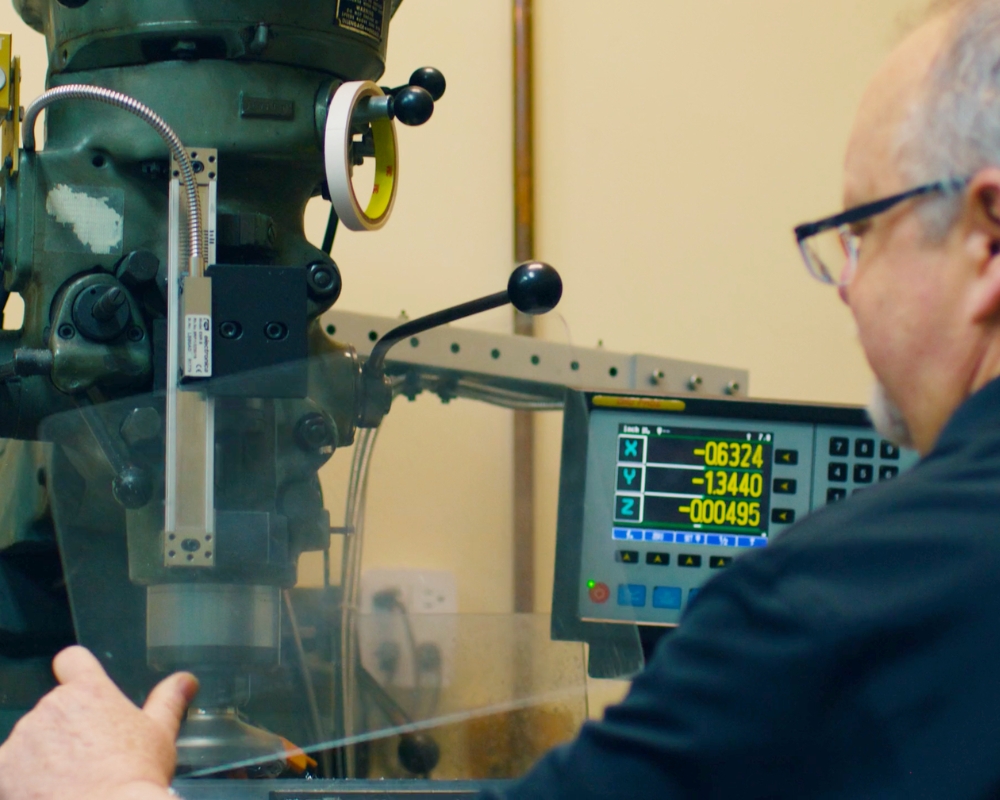
After its existing compressor was overwhelmed with the addition of semiconductor dicing saws and CNC machines, Custom Thermoelectric purchased a 20-HP KRSB belt-drive rotary screw compressor with a larger storage tank, dryers and particulate and coalescing filters.
Things change: You’re moving. Doing an expansion. Changing your lineup of production equipment. Going to a third shift. Even downsizing.
In the rush to accommodate major changes, many customers forget that facility modifications and equipment additions can significantly affect compressed air usage. Demanding more capacity. Requiring higher-quality air. Making a backup or redundancy a necessity.
Failing to account for these changes could adversely affect your operation, potentially causing shutdowns, product losses or inefficiencies.
As a result, you’ll want to assess how your demand profile might change with a facility expansion or closure, addition of new equipment, changing regulations or other major business change.
Let’s walk through the possibilities, starting with a facility expansion.
You’re Expanding
Plant expansions can have a major impact on your system, especially if you’re adding new equipment driven by compressed air.
If you acquire new equipment demanding additional capacity that you have not planned for, you could easily face the following consequences:
- Lower speed. Tools could run slower, not at the recommended RPMs.
- Less power. Tools may not be able to deliver the required torque.
- Lost or damaged products. Depending on your product and process, an underpowered air tool may not be able to perform its task within the allotted time (if at all). Product loss or damage may result.
- Higher costs. The device will take longer to complete its task and waste energy in the process. You may need to scrap lost or damaged products.
- Shorter equipment lifespan. Although most tool damage occurs when the equipment is over-pressurized, there may be more long-term wear and tear, resulting in a shorter lifespan.
- Safety hazards. Any time a tool is operated outside its design parameters, safety is compromised.
Even if the changes do not require additional capacity, a different plant layout could create longer piping runs or pressure drops that could impact your system performance.
In addition, many of our customers have added additional capabilities when they expanded. Building in redundancy. Incorporating variable-speed drives to save energy. And increasing storage, drying and filtering capabilities.

Biltwood Powder Coating was expanding into a second building and needed a reliable source of compressed air. The company replaced an aging compressor with a 20-HP KRSB belt-drive rotary screw air compressor, with a receiver tank and dryer, avoiding downtime that could cost $10,000 per day.
The key point: it’s wise to work with a professional to assess the impact of facility and equipment modifications on your compressed air system.
You might think that doing the opposite and downsizing your facility or equipment lineup would give you more capacity and be less of a problem. Unfortunately, downsizing is as tricky as upsizing.
You’re Downsizing
Perhaps you’re moving part of your operation to another location. Closing a line that is no longer needed. Or eliminating your third shift. That means you have excess compressed air capacity.
At first blush, that might seem like a good thing. More is better, right?
Not so fast. In fact, having too much capacity is as bad as not having enough. Especially in a rotary screw compressor.
The reason? Having extra capacity means your compressor most likely will be starting and stopping constantly.
We call that short cycling, and it causes a lot of problems, including:
- Extra wear and tear on the motor, valves, bearings and other internal parts
- Overheating
- Carryover of moisture and oil
- Wasted energy
- Additional maintenance
- A shorter lifespan
Compressors have completely burned out after only six months of short cycling (also called rapid or fast cycling). It’s basic physics: Manufacturers will tell you that if a 200-HP motor starts and stops more than four times in an hour, it will burn out quickly.
It’s so much of a problem that it’s well worth replacing that “extra-capacity” compressor with one that’s right-sized. In fact, we’ve had customers recoup the additional cost in two years, solely from energy savings. For more information on short cycling, read our blog post, “How Often Should an Air Compressor Cycle?" Or go to our site and use our power savings calculator to get an estimate of your savings.
So, once again, it’s wise to call in your compressed air consultant to guide you through any transitions you need to make.
You may also need to modify your system if you’re adding new equipment or a new shift.
You’re Adding New Equipment or a New Shift
If your company is expanding and adding new machinery to enhance production, you may need to increase the capacity of your compressed air system, especially if it requires high air flow.
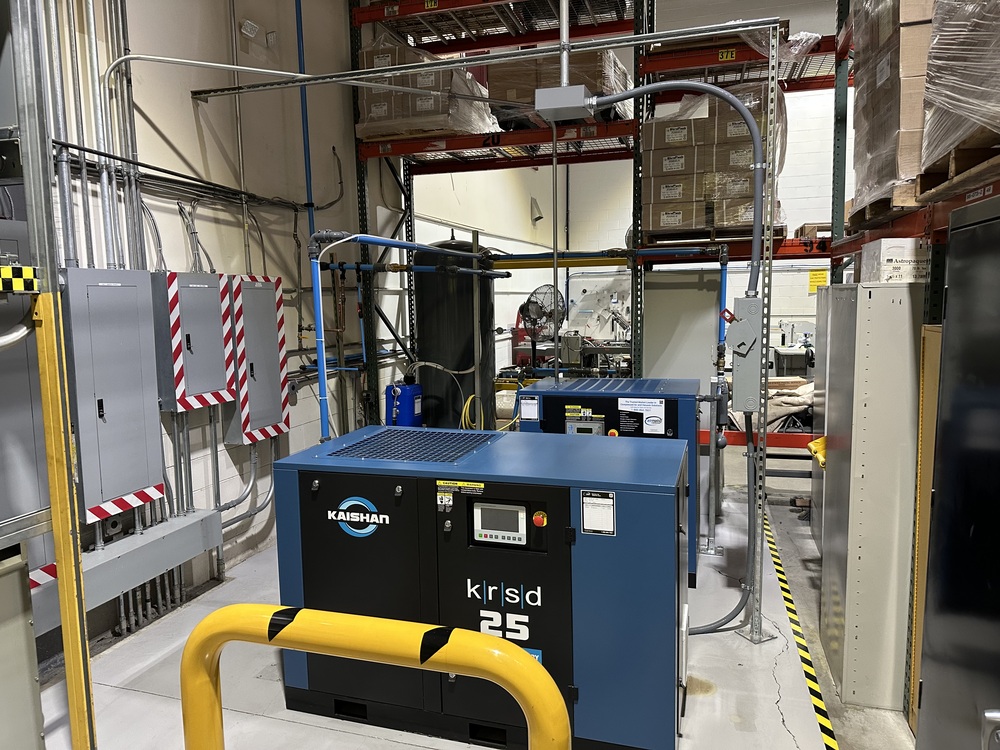
Adams Direct & Media Services added an advanced Canon varioPRINT iX3200 printer, which needed clean air at constant pressure and humidity. The company purchased two Kaishan rotary screw compressors—a 25-HP KRSD direct-drive model with a variable-speed drive and a 20-HP KRSB belt-drive fixed-speed machine as a backup. The two machines are linked, balancing the workload between the compressors and monitoring system performance metrics such as pressure, flow, temperature and electrical consumption.
And while you might be reluctant to recommend adding new compressor capacity when your company is investing in new production equipment, the consequences of not having enough capacity are serious. They’re similar to the low-capacity impacts of expanded production, mentioned previously, including poor performance of (and damage to) end-use equipment, lost or damaged products, higher costs, lower productivity and safety hazards.
You may need to rethink your system, if you’re only relocating equipment, lengthening supply lines or moving storage farther from the tools it serves. Even adding a new shift.
You may even have to deal with changing regulations affecting your industry.
Regulations Are Changing
Regulations covering compressed air systems admittedly change relatively slowly. The most recent compressed air system changes, for instance, were the U.S. Department of Energy’s “Air Compressors—DOE’s Current Regulations,” which became effective at the beginning of 2025.
However, individual industries have other regulations they must follow, especially those involving products consumed by human beings, including:
For more on the regulations impacting these industries, download our white paper, “Oil-Free Air Compressor Buyers’ Guide: Cracking the Code on Class 0 Compressed Air.”
Compressed air systems are also governed by sector-specific regulations in industries such as mining, aerospace, and oil and gas, among others.
Companies in these industries may need to review their systems to ensure they comply with industry-specific regulations. Even state and local governments have requirements to operate within their borders.
Finally, your compressed air system may be impacted by production needs that change seasonally.
Seasonal Changes
- Recreational vehicle manufacturers gear up for the spring selling season.
- Candy manufacturers need to increase production in anticipation of the holidays.
- Even textile manufacturers adjust their output to reflect changes in clothing needs from season to season.
As a result, facility managers may need to account for changes in compressed air use, whether they will have excess or insufficient capacity at different times of the year.
No matter what changes you need to adapt to, it’s a good idea to establish a baseline of compressed air usage.
Start with a Baseline
In today’s business environment, you may not know when or how your company will need to change or adapt. You may not have much advance notice.
As a result, it’s smart to establish your system’s baseline of operations now. Then continue to monitor it, not only to ensure that your system is operating correctly, but also to adapt quickly when changes occur. Because they will come, with or without warning.
You’ll want to track:
- CFM demand
- Pressure levels
- Energy consumption
- Load and run hours
You’ll want to make sure you retain that information to plan for the inevitable changes that will occur. You may also choose to add remote monitoring capability.
As mentioned, you’ll want to have a consultant guide you through these important transitions.
Help in Adapting Compressed Air Systems
“Everything changes except change itself,” so the saying goes. And that’s certainly true of today’s industrial facilities. Especially compressed air systems.
The task that facility managers face is adapting to that change as quickly and efficiently as possible. But, as we indicate above, the way your company adapts to larger facility changes could well determine your company’s success in achieving broader objectives such as reliability, energy efficiency and cost efficiency.
That’s why it’s so important to have the help of a compressed air professional in adapting to your changes in your facility and your business. They’ll probably start with an audit. For more on the value these studies deliver, download our white paper, “How an Air Compressor Audit Can Help You Build Competitive Advantage.”
Key Takeaways
- In the rush to accommodate major changes, many customers forget that facility modifications and equipment additions can significantly affect compressed air usage.
- If your plant expansion or equipment upgrade requires additional compressed air capacity you did not plan for, you could experience poor performance of (and damage to) end-use equipment, lost or damaged products, higher costs, lower productivity and safety hazards.
- Even if you are downsizing, you may need to revise your system to prevent problems associated with short cycling.
- New regulations or seasonal changes in your production may also require that you update your system.
- To be best prepared to adapt to a changing environment, you should establish your system’s baseline of operations.
- When faced with changes, it’s wise to seek help from a trusted compressed air professional.
Local Pros Who Can Help
Kaishan USA works with a nationwide network of independent distributors, who can provide the on-site help and consultation you need to adjust to change.
These factory-trained air compression experts offer expert guidance, faster response times and personalized support tailored to your needs.
Their factory-trained technicians have a deep understanding of industrial applications and help maximize efficiency and minimize downtime. They don't just sell compressors—they build relationships, ensuring you get the right system, reliable service and quick access to parts when you need them most.
A pro you trust can make a huge difference in your long-term success. Find a compressed air professional near you. Or contact us directly.
Further Reading
“How Often Should an Air Compressor Cycle?" More information on the hazards of short cycling. And how to avoid them.
“Oil-Free Air Compressor Buyer’s Guide: Cracking the Code on Class 0 Compressed Air.” A buyer’s guide on providing compressed air that meets the needs of various industries, including food and beverage, healthcare and electronics.
Frequently Asked Questions
Listen to the Podcast Version



When a Small Change Breaks the Air System
Welcome to the show. Jason Reed here with Lisa Saunders. Lisa, picture a shop that adds two CNC machines, maybe a dicing saw, maybe just one more packaging line, and nobody touches the air system because on paper the compressor still looks fine. Then all of a sudden the guys on the floor are saying, “Why are these tools dragging?” That is how this stuff usually shows up -- not as a big dramatic failure, but as a bunch of little ugly symptoms.[curious] The phrase “tools dragging” is the whole story, isn’t it? Because nobody walks in saying, “I believe our system CFM profile has changed.” They say the grinder feels weak, the actuator is slow, the machine isn’t hitting torque, the product quality got weird. It sneaks in through operations, not through theory.
Exactly. And if you’re short on air, the problems stack fast. Lower speed, lower torque, longer cycle times, more scrap, higher energy cost because everything takes longer to do the same job. And the one people skip over is safety. Any time you run a tool outside what it was designed for, you’re rolling dice.
[questioning tone] Let me grab that “longer cycle times” part, because that’s the sneaky cost. If a tool takes, say, 15 seconds instead of 10, nobody panics over five seconds. But multiply that across a shift, across a line, across a month... now your “we didn’t need to upgrade air” decision is eating production.
[matter-of-fact] Right. And people assume the only way to outrun the air system is adding more demand. That’s not true. You can break performance by just changing the layout. Move machines farther away, add longer pipe runs, relocate storage, add a second building -- now you’ve introduced pressure drop where you didn’t have it before.
Wait -- that “second building” example is a good one. Because from a manager’s point of view, they think, “We already own compressed air. We’ll just extend it.” But distance is not free. A longer run can mean the pressure at the tool is not the pressure you thought you had back at the compressor room.
That’s it. The compressor can be doing its job and the end use still starves. I’ve seen plants chase the wrong problem for weeks because the machine operator says the process is unstable, maintenance checks the tool, production blames the machine OEM, and meanwhile the real issue is the air got worse when the facility changed.
[skeptical] And this is where I think people get tripped up by the phrase “we’re only adding one shift.” Only one shift? That can be a massive change. If your demand pattern used to fall off at night and now it doesn’t, your whole operating rhythm changed. Your compressor doesn’t get to live the same life anymore.
Yep. New shift, new machine, expansion, even rearranging the floor -- all of that can change demand, pressure stability, and air quality needs. Especially if the new equipment wants cleaner, drier air at a tighter pressure band. Modern printers, CNC equipment, automation components -- some of that stuff is not forgiving.
[lightly] Compressed air is funny that way. It’s treated like background utility... right up until the background utility starts wrecking the foreground.
What System Thinking Actually Changes
So let’s flip it, because this part surprises people more. Downsizing sounds like good news. You shut down a line, move work out, lose a third shift -- now you’ve got extra capacity. More air than you need. That sounds comfortable. But in a rotary screw setup, “comfortable” can turn into “wrong” pretty fast.[firm] Too much capacity is a real problem. When the compressor is oversized for the way the plant runs NOW, it can start and stop too often. That’s short cycling. And short cycling is hard on motors, valves, bearings -- the whole machine. It wastes energy, creates overheating problems, and can carry over moisture and oil.
“More air than you need” causing moisture and oil carryover -- that’s the part that sounds backwards to people. They hear extra capacity and think cushion. But what you’re saying is the machine never settles into a healthy operating pattern.
Exactly. Rotary screws like to run properly, not bounce in and out all day. If a big motor is starting and stopping over and over, you’re chewing it up. I mean, manufacturers will flat-out warn against frequent starts. This isn’t some theoretical best practice thing. Burn up a motor and now your “free extra capacity” gets real expensive.
[reflective] So the better question isn’t, “Do we have enough air?” It’s, “Does this system match how we actually operate today?” Because “today” might mean fewer lines, variable demand, one busy season, one slow season, or different shifts than you had two years ago.
That’s the right question. And sometimes the answer is you need a smaller machine. Sometimes it’s staging compressors differently. Sometimes it’s adding storage. Sometimes it’s looking at variable-speed drive technology because demand isn’t flat anymore. But you can’t answer any of that by eyeballing the nameplate and guessing.
[responds quickly] Okay, let me say it back and you tell me where I’m wrong. Undersized hurts because the plant can’t do the work. Oversized hurts because the compressor can’t do its own work efficiently. Different failure, same result: wasted money and reliability problems.
[chuckles] That’s actually clean. Yeah. One starves production, the other abuses the air system. And both usually happen after change. Not during steady state -- after change.
Which brings us to the boring answer that is, annoyingly, the smart answer: baseline the system before you need the answer. Track actual CFM demand, pressure, energy use, load hours, run hours, and pressure drops. Not once. Ongoing.
[matter-of-fact] Baseline is everything. If you know what normal looks like, then when the plant adds equipment or cuts a shift or starts missing pressure at the far end of the building, you’ve got something to compare against. Without that, every change becomes a guessing contest.
And baseline also tells you when the issue is not capacity alone. Maybe regulations changed and now air quality matters more. Food, beverage, pharma, healthcare, electronics -- those environments can force you to rethink filtration, drying, maybe even whether your air approach is appropriate for the product.
Right. And then there’s seasonality. Candy plants ramp before the holidays. RV manufacturers gear up for spring. Textile output can shift with seasonal demand. So the system that looked perfect in February might be wrong in October. That’s why I like data that covers real operating periods -- not just one clean week.
[curious] And when that baseline shows the plant is changing, the fixes are not always “buy more compressor.” It might be more storage. Better drying. Better particulate and coalescing filtration. A backup machine for redundancy. A VFD because your demand swings all over the place. Or just fixing the layout so the pressure drop isn’t killing you at the far end.
Yep. Compressed air problems love to dress up as simple compressor problems. Sometimes they are. A lot of times they’re system problems. Storage, controls, piping, filtration, drying, backup strategy -- it all matters once the operation changes.
[softly] I think that’s the real tension here. Change at a plant usually feels urgent. New line, new building, new schedule, new compliance requirement. Everybody moves fast. And compressed air gets treated like something you can sort out later.
[serious] And later is when the downtime shows up. The best time to prepare for a production change is before it lands on the floor. Because once people are standing around a machine that won’t run right, you’re not adapting anymore -- you’re recovering.
[calm] That’s the line. Prepare before the change, or pay during it.
I’ll take that. See you next time.