
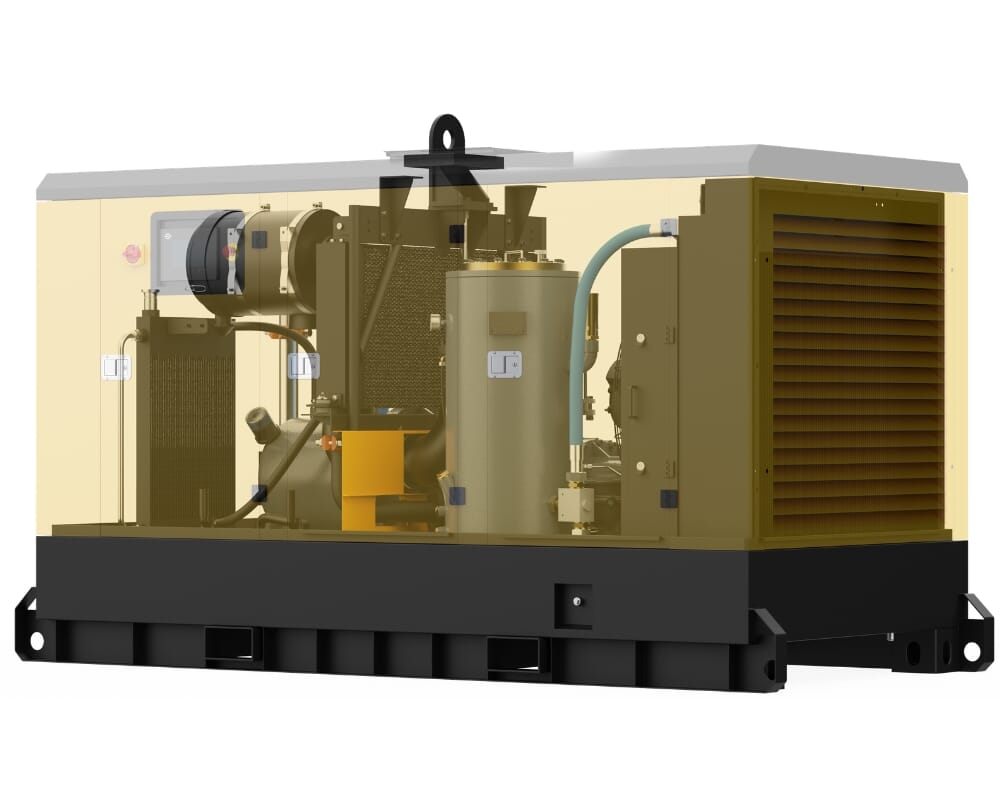
For decades, diesel models have been the go-to option for rental companies providing their customers with replacement compressed air, whether for a planned maintenance window or a sudden shutdown.
Everyone recognizes the limitations of diesel compressors, including the following:
- Constant refueling
- Operating costs
- Environmental concerns
- Maintenance
Unfortunately, there haven’t been many good alternatives for rental companies in the past. (We go into more detail in our blog post, “Electric Portable Air Compressors: A Smart Alternative to Diesel.”)
Now, however, there’s another option—an electric portable air compressor that delivers the air customers need without the diesel headaches. No fuel runs. No exhaust. No DEF. No flat tires.
And it comes just in time, as the $6 billion global industrial air compressor rental market is positioned for growth. It’s expected to grow at a combined annual growth rate of 6%, reaching $10.8 billion in 2033, according to Grand View Research. Portable compressors account for 65.5% of the revenue.
In fact, the research group Fact MR. added that “Industrial processing leadership programs and operational excellence initiatives are driving adoption of precision-engineered compressed air rental solutions that support advanced project systems and performance optimization.”
And we’re here to help. With an alternative that has the reliability and performance the industry has come to expect from rotary screw compressors. And one of the world leaders in compressed air technology.
The Kaishan KPE: A Portable Electric Air Compressor Designed for Rental
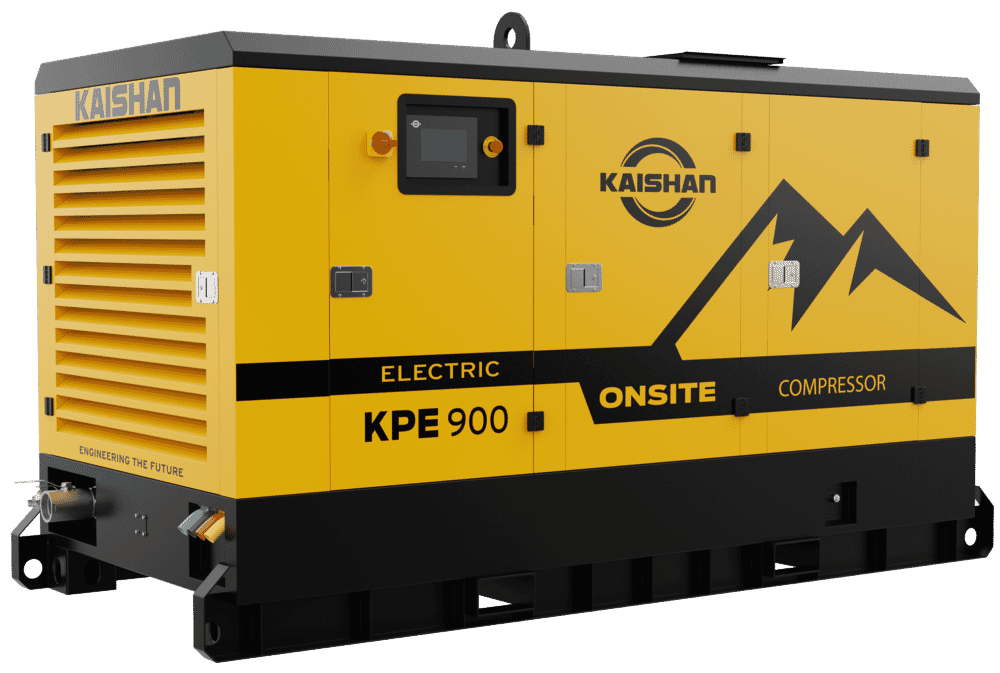
Kaishan’s KPE electric portable air compressor finally delivers the industrial air compressor rental market a portable compressor it can rely on for high utilization and great return on investment.
The KPE electric portable air compressor eliminates fuel logistics and diesel exhaust, cuts maintenance costs and fits in almost anywhere in your customer’s facility, indoors or out. Without the diesel.
It’s engineered for versatility, durability and ease of use in industrial environments and designed for the rental market from the ground up. Ensuring rental companies a higher utilization rate with a smaller investment.
Fewer Machines, Less Capital Required
Currently, a rental company needs a fleet of diesel compressors to meet the pressures (PSI) and flows (CFM) their customers need.
Now, however, with just a handful of Kaishan KPEs, you can service almost all customer needs with far fewer machines.
Here’s how: the KPE has a glycol-cooled variable-speed drive that allows a single KPE machine to cover a much wider capacity range.
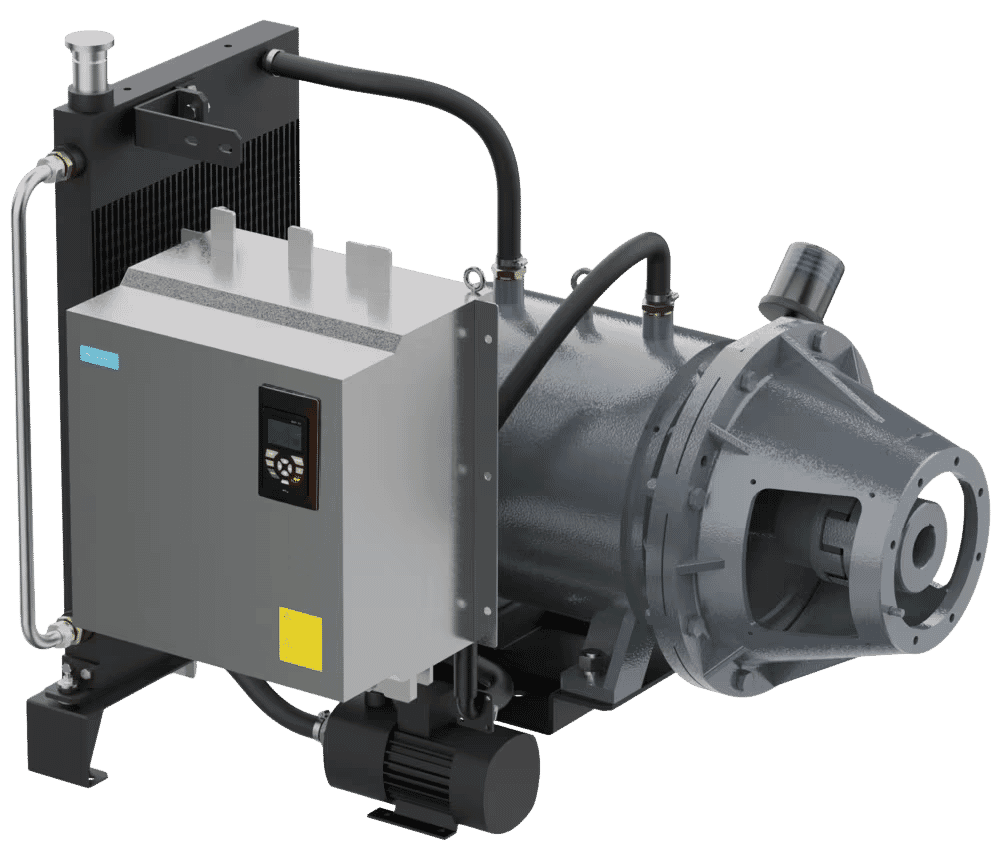
The KPE can operate almost anywhere in your plant, because it relies on an oversized glycol cooling system to cool both the motor and the variable-speed drive.
The KPE-900, for instance, has a wider pressure range than almost any portable currently on the market. It can generate pressures from 80 PSI to 190 PSI, which would cover most industrial applications. Flows range from 623 CFM to 834 CFM.
As a result, one KPE can replace multiple diesel machines.
Greater Versatility, Higher Utilization Rate
The KPE’s versatility means each machine can serve a wider range of customer needs. So, you don’t need to stock multiple machine sizes to meet the full range of needs. And you can book each machine you stock to (almost) full capacity.
Fits in Easily
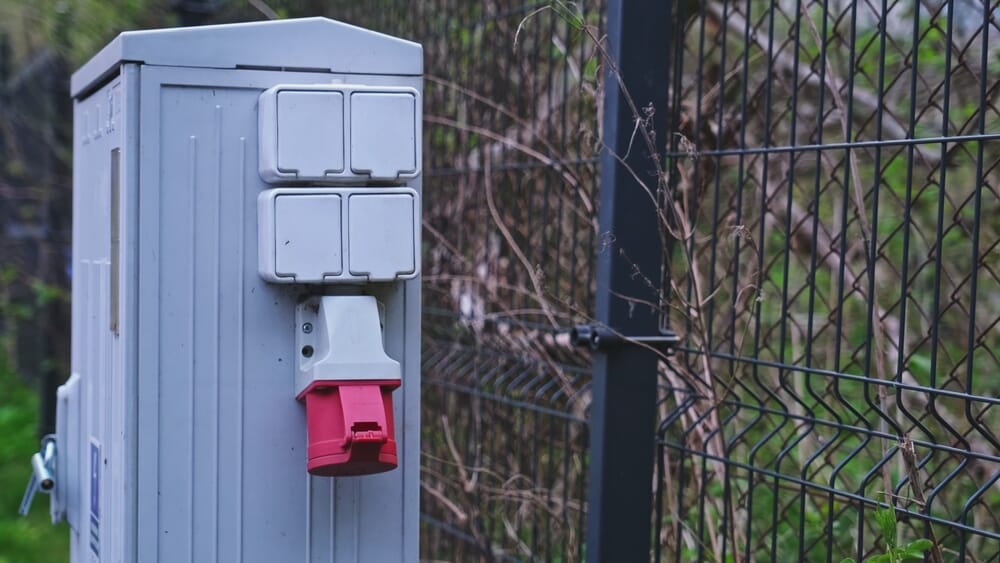
If your customer has a stationary air compressor in place, they probably already have the 460-volt power infrastructure to run an electric portable. No elaborate wiring or improvisation needed.
Goes Anywhere
The KPE can handle almost any environment, no matter how dirty or dusty. Unlike other portable electrics with traditional VSDs that can’t handle harsh environments, the KPE has closed-loop liquid cooling that isolates critical components from dusty, abrasive air streams and stabilizes temperatures under varying loads.
So you get the versatile range and performance of a VSD without the risk of heat exchanger clogging. The liquid cooling circuit cools both the drive and the motor.
Built for Harsh Conditions
The KPE carries a NEMA 4 rating for protection against windblown dust and water spray, expanding your placement options and providing peace of mind in unpredictable weather. It is truly a NEMA 4 portable compressor.
With our integrated cold-weather package, the KPE can handle most outside environments in the U.S., including cold New England winters.
Great Return on Your Investment
Rental companies will find that the quick turnarounds, portability, reliability and maintainability will all deliver an attractive ROI.
Quick Turnaround
When a customer returns the unit, you can turn it around quickly, compared to other alternatives. It requires much less downtime to reservice it and reship it to the next customer. You can even do the required service on-site.
Truly Portable
The KPE has been designed to move:
- It has vibration isolators on coolers and other major components to minimize vibration-related stress.
- It has an internal latch to keep the compressor from opening during transport.
- It can be equipped with an optional DOT-approved trailer for over-the-road transport.
Reliable, Durable
The KPE’s “SKY” series direct-drive airends use four SKF discharge bearings to absorb radial and axial loads.
As a result, you get increased load-carrying capacity and longer bearing life under all operating conditions.
In addition, the KPE has corrosion-free, 316 stainless steel control tubing, which will outlast other materials such as nylon, copper or mild steel.
Easy to Maintain
The KPE was also engineered with maintenance in mind. You can access all key components easily, and all the drain ports are plumbed to the drain. So, if you need to drain the oil, the moisture, the moisture traps or even the glycol system, everything is plumbed through the drain for easy, quick access.
Other labor-saving maintenance features include:
- Lubrication. Dual automatic greasers ensure front and rear motor bearings are lubricated.
- Separator maintenance. A latch on top of the unit lets you pull out the separator elements.
- Cleaning. To blow out the coolers, you open a panel.
- Fluid refills. You can easily refill the glycol via a cap on top of the unit.
Low Cost of Components and Service
Kaishan USA is known for pricing parts and components competitively. We want all our customers to use our original parts to maintain warranty eligibility.
Five-Year Warranty
All KPE portable electric models have an unmatched five-year warranty on the airend, main motor and all major components, including separator tank, heat exchangers, main motor VFD and oil hoses and pipes. There is a one-year warranty on the entire package.
Safe and Secure
All doors are lockable, and there is a disconnect switch on the control panel.
Advanced Communications
The KPE comes with standard Modbus communication, so you can connect your own Internet of Things or fleet management software to track load hours and other key parameters.
A Portable Electric Compressor Your Customers Will Love
In addition to eliminating the hassles of diesel fumes and refueling, the KPE has a range of features your customers will find beneficial.
Reduced Energy Use
With the VSD, the KPE draws the fewest amps to deliver the air your customers need.
In addition, running at the speed the application requires reduces energy waste and mechanical wear. That means fewer thermal trips, fewer nuisance alarms and a smoother day for your crew.
Clean and Quiet
Unlike most other rental units, the KPE has several features designed to give you clean, dry air:
- A coalescing filter
- A moisture trap
- An aftercooler
Most major manufacturers do not include an aftercooler in similar units. Without one, the air will slam into your dryer or your downstream processes, bringing in hot air that may also contain oil or moisture.
The air filter also has a breather or burp valve that discharges dust or particulates.
In addition, the KPE is also much quieter than many other units, coming in at less than 76 dBA, about the level of a vacuum cleaner.
Easy to Set Up and Use
It has intuitive controls without unnecessary complexity. You simply connect power to the KPE’s CamLok™ connectors, attach your main air line and turn it on. No elaborate wiring or improvisation needed.
There is also an auxiliary Chicago-style coupling that allows you to quickly connect a pneumatic operation or air tool.
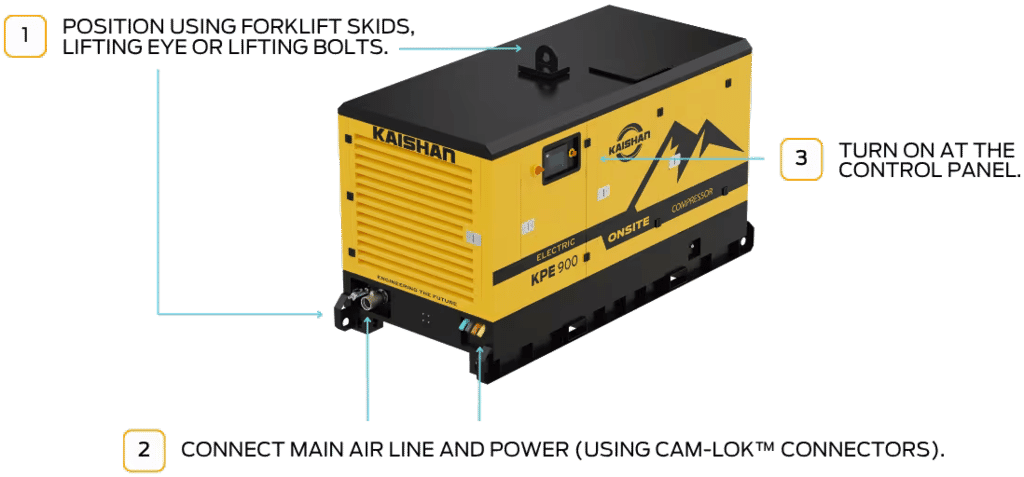
Setting up a Kaishan KPE portable electric air compressor is as easy as 1-2-3.
Easy to Move
If your customer wants to move it to another location, the KPE is ready. It has:
- Forklift skids underneath
- A lifting eye on top
- Lifting bolts on the side
Drag it, lift it or hoist it with a crane. KPE goes where you need it. It can be configured with a skid and drag bar for on-site movement.
As mentioned, your customer can right-size the pressure (PSI) and flow (CFM) on the fly rather than swapping machines. That reduces transport and scheduling headaches for maintenance teams.
Battery-Driven Portable Available
Kaishan also offers the KPB, a battery-operated portable electric compressor with a lithium iron phosphate battery, the same battery used in forklifts.
It has a charge time of roughly two hours, allowing about three and a half hours of runtime. The lower the pressure, the more run hours you get.
The KPB is the only electric portable on the market with a cutting-edge permanent-magnet motor, which delivers some of the highest efficiencies currently available.
It’s perfect for smaller, point-of-use applications and provides clean, green energy.
A New Opportunity for Rental Companies
With the KPE, rental companies can offer industrial customers the quieter, cleaner, lower-cost temporary air they have been asking for.
Electric portables provide a cost-effective, energy-efficient, quiet and safer option for planned outages, new equipment startups, production spikes and emergency backups.
Key Takeaways
- The $6 billion global air compressor rental market is expected to grow at a combined annual growth rate of 6%, reaching $10.8 billion in 2033.
- For decades, diesel compressors have been the go-to option for rental companies. Unfortunately, they have many limitations, including high operating costs, environmental concerns, maintenance and the need for constant refueling.
- Kaishan’s KPE electric portable air compressor finally delivers the industrial air compressor rental market a portable compressor they can rely on for high utilization and great return on investment.
- A rental company currently needs a fleet of diesel compressors to meet the pressures and flows their customers need. However, with just a handful of Kaishan KPEs, you can meet almost all customer needs with far fewer machines.
- Rental companies will find that quick turnarounds, portability, reliability and maintainability will all yield an attractive ROI.
Let Us Help
Portable electric air compressors offer a new level of reliability and backup support for compressed air users.
If you and your customers want to explore the opportunities that electric portables can offer, get in touch with the experts at Kaishan. Contact us today.
Further Reading
“Electric Portable Air Compressors: A Smart Alternative to Diesel.” We provide more details on the KPE portable electric air compressor.
Frequently Asked Questions
Before purchasing, have your electrical team assess your facility's current capacity and determine whether upgrades are necessary. If the rental compressor is the same size as your existing compressor, it can use the same power setup, allowing most facilities to support a portable electric compressor without major infrastructure investment. However, if your electrical panel is at capacity, you may need to upgrade service, which is a one-time cost that typically pays for itself through energy savings within a few years. It's worth having this conversation early in the evaluation process so there are no surprises during installation.
The operating cost advantage of electric compressors is significant. Electric units typically consume 20 to 30 percent less energy than comparable diesel models, resulting in substantial savings on utility bills. For example, a 1500 cfm diesel compressor uses 24 gallons of diesel per hour or 576 gallons per day. At $5 per gallon, the cost would be $2,880 per day. An electric unit at 10 cents per kWh would be about $700 of electricity per day.
Beyond energy consumption, consider these factors:
- Fuel costs: Diesel requires ongoing refueling, storage and management. Electric compressors eliminate these expenses.
- Maintenance: Electric units have fewer moving parts and require less routine service. No engine oil changes, fuel filters or spark plugs means lower maintenance labor costs.
- Downtime: Fewer breakdowns and simpler repairs mean less unplanned downtime, which translates to improved productivity.
The exact ROI timeline varies by facility, but three to five years is typical for payback on the higher initial investment.
Portable electric compressors are designed for straightforward maintenance that your existing maintenance staff can handle. Typical service intervals run every 500 to 1,000 operating hours, depending on the model and application. Here's what's typically involved:
- Air filter replacement: Every 500 to 1,000 hours
- Oil level checks (for oil-flooded models): Monthly or as specified by the manufacturer
- Belt inspections: Every 500 hours or as needed
- General visual inspection: Before each use, check for obvious issues
Unlike diesel compressors, electric units don't require fuel system maintenance or complex emissions system work. Most maintenance tasks require only basic hand tools and minimal training. Many manufacturers provide straightforward maintenance manuals and online resources to guide your team through routine care.
Startup time is virtually instantaneous. Unlike diesel units that may require warm-up time, electric compressors are ready to deliver full output seconds after being switched on. This rapid response is critical in backup scenarios where every second of downtime impacts productivity and costs money.
For optimal backup performance, position your portable unit close to your critical pneumatic tools and processes. Keep it connected to your electrical supply so it's ready to activate immediately. Many facilities integrate their backup compressor with their primary system using check valves and regulators, creating a seamless transition when needed.
Yes, several incentives and certifications can enhance the financial case for investing in portable electric compressors:
- Energy Star certification: Many manufacturers produce Energy Star-certified portable electric compressors, which qualify for utility rebates in some regions.
- Tax incentives: Some jurisdictions offer tax credits or deductions for businesses investing in energy-efficient equipment or equipment that reduces emissions.
- Utility rebates: Contact your local utility company to ask about rebate programs for energy-efficient compressed air equipment. Many utilities actively encourage businesses to upgrade to more efficient systems.
- Environmental grants: Depending on your location and industry, there may be grants or incentives available to facilities that reduce their carbon footprint or emissions.
Before finalizing your purchase decision, spend 30 minutes researching incentives available in your area. The rebates and tax credits you discover could significantly improve your ROI timeline and make the investment even more attractive.
Determining the right CFM rating requires understanding your application and air consumption patterns. Here's how to approach it:
- Identify your pneumatic tools: List all the tools and equipment that will use compressed air from the portable compressor.
- Check tool specifications: Each pneumatic tool has a CFM requirement, typically listed on the tool or in the manufacturer's documentation.
- Add up total consumption: Sum the CFM requirements of all tools that will operate simultaneously. This is your minimum CFM requirement.
- Add a buffer: Industry best practice suggests adding 10 to 20 percent to your calculated requirement to account for pressure drop, future expansion and inefficiencies. This ensures your compressor isn't running constantly at maximum capacity.
- Consider duty cycle: If you're running tools continuously, size accordingly. If usage is intermittent, you may be able to select a slightly smaller unit.
For example, if your tools require a combined 300 CFM, add a 15-20 percent buffer and select a 345-360 CFM compressor. Don't undersize or oversize the unit. Undersizing creates bottlenecks; oversizing wastes energy and money. If you're not sure, ask your compressed air professional to conduct an air audit.
Yes, portability is one of the key advantages of these units. You can relocate a portable electric compressor to different areas of your facility as needs change. However, there are some practical considerations:
- Electrical connections: Each location needs adequate electrical infrastructure. You may need to install dedicated circuits or outlets at different locations, which requires planning and potentially some electrical work.
- Compressed air piping: If you want to integrate the compressor into your facility's main compressed air system across multiple locations, you'll need flexible hoses or quick-connect fittings for easy setup and teardown.
- Floor space: Ensure adequate space at each location for the compressor unit itself, plus clearance around it for airflow and maintenance access.
- Vibration isolation: Portable compressors generate vibration and noise. Consider using vibration isolation pads or mounts, especially if the compressor will be positioned near workstations.
Many facilities deploy portable electric compressors as either dedicated backup units (stationary) or true portable units that move between applications as needed. The flexibility to relocate is valuable, but planning ensures smooth transitions and optimal performance.
Listen to the Podcast Version


The Diesel Dilemma and the Electric Shift
So, I- I was talking to a fleet manager last week, and he- he was telling me that on some of these big shutdown jobs, they literally have one guy whose entire, like, sole job is just driving around in a truck with a fuel tank, refilling diesel compressors. All day. Just- just endless fuel runs.Refilling diesel... wait, seriously? One entire person just dedicated to, to keeping the things fed? That- that sounds incredibly tedious, not to mention the- the cost of it.
Oh, the math is- is honestly brutal. Think about it. A big fifteen-hundred CFM diesel compressor burns, what, maybe twenty-four gallons of diesel an hour? At five bucks a gallon, you are looking at- at twenty-eight hundred and eighty dollars a day. Just in fuel. Per machine.
Twenty-eight hundred... eighty? A day? Wow, okay, that- that is a massive number. Especially when you compare it to running an electric unit. I mean, even at ten cents a kilowatt-hour, an electric machine of the same size is only going to cost around seven hundred dollars a day to run. That is over two thousand dollars in savings, Jason. Every single day.
Exactly! And that is before you even touch the- the maintenance headaches. No diesel engine means no fuel filters, no oil changes on the- the engine side, no- no diesel exhaust fluid, none of that. It- it- it is why the rental market is absolutely turning on its head right now. There is this huge pivot happening.
Right, and you can see it in the data. The- the global industrial air compressor rental market is projected to hit, uh, ten point eight billion by 2033. Ten point eight billion! And get this, portable compressors make up over sixty-five percent of that revenue. So the demand is- it is definitely shifting away from those noisy, smoky diesel boxes.
Well, it makes sense. Plants have these massive operational excellence programs now, right? They want cleaner, quieter, more efficient systems. But historically, if you needed temporary high-capacity air, you- you basically had to take the diesel option. There just was not a- a reliable electric portable that could actually keep up with industrial demand.
Because people are used to the reliability of permanent, stationary rotary screw air compressors inside the plant, right? They expect that same heavy-duty, continuous-duty cycle, but they need it on wheels so they can wheel it in for a maintenance shutdown or an emergency backup.
Right, but- but you couldn't just stick a standard plant compressor on a trailer and drag it outside into a muddy, dusty rental yard. The- the electronics would melt, or the VSD would clog up with- with abrasive dust in about five minutes. So, the engineers had to find a way to make these electric portables actually survive the- the real world.
The Tech Making Portability Practical
So, okay, how did they actually solve that? Because a- a variable speed drive, a VSD, is incredibly sensitive to- to dust and heat, right? How do you keep it from clogging up in a dirty industrial environment?This is the- the really cool part. Instead of relying on standard air cooling for the- the electronics, these new-generation machines use a closed-loop liquid cooling system. Basically, they run glycol through the motor and the VSD. It isolates the critical electrical components completely from the outside air stream.
Oh, so the dusty, dirty outside air never actually touches the- the sensitive bits of the drive? It is just- it is sealed up, and the glycol- glycol loop carries the heat away to an oversized radiator?
Exactly. And because it is liquid-cooled, you can run it in a- a NEMA four environment. Which means it is rated for windblown dust, rain, water spray... you can park it outdoors in a New England winter or a Texas summer, and it just- it just runs. No- no nuisance thermal trips.
NEMA four is huge for rental companies. It means they do not have to worry about where the customer is placing the unit. But what about the- the pressure ranges? Usually, with diesel, you have to- you have to rent a specific machine for high pressure and a different one for low pressure, right?
Usually, yes. But with a liquid-cooled VSD, you get this massive operating range. Take a typical nine-hundred CFM unit. It can dial in anywhere from eighty PSI all the way up to one hundred and ninety PSI. That covers almost every industrial application you can think of. So, instead of a rental company stocking five different diesel models, they can keep just- just a handful of these electrics and cover the same exact range of flows and pressures.
That is- that is a total game-changer for utilization rates. They need fewer machines in their fleet to meet the same customer demands. And for the customer, it is just... you plug it into their existing three-phase power, connect the air line, and you are done. No diesel fumes next to the- the air intake.
Yeah, and they are quiet, too. Under seventy-six decibels, which is like... what, a household vacuum cleaner? Compare that to a screaming diesel engine. It completely changes the environment on a job site.
Wait, what about sites that do not have easy access to three-phase power? Is there an option for them, or are they still stuck with diesel?
Well, there is actually a pretty wild frontier opening up with battery-powered portables now. They are starting to use lithium iron phosphate batteries—the same heavy-duty stuff you find in forklifts—combined with permanent-magnet motors.
Lithium iron phosphate... so you can charge it up and run it completely cord-free? How- how much runtime are we talking about?
You get about a two-hour charge time, which gives you roughly three and a half hours of runtime depending on the pressure. And since it uses a permanent-magnet motor, the- the efficiency is off the charts. It is perfect for smaller, point-of-use jobs where you need clean, quiet, temporary air, but you do not want to run cables or burn fuel.
It really feels like we are seeing the end of the diesel-only era for portable air. The tech has finally caught up to what the industry actually needs. Well, I think that is a wrap for today. Thanks for the breakdown, Jason.
Anytime, Lisa. Talk to you next time.