

Compressed air systems are one of the safest industrial sources when properly operated and maintained.
But you must treat them with respect. After all, they store energy at pressures that can injure workers. They generate heat that can ignite. They move parts that can catch a hand. And they produce air that, in the wrong conditions, can contaminate a product that reaches a patient or a consumer.
Three important things to note, no matter which type of compressor you’re operating:
- Every compressor type has inherent safety advantages and inherent hazards.
- Maintenance is not just an efficiency strategy; it’s a safety strategy.
- The safest compressor is the one matched to the application and maintained by someone who pays attention to it. Maybe even cares.
Let’s start with what “safety” actually covers.
What Safety Means in Compressed Air
Most plant managers think of compressor safety as not getting hurt by the machine. That’s a great start and, of course, a worthy goal. But it’s not enough. A compressed air system is so much more than a machine sitting in your plant, giving safety three distinct dimensions:
- Operator safety. Compressed air systems have hot surfaces, moving parts, noise exposure and electrical hazards. Think OSHA, with guarding, PPE, ventilation and lockout/tagout. It’s the most visible safety layer, and most plants manage it well. As they should.
- Environmental hazards. Compressors combine heat, pressure and lubricant. When oil degrades at high temperatures, it forms carbon buildup in discharge lines. Also watch for airborne contaminants like those you would find in a sawmill or flour facility. Or the gaseous, solid or liquid fuel sources in process environments.
- Product safety. Your compressor itself can be a contamination source. Oil carryover into the airstream can contaminate food, pharmaceuticals, electronics and medical air, extending safety risks beyond the compressor room to end users, patients and consumers.
Every compressor type handles these three categories differently. The right choice depends on your application. And what keeps your safety manager up at night.
The Three Industrial Workhorses
As mentioned, the three main types of compressors each have strengths and weaknesses in the safety realm. We’ll review all three, starting with reciprocating compressors.
Reciprocating Compressors: Hot Heads, Hot Pipes and the Belt Guard Nobody Puts Back
The reciprocating compressor runs hot. Cylinder heads are exposed, and discharge lines carry air at temperatures that can degrade oil and form carbon buildup. Run it long enough at high temperature, and that carbon may build up in the discharge line. That’s a documented hazard.
In addition, probably 95% or more of recips are belt-driven. That means moving parts and guards: The good news is that guarding is installed before the compressor leaves the factory. The bad news is what happens after the first service call: a mechanic goes through the hassle of removing the belt guard to replace a belt. When the job’s done, the mechanic asks himself, “Why am I going to put it back on? I’m not going to stick my fingers in there.” So, the guard goes on the shelf and stays there. Yet another avoidable safety risk.
Two-stage recips are a little safer, with a simple, serviceable design.
The biggest safety risk on a recip is overheating from neglect. Keep it clean, especially in dusty environments like sawmills, where sawdust can build up on a machine. And do the basics: Change the oil. Replace the filters. Watch the duty cycle.
A well-maintained recip is a safe machine. A neglected one, not so much.
Oil-Flooded Rotary Screw Compressors: Safe When Maintained
An oil-flooded rotary screw compressor is safe when it’s well maintained. The package is enclosed, which helps with noise and protects passersby from hot surfaces. ASME relief valves and controller-based pressure shutdowns provide layered protection against over-pressurization.
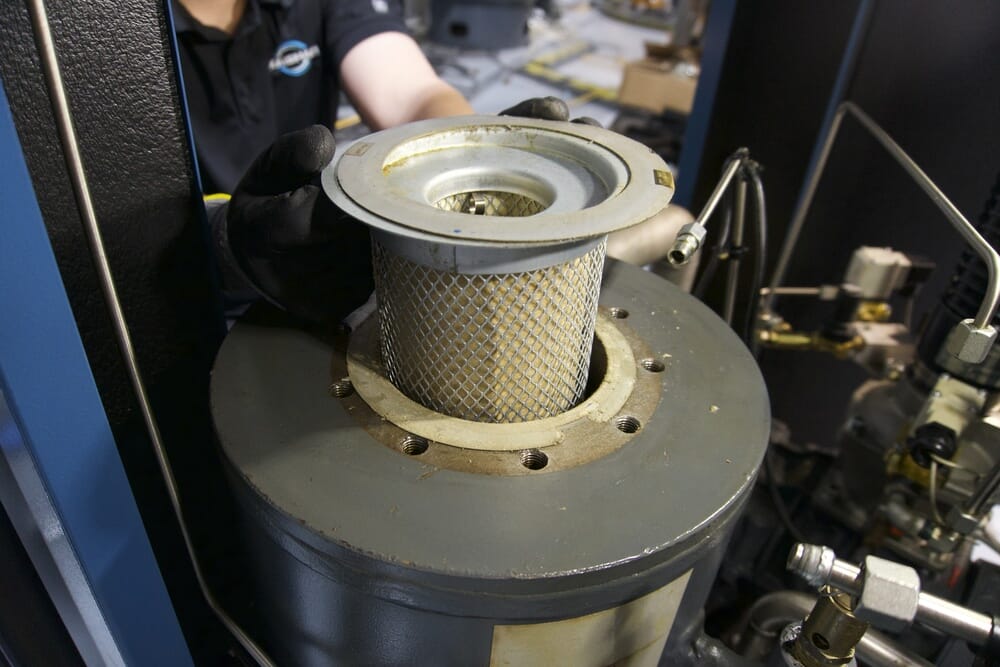
But maintenance is critical. The oil injection system, which keeps discharge temperatures lower, needs regular service. If you don’t keep the separator element clean, change the oil and maintain the oil separator tank, you may have problems.
The fix is straightforward: keep the separator element properly grounded, keep it clean, use fresh oil, monitor oil condition and keep heat exchangers clean (a critical operation in maintaining low oil temperature). None of that is expensive. All of it is safety.
It’s all super-cheap insurance.
For more on the maintenance practices that keep a rotary screw safe, see our rotary screw compressor maintenance guide.
Centrifugal Compressors: High Speed, High Stakes
A centrifugal air compressor delivers oil-free air, so product safety is built in. There’s no oil in the airstream, so there’s no contamination risk from the compressor.
Vibration is low compared to large reciprocating machines—no five-foot-diameter pistons shaking the foundation. Smooth operation by design.
It is important to watch, monitor, and trend vibration to forecast maintenance and to prevent a failure. So, make sure your team doesn’t ignore the built-in vibration sensors and shutdown alarms.
The other hazard is surge, the minimum flow below which a centrifugal cannot operate without stalling. When a centrifugal crosses the surge line, the event is instantaneous. Not a gradual buildup. The blow-off valve opens, and you get an air pop that can startle anyone standing nearby. The loud, jarring noise makes hearing protection a must around centrifugal compressors, especially during surge events.
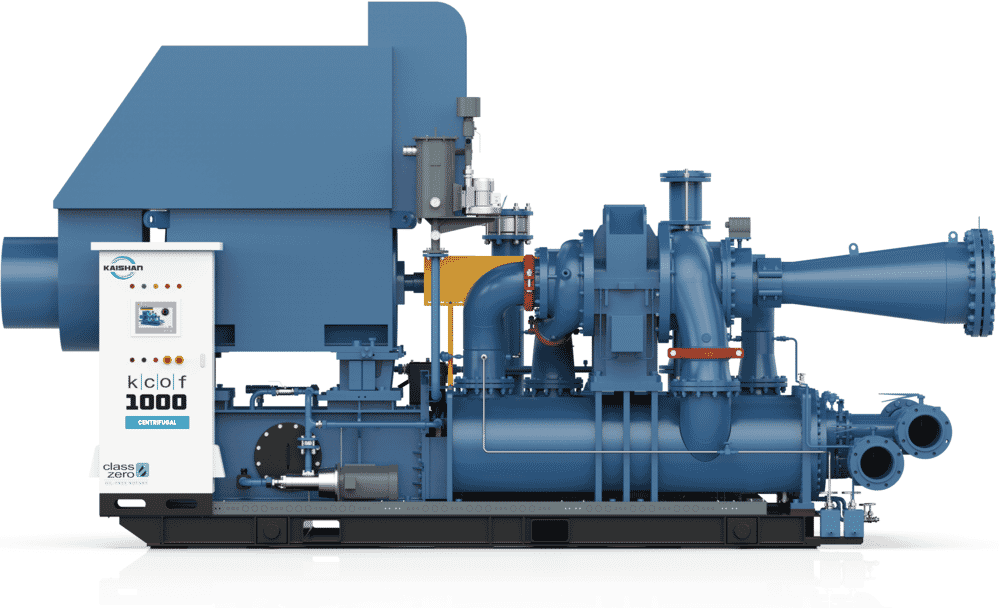
Kaishan’s KCOF centrifugal compressor handles surge better than most due to its robust gears, thrust collars and flexible-pad bearings. So, keep an eye on surge controls, and keep your vibration monitoring calibrated.
And don’t keep operating with a bad sensor even though the machine still runs. Instrumentation is critical safety equipment on a centrifugal.
| Type | Reciprocating | Rotary Screw | Oil-Free Screw | Centrifugal |
|---|---|---|---|---|
| Universal Issues |
|
|||
| Specific Issues |
|
|
|
|
Two Variations Worth Knowing
Scroll and oil-free compressors are important additions to our safety story.
Scroll Compressors: The Safest on the List
If there’s a winner for pure safety, it’s the scroll compressor. Since most scroll compressors are oil-free, they pose no carbon buildup risk and have no separator or oil in the condensate to manage.
Additionally, it is:
- Quiet enough for dental offices and clinics
- Low-vibration
- Enclosed, with no exposed hot surfaces or pinch points
The safety profile is so good that scroll compressors are the default choice for smaller areas like doctors’ and dentists’ offices. They’re safe around people who aren’t traditional compressor air users.
Part of their positive safety profile stems from the fact that scrolls generally are small. Too small for most industrial applications.
Oil-Free Rotary Screw Compressors: No Oil, No Carbon, Hotter Running
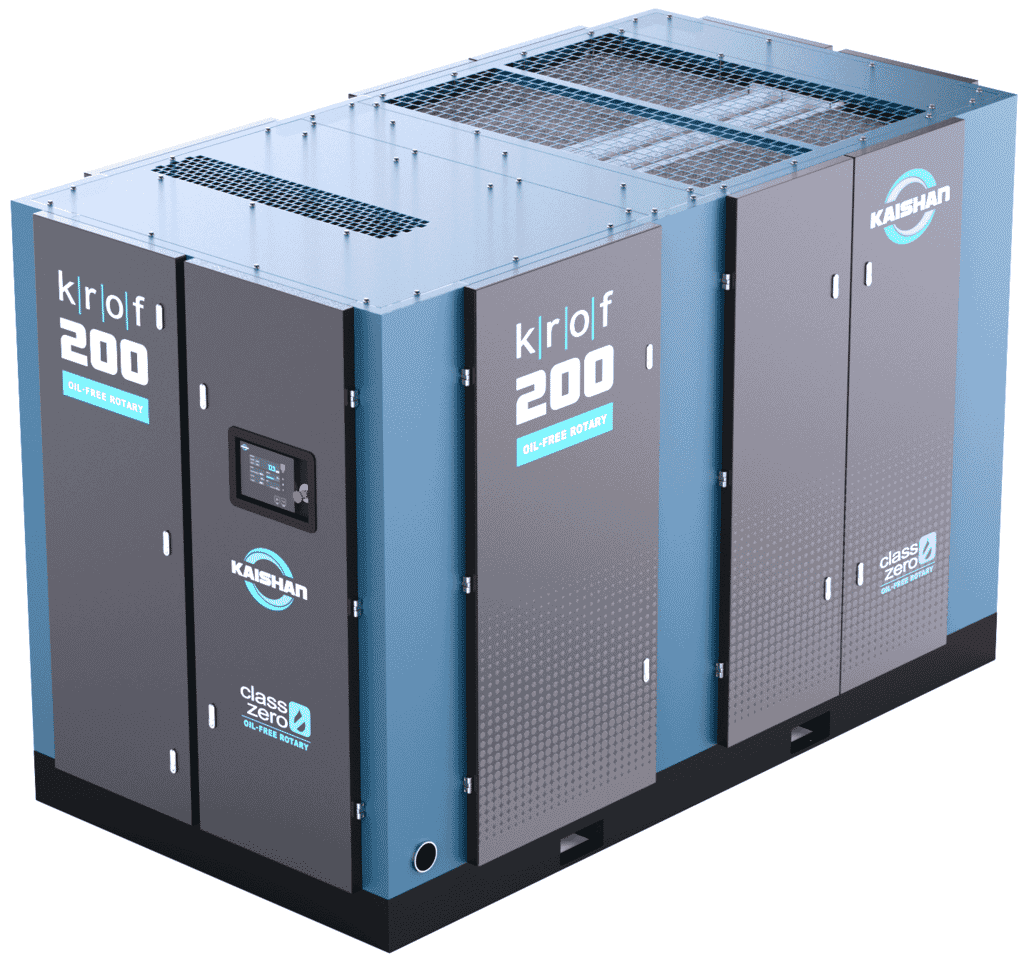
Oil-free rotary screws such as Kaishan’s KROF two-stage oil-free compressor don’t inject oil into the compression chamber.
No oil means no carbon buildup, no oil mist and no separator. That’s a meaningful safety advantage in any facility. Condensate disposal also becomes easier.
The trade-off is heat. Without oil to carry heat away from the compression chamber, everything runs hotter. The pipes inside the package are hotter than in an oil-flooded machine. But the packages are enclosed, so hot surfaces are protected from casual contact. Interstage and discharge ASME relief valves provide physical over-pressurization protection in addition to the controller’s digital shutdowns.
The Single Biggest Safety Move You Can Make: Change the Oil.
The most important maintenance task on any rotating equipment—from compressors, pumps, and motors to your car and your lawnmower—is simple: change the oil.
It’s also the single biggest safety item. It will also extend the life of any piece of rotating equipment.
Oil that degrades at high temperature forms carbon. Carbon builds up in discharge lines and becomes a flashpoint.
In addition, degraded oil loses its lubricating properties. Bearings fail. Airends fail. Almost anything bad in a compressor starts with the oil. You’ll also want to maintain the coolers, a key step in maintaining oil quality.
As a result, an oil change is not just a maintenance item. It’s part of your reliability strategy and your safety strategy. Fresh oil, on schedule, every time. It’s super cheap insurance when you’re talking about safety.
For a deeper look at safety practices, see our guide to eight ways to improve air compressor safety.
The Bottom Line
Compressed air safety is not a checkbox. It’s a daily practice that starts with the right compressor for the application and depends on maintenance discipline that treats oil changes as safety events, not just service items.
If you want help evaluating your current safety practices or selecting a compressor that fits your application’s safety requirements, reach out to your local compressed air professional.
Key Takeaways
- Compressor safety also encompasses operator safety and product safety.
- Centrifugal compressors are oil-free and smooth but run at high speeds. Surge events are instantaneous and violent. Vibration monitoring is critical.
- Scroll compressors are the safest on the list—enclosed, oil-free and quiet, with no exposed hazards. But too small for most industrial applications.
- Oil-free rotary screws eliminate carbon and separator risk. The trade-off is higher operating temperatures.
- Changing the oil is the single biggest safety move you can make on any compressor type.
Keep Your People and Your Plant Safe
It’s hard to beat a walk-through with your local pro. Identifying safety hazards in your plant really doesn’t lend itself to email or ZOOM calls.
That’s why we work with a nationwide network of independent distributors, who can provide on-site help and consultation as needed to help ensure your safety program works for everyone.
They can walk through your installation, review your maintenance practices and help you keep your people, your product and your plant safe.
We partner with independent, local distributors because it’s the best way to make sure you get the right system, reliable service and quick access to parts when you need them most.
They have factory-trained technicians and a deep understanding of industrial applications and can help maximize efficiency and minimize downtime.
So, when you buy through Kaishan, you’re getting more than a product—you’re getting a local partner who cares about your business and wants to see it succeed. Contact us today.
Further Reading
Our rotary screw compressor maintenance guide: “Ten Need-To-Know Rotary Screw Air Compressor Maintenance Tips.”
Frequently Asked Questions
In most industrial compressor rooms, yes. OSHA requires hearing protection at 85 dBA (eight-hour time-weighted average). Reciprocating compressors are noisy by design. Centrifugal compressors are quieter in normal operation but extremely loud during surge events. Scroll compressors are the quietest option and often don't require hearing protection in the surrounding workspace. Know your compressor room's noise level and protect accordingly. For more on workplace safety around compressors, see our guide to eight ways to improve air compressor safety.
Listen to the Podcast Version



The Three Dimensions of Compressed Air Risk
Welcome to the Big Dog Podcast, everybody. I am Jason Reed with Lisa Saunders, and Lisa, when most plant managers talk about air compressor safety, they immediately jump to OSHA compliance. You know, yellow warning tape, earplugs, maybe a steel mesh guard over a motor.Yeah, exactly. The stuff you can easily point to during a safety walkthrough.
Right, but physical machine guarding is really just the outer shell. Safety in a compressed air system is actually three dimensional. You have got operator safety, environmental risk, and product safety. And if you ignore any one of those three, things can go sideways fast. Take reciprocating compressors, for instance. Those old workhorses run ridiculously hot, and well over ninety five percent of them are belt driven.
And that belt guard is usually the first thing to disappear, right?
Every single time. A mechanic goes in to swap a belt, unbolts this heavy wire metal guard, finishes the repair, and then looks at the guard and thinks, well, why put it back on? I am not going to stick my fingers in there. So the guard goes on a shelf in the back room, and now you have exposed pinch points right next to open cylinder heads that get hot enough to burn skin instantly.
Which leads directly into that second layer, the environmental hazards. Because when a recip runs that hot, the oil inside starts to break down. High discharge air temperatures actually bake the lubricant, forming hard carbon buildup inside the discharge piping. Over time, that carbon becomes a genuine ignition point inside a pressurized line. Add in ambient workplace dust, say in a sawmill or a flour milling plant where airborne particles settle all over the machine fins, and a neglected recip becomes a literal fire hazard.
It, it, it really does. And then people completely forget about the third dimension, which is what comes out of the pipe.
Oh, absolutely. I was doing an audit at an automated food packaging facility a few years back. They had a minor oil leak on a lubricated unit upstream. It was not even a huge leak, just a slight seal degradation, but it allowed oil mist to blow straight down the line into the direct contact packaging area. It contaminated an entire production run of sealed trays. They had to scrap tens of thousands of dollars in product and shut down for two days. That is product safety. If oil carryover reaches food, pharmaceuticals, or electronics, the safety risk leaves the compressor room and lands squarely on the end consumer.
How Rotary Screw and Centrifugal Systems Tackle Safety
Which is why moving to a rotary screw compressor is such a popular shift. The whole package is fully enclosed, so you do not have exposed belts or open burn hazards, and cabinet insulation keeps noise levels down. But rotary screws bring their own unique safety considerations, especially around static electricity.Wait, static inside the separator tank?
Yes. As dry air flows at intense speeds through the separator element mesh, it creates a massive static charge. Factory original equipment manufacturers build grounded metal straps or conductive pins right into the separator gaskets so that charge safely grounds out to the tank frame. But some cheap, non OEM knockoff elements use standard office staples in the gasket. If that staple fails to make clean metal to metal contact, static builds up inside a pressurized vessel filled with atomized oil mist. One spark, and the sump tank can literally explode.
That is horrifying. And it shows why basic maintenance is a safety strategy, not just an efficiency checklist. Take the scavenge line, for example. That tiny return tube has an orifice barely zero point eight to one point five millimeters wide. If that tiny opening gets clogged with sludge, filtered oil cannot drain back into the sump. It pools at the bottom of the element until rushing air drags it right downstream into your plant. Keeping that line clean, swapping air oil separators before differential pressure exceeds ten PSI, and keeping oil coolers free of dirt is what keeps operating temperatures in that sweet spot of one hundred and eighty to two hundred degrees Fahrenheit.
And if you absolutely cannot risk a single molecule of oil in your product air, you move to something like a centrifugal compressor. Centrifugals are completely oil free in the compression chamber, and they operate smoothly without heavy pistons shaking the foundation. But their main hazard is high speed surge.
Surge is when airflow drops below the minimum threshold, right?
Exactly. The compressor stalls instantly, the blow off valve snaps open, and you get this sudden, violent air pop that can startle anyone nearby and spike noise levels through the roof. It is why strict hearing protection and calibrated vibration sensors are mandatory around centrifugals. You can never bypass a vibration alarm just to keep the machine running.
At the end of the day, the safest compressor on the market is always the one properly matched to your specific process and maintained by a team that pays attention. Fresh oil, clean filters, and proper grounding are cheap insurance.
Spot on. Thanks for tuning in to the Big Dog Podcast, everyone. Keep your machines maintained and stay safe on the floor.