
See how your compressed air challenges and investment priorities compare with those of 200 U.S. industry peers.
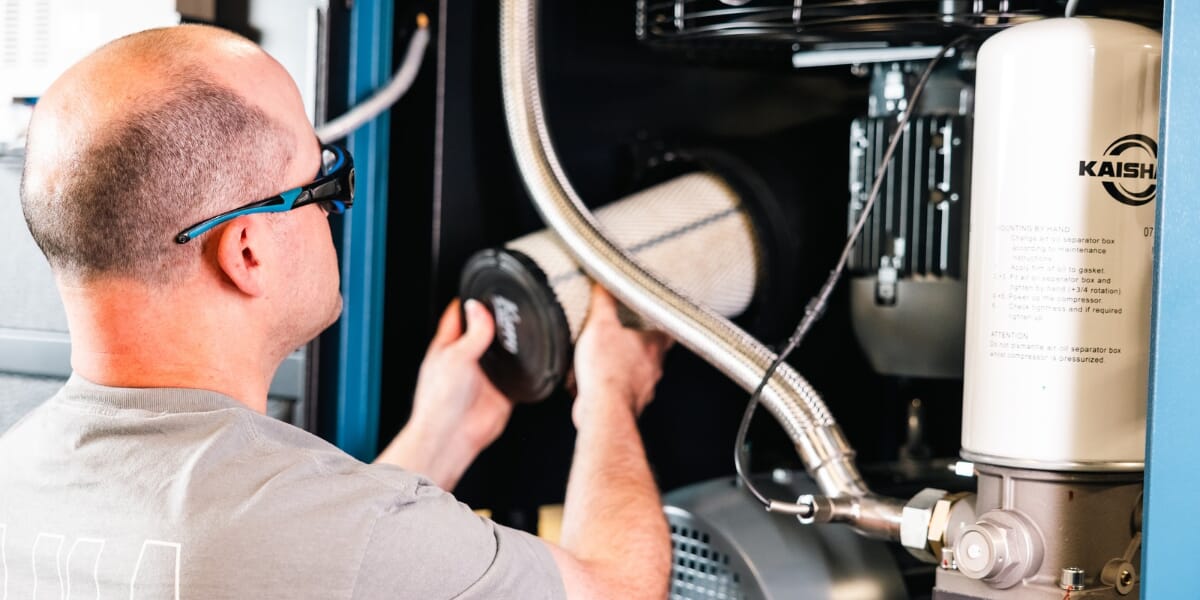
When asked to identify their biggest challenge in operating a compressed air system, 24% of decision-makers and influencers volunteered managing maintenance costs.
Despite the critical role compressed air plays in nearly every facet of industrial manufacturing, and with many manufacturers available to provide it, no major manufacturer takes a forward-looking approach anticipating where the industry is headed.
There is no one to tell us, in a statistically significant, meaningful way, where the market is going, what’s on end users’ minds, etc. Not just relying on surveys, anecdotal information or social media chatter. But capturing hard data that addresses where the market is headed and what’s on end users’ minds. We know the market wants this information.
As a result, Kaishan USA developed an annual report, The State of Compressed Air, to meet this need.
Working with B2B market research firm, Werk Insight, we created this State of Compressed Air 2027 report, the first in what we intend to make an annual effort. Werk identified decision-makers for industrial compressed air systems and conducted 20-minute, structured telephone and video interviews with 200 of them.
We asked users about their outlook on the current business situation, how they use compressed air and what kinds of systems they use. We also went into great depth about their organizations and the operational and technical challenges they face.
We present some of those findings here. To get the whole picture, download the full report.
Following a consistent air compressor maintenance plan will ensure that you deliver high-quality compressed air, save money and prolong the life of your air compressor and the other components in your compressed air system. It may even extend the service life of the equipment you’re powering.
It’s no surprise that when asked to volunteer their biggest challenge when it comes to operating or maintaining industrial compressed air systems, 24% of respondents selected managing maintenance costs, making it the leading unaided response in this research.
Downtime costs the world’s 500 largest companies 11% of their revenue, a staggering $1.4 trillion a year, according to a 2024 study by Siemens.
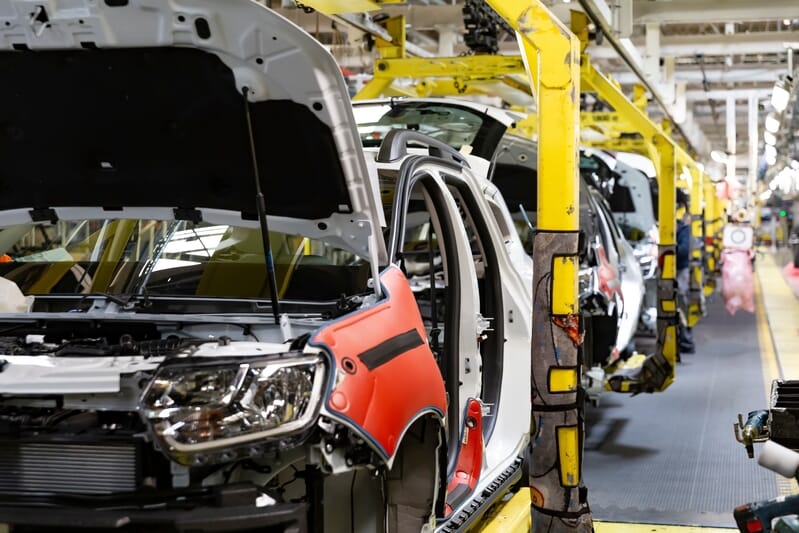
In the automotive sector, downtime costs an average of $2.3 million per hour—more than $600 per second. So, it’s not surprising that compressed air reliability was a major issue.
However, it’s one area where our survey participants seemed to be somewhat conflicted.
On the one hand, when asked about their broad outlook, 90% said they felt positive about the reliability of their air compressor equipment.
On the other hand, when asked about their challenges in operating their compressed air systems, 98% of participants named equipment downtime due to unexpected failures. That challenge was selected more than any other, including cutting energy costs (95%) and eliminating air leaks (93%).
| Organization Industry | Organization Size | Job Function | ||||||||
|---|---|---|---|---|---|---|---|---|---|---|
| Column % | NET | Heavy mfg. | Food & bev mfg. | Specialized mfg. | Small (Under 50) | Medium (50 - 249) | Large (250 - 999) | Enterprise (1,000+) | Frontline | Management |
| Equipment downtime due to unexpected failures | 98% | 99% | 100% | 95% | 93% | 97% | 100% | 100% | 98% | 96% |
Question: How challenging are the following issues related to industrial compressed air systems for your organization? The figure is the percentage identifying each issue as challenging.
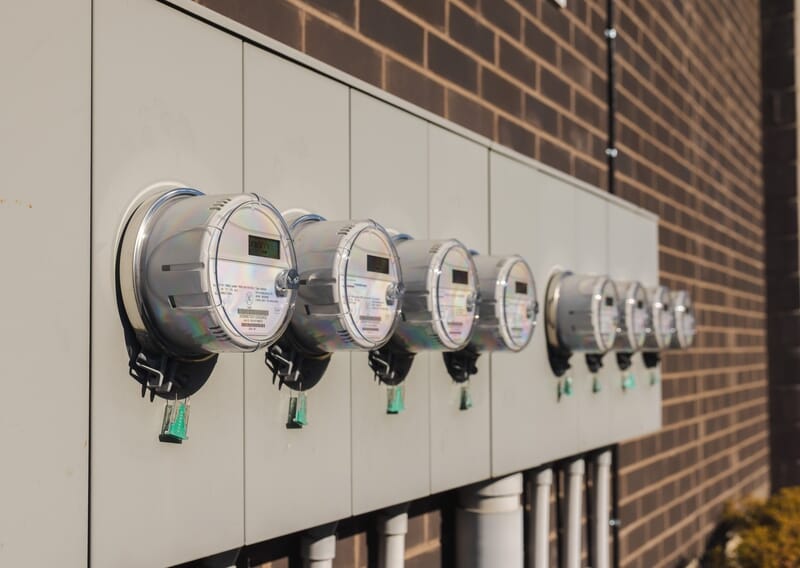
Retail electricity prices increased 4.9% year over year as of July 2026, according to the U.S. Energy Information Administration.
No wonder, then, that reducing energy consumption appears to be an issue across all the industry and organizational peer groups.
| Organization Industry | Organization Size | Job Function | ||||||||
|---|---|---|---|---|---|---|---|---|---|---|
| Column % | NET | Heavy mfg. | Food & bev mfg. | Specialized mfg. | Small (Under 50) | Medium (50 - 249) | Large (250 - 999) | Enterprise (1,000+) | Frontline | Management |
| Reducing energy consumption of the compressor system | 57% | 53% | 62% | 59% | 33% | 64% | 65% | 63% | 54% | 63% |
Question: How challenging are the following issues related to industrial compressed air systems for your organization? The figure is the percentage identifying each issue as very challenging.
Among the industry groups, our food and beverage participants were more likely than the others to consider energy consumption challenging (98% vs. 95%) or very challenging (62% vs. 57%).
Although smaller companies still consider it challenging to cut energy costs (93% vs. 95% on average), a smaller percentage find it very challenging (33% vs. 57%).
By job function, 98% of frontline workers found energy savings to be challenging, compared to 91% of managers. The opposite was true among those who found it very challenging (63% of managers vs. 54% of frontline workers).
These findings may indicate that smaller companies and frontline workers accept that reducing energy consumption is an ongoing challenge, a fact of life.
Few issues illustrate the divide between small and large companies more clearly than the challenge of reducing costs and justifying the investment in compressed air:
The participants from enterprise organizations, for example, rated cost issues as less challenging than the study’s average:

Not surprisingly, the opposite was true of small companies:
| Organization Industry | Organization Size | Job Function | ||||||||
|---|---|---|---|---|---|---|---|---|---|---|
| Column % | NET | Heavy mfg. | Food & bev mfg. | Specialized mfg. | Small (Under 50) | Medium (50 - 249) | Large (250 - 999) | Enterprise (1,000+) | Frontline | Management |
| Justifying investments for upgrades or replacements | 88% | 90% | 88% | 83% | 93% | 91% | 88% | 78% | 85% | 92% |
| Finding funding for necessary upgrades or replacements | 86% | 88% | 82% | 83% | 95% | 91% | 86% | 65% | 85% | 87% |
Question: How challenging are the following issues for your organization? The figure is the percentage identifying each issue as challenging.
Compressed air systems typically lose as much as 30% of their volume to leaks. And poorly designed and maintained compressed air systems waste up to $3.2 billion in utility payments in the U.S. annually, according to CAGI.
As a result, air leaks are the third-most-challenging operational issue, with 93% of our participants saying that dealing with them is challenging and 33% reporting them as very challenging.
Small companies are more challenged, with 53% saying they are very challenged.
Respondents from large companies are much less likely to find leaks challenging. In fact, 14% said they are not challenging, double the average rate.
Reflecting the difference in roles, frontline workers were much more likely than management personnel to find leaks to be challenging.
| Column % | NET | Heavy mfg. | Food & bev mfg. | Specialized mfg. | Small (Under 50) | Medium (50 - 249) | Large (250 - 999) | Enterprise (1,000+) | Frontline | Management |
|---|---|---|---|---|---|---|---|---|---|---|
| Air leaks in the compressed air system | 33% | 32% | 42% | 37% | 53% | 34% | 19% | 25% | 34% | 30% |
Question: How challenging are the following issues related to industrial compressed air systems for your organization? The figure is the percentage identifying each issue as very challenging.
Several of the newer technologies included in our survey are already at the point of widespread adoption, with variable-speed drives, air audits and predictive maintenance achieving adoption rates above 30%.
Other new techniques, however, including compressed air as a service, digital twins and AI-based analytics, still languish in relative obscurity, all of them below the 10% usage level. For the first two, awareness remains an issue, with more than 30% of participants saying they had not heard of the technology.
Company size loomed large as a differentiator in the uptake of new technology. The larger the organization, the more likely they were to use air audits and to be trialing or implementing AI-based analytics or optimization tools. And enterprise companies generally had higher awareness levels of the new techniques.
| Organization Industry | Organization Size | Job Function | ||||||||
|---|---|---|---|---|---|---|---|---|---|---|
| Column % | AVERAGE | Heavy mfg. | Food & bev mfg. | Specialized mfg. | Small (Under 50) | Medium (50 - 249) | Large (250 - 999) | Enterprise (1,000+) | Frontline | Management |
| Variable speed drive (VSD) compressors | 80% | 78% | 88% | 85% | 75% | 83% | 72% | 85% | 77% | 83% |
| Air audits to evaluate system efficiency | 63% | 62% | 60% | 68% | 45% | 55% | 77% | 83% | 62% | 64% |
| Predictive maintenance | 30% | 37% | 24% | 24% | 13% | 26% | 35% | 48% | 29% | 30% |
| Compressed air as a service (paying a subscription for compressor rental and volume use rather than buying equipment) | 8% | 4% | 20% | 0% | 3% | 10% | 5% | 10% | 6% | 9% |
| AI-based analytics or optimization tools | 7% | 6% | 2% | 7% | 5% | 6% | 5% | 10% | 7% | 5% |
| Digital twins or system simulation tools | 2% | 3% | 0% | 0% | 3% | 3% | 0% | 3% | 2% | 3% |
Question: Which best describes your organization’s relationship with the following technologies and solutions? The figure is the percentage identifying using each technology.
We provide greater detail in our section on predictive maintenance.
Participants trialing or implementing predictive maintenance totaled 52% in the study, giving it the highest rating in the new technology adoption category. It also had the third highest usage rate of any new technology, at 30%. In addition, it is also well established in the market: only 1% of our participants say they haven’t heard of it.
Heavy manufacturing respondents reported the highest usage rate at 37%, while the food and beverage industry reported the lowest usage rate among the industry groups at 24%. However, it had the highest trialing/implementing rate at 62%.
Given the importance of reliability and maintenance in the food and beverage sector, the relatively slow adoption of predictive maintenance seems surprising.
As in many other categories, size matters. Usage increases with organization size. Enterprise organizations are more than three times as likely to use predictive maintenance as small ones.
Predictive maintenance was just one of the new technologies profiled in the technology adoption section.
Our study demonstrates that data use is a major issue among compressed air users, with 88% of our respondents identifying “capturing and tracking accurate data about our operations” as a challenging issue and 63% saying the same about "benchmarking our performance.”
The levels were consistent across industry groups and organization sizes. The major differences occurred in job function:
Almost all of our respondents (94%) agreed that tracking KPIs is a priority for their organizations, with 51% strongly agreeing. Company size was a factor, as larger organizations were much more likely to strongly agree that their companies value their efforts to record KPIs.

Attracting and retaining talent were two of the top three organizational issues, with more than 90% of study participants finding both to be challenging.
Interestingly, small companies reported fewer concerns, while large companies said they were very challenged at a higher rate than organizations of other sizes.
Frontline workers experienced greater challenges in attracting workers than managers reported.
Among the industries, 58% of heavy manufacturing participants found it very challenging to attract talent, while only 40% of food and beverage respondents said the same. On the issues of knowledge transfer and employee retention, there was widespread agreement (83%) that knowledge is not being transferred when employees leave. But fortunately, 67% of participants believe that most employees stay at their organizations for five years or longer.
Supply chain issues were cited as challenging by 89% of study participants, making the topic the fourth-most-challenging organizational issue.
Managers were more likely than frontline workers to find it challenging, at 95% vs. 85%. Twice as many managers (46%) as frontline workers (23%) said the issue was “more challenging,” while only 5% said it was not challenging. Enterprise organizations reported a greater level of challenge than other industry sizes.
By industry, the responses were fairly uniform.
Safety and regulatory issues proved to be challenging for many of our study participants. When asked about organizational challenges:

In the section on compressed air operational challenges, 52% of respondents indicated that complying with new regulations and safety codes was challenging.
Among the industry groups, the major outlier (beyond heavy industry) was the specialty manufacturing group, where the total for complying with safety standards was 8 points lower than average in the organizational challenges category. In the operational-challenges section, only 41% of participants found compliance with safety and regulatory requirements to be challenging, 11 points below the average figure.
We’ve provided a lot of information on this page. And if you want to see all the data behind it, download the full State of Compressed Air 2027 report.
| Kaishan Product Configurator | |||
|---|---|---|---|
| Model |
|
||
| Drive |
|
||
| Type |
|
||
| Horsepower | |||
| Pressure |
|
||
| Flow (25-3000) | |||
| Submit | |||
| Models | |||