

There are two fundamental categories of air compressor, positive displacement and dynamic, and roughly six types in common use beneath them. For industrial operations the practical choice usually comes down to three: reciprocating, rotary screw and centrifugal. Each is built around a different mechanical principle, and each is genuinely better than the others at something.
Choosing between them is a balancing act. Energy efficiency, upfront investment, maintenance cost, air quality, noise and reliability all pull in different directions, and the right answer depends on your pressure requirement, your flow requirement and how continuously you run. This guide covers every type, then closes with three comparison tables: one on the tradeoffs of each type, one on what fits which industry, and one on what to choose for a given business objective.
The Two Categories of Air Compressors
Every air compressor falls into one of two categories, defined by how the machine actually raises pressure.
Positive displacement compressors draw air into a chamber and then mechanically reduce the volume of that chamber. Squeezing the same quantity of air into a smaller space raises its pressure. When the target pressure is reached, a valve opens and the air discharges. Reciprocating, rotary screw, scroll and rotary vane compressors all work this way.
Dynamic compressors work by acceleration rather than confinement. A rapidly rotating impeller imparts velocity to the air, and a diffuser then slows that moving air down, converting its kinetic energy into pressure. Because dynamic compressors never trap air in a sealed chamber, they move very large volumes continuously, and most are oil-free by design. Centrifugal and axial compressors are the two dynamic types.
The practical difference: positive displacement machines are better at delivering pressure, dynamic machines are better at delivering volume.

Positive Displacement Air Compressors
Four types of positive displacement compressor appear in commercial and industrial settings, though two of them dominate.
Rotary Screw Air Compressors
Rotary screw compressors use two interlocking helical rotors turning in opposite directions inside a compression chamber. As the rotors mesh, the space holding the trapped air steadily decreases and the pressure rises. In oil-lubricated designs, oil is injected into the chamber to seal the clearances between the rotors and the housing, which increases efficiency, and to carry away the heat compression generates.
Because they have fewer moving parts than a piston machine, rotary screw compressors are more reliable than the alternatives. They are rated for a 100% duty cycle, meaning they can run continuously without a cool-down interval, and they handle variations in demand well, particularly in variable speed configurations. Typical industrial units run from 5-600 HP.
The tradeoff is upfront cost, which is higher than a reciprocating machine of comparable output though lower than a centrifugal on a dollar-per-CFM basis. They are also not ideal for extended periods of very low demand, below roughly 20%, where they lose their efficiency advantage.
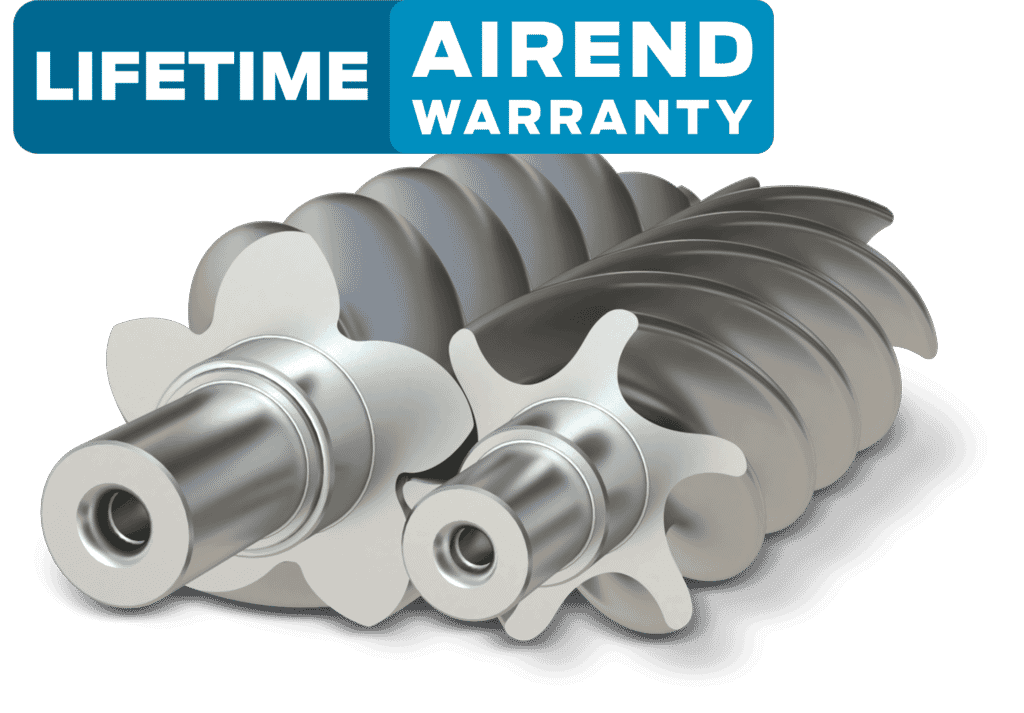
Kaishan’s KRSP and KRSP2 rotary screw compressors are backed by a lifetime warranty on the airend, which is a reflection of how these machines are built to last under continuous load.
Reciprocating (Piston) Air Compressors
Built much like an automotive engine, a reciprocating compressor has a crankshaft driven by an electric motor. As the shaft turns it drives a piston up and down inside a cylinder, drawing air in on one stroke and compressing it on the return. Often called piston compressors, they are rugged, durable and practical for smaller applications, and they cover an enormous size range, from fractional-horsepower units up to 1,000 HP in double-acting designs.
Configurations vary. Single-stage models have one compression chamber, typically run from .25-5 HP and suit low-pressure work. Multi-stage models compress across two or more cylinders in sequence, with an interstage cooler dropping the air temperature between stages, which reduces the work required and the risk of heat-related mechanical failure. Multi-stage compression is more energy efficient than single-stage for high-pressure applications, and most recips in industrial service today are two-stage.
Double-acting recips compress on both sides of the piston and reach the largest sizes in the category. They use water cooling, which addresses the duty cycle limitation, but they are becoming less common because they are expensive, require reinforced foundations to handle vibration and demand more extensive maintenance.
The central limitation of any reciprocating compressor is duty cycle. These machines need time to cool, and they typically run best at 50% duty cycle or less, roughly thirty minutes in an hour. Running one harder than that risks damaging it and shortening its life. The practical consequence is that recips have to be oversized: to size one correctly you specify a higher horsepower rating than the load alone would suggest, purely to give the pump time to cool down.
Two other limitations matter in specific applications. Pistons produce larger air pulses than rotary screws, and because they rely only on wiper rings between the air and the oil, they have no mechanism to prevent oil slugs from passing downstream. Both are disqualifying in painting, where a smooth even flow of high-quality air is what produces a mirror finish.
They are also loud. Pistons are generally open, with loud valves and no acoustical enclosure, so reciprocating compressors typically exceed 85 dBA, the threshold at which OSHA requires hearing protection. Many facilities isolate them in dedicated rooms that become hot and stuffy, or move to rotary screw machines specifically to reduce noise and vibration.
Rotary Scroll Air Compressors
A scroll compressor uses two spiral elements, one fixed and one orbiting, to trap air in pockets that shrink as the moving scroll orbits. The compression process is continuous and exceptionally smooth, producing very little pulsation or vibration, and scroll compressors are typically oil-free.
That combination makes them attractive where clean, steady, quiet air matters more than volume: medical equipment, dental practices, laboratories and small-scale electronics work. They are rarely specified for heavy industrial duty because they do not scale well, generally topping out around 30 HP.
Rotary Vane Air Compressors
Rotary vane compressors use a slotted rotor mounted off-center inside a cylindrical housing. Vanes slide in and out of those slots as the rotor turns, forming chambers that shrink and compress the air. The design is compact, mechanically simple and robust, and it produces notably low oil carry-over, in some cases as little as 2 PPM.
Rotary vane machines appear in automotive repair, packaging, dentistry and light manufacturing. They are less common in heavy industry, where rotary screw compressors deliver better efficiency at the horsepower ranges plants actually need.
Dynamic Air Compressors
Dynamic compressors trade pressure capability for sheer volume, and they dominate the largest installations.
Centrifugal Air Compressors
A centrifugal compressor draws air into a rapidly rotating impeller, which accelerates it outward. A diffuser plate then slows that high-velocity air, converting velocity into pressure. Because compression is continuous and no oil enters the air stream, centrifugal compressors are oil-free by design, which matters enormously in food, pharmaceutical and semiconductor production.
They are extremely efficient at high volumes and produce a great deal of air from a relatively small footprint, and they are very durable in continuous service. Centrifugals are most efficient at sizes above 500 HP, and the larger the demand, the more efficient they become.
The limitations are real. They are expensive, they have a limited pressure range in a single stage and require multi-stage designs to exceed 100 PSIG, and they are markedly less efficient when air demand is low. They do not handle partial loads well and they are sensitive to changes in ambient temperature. Maintenance requires a high level of expertise, which can push lifecycle costs above what the efficiency numbers alone suggest.
Axial Air Compressors
Axial compressors pass air through alternating rows of rotating and stationary blades, compressing it in stages along the axis of the machine. They achieve very high efficiency at high speed and enormous flow rates.
They are almost never found in industrial compressed air systems. Their applications are aerospace jet engines, high-speed marine propulsion and some power generation, where the complexity and cost are justified by the performance requirement.
Oil-Lubricated vs. Oil-Free Air Compressors
Alongside the mechanical type, buyers face a second distinction that often matters more to the specification: how the machine handles oil. There are three positions on this spectrum.
Oil-lubricated compressors inject oil directly into the compression chamber, where it seals, cools and lubricates. This improves efficiency and allows higher single-stage pressures, and it is the most common configuration in industrial rotary screw machines. A small amount of oil leaves with the air, typically under 3 PPM after separation, which downstream filtration can reduce much further.
Oil-free compressors keep oil entirely out of the compression chamber. Oil still lubricates bearings and gears, but it never contacts the air stream, so the delivered air carries no oil contamination. This is a requirement rather than a preference in food processing where air touches product, in pharmaceutical manufacturing and in semiconductor fabrication.
Oil-less compressors are a subset of oil-free machines that use no oil anywhere, relying on permanently lubricated bearings and self-lubricating materials such as PTFE. Scroll and some reciprocating designs fall into this group.
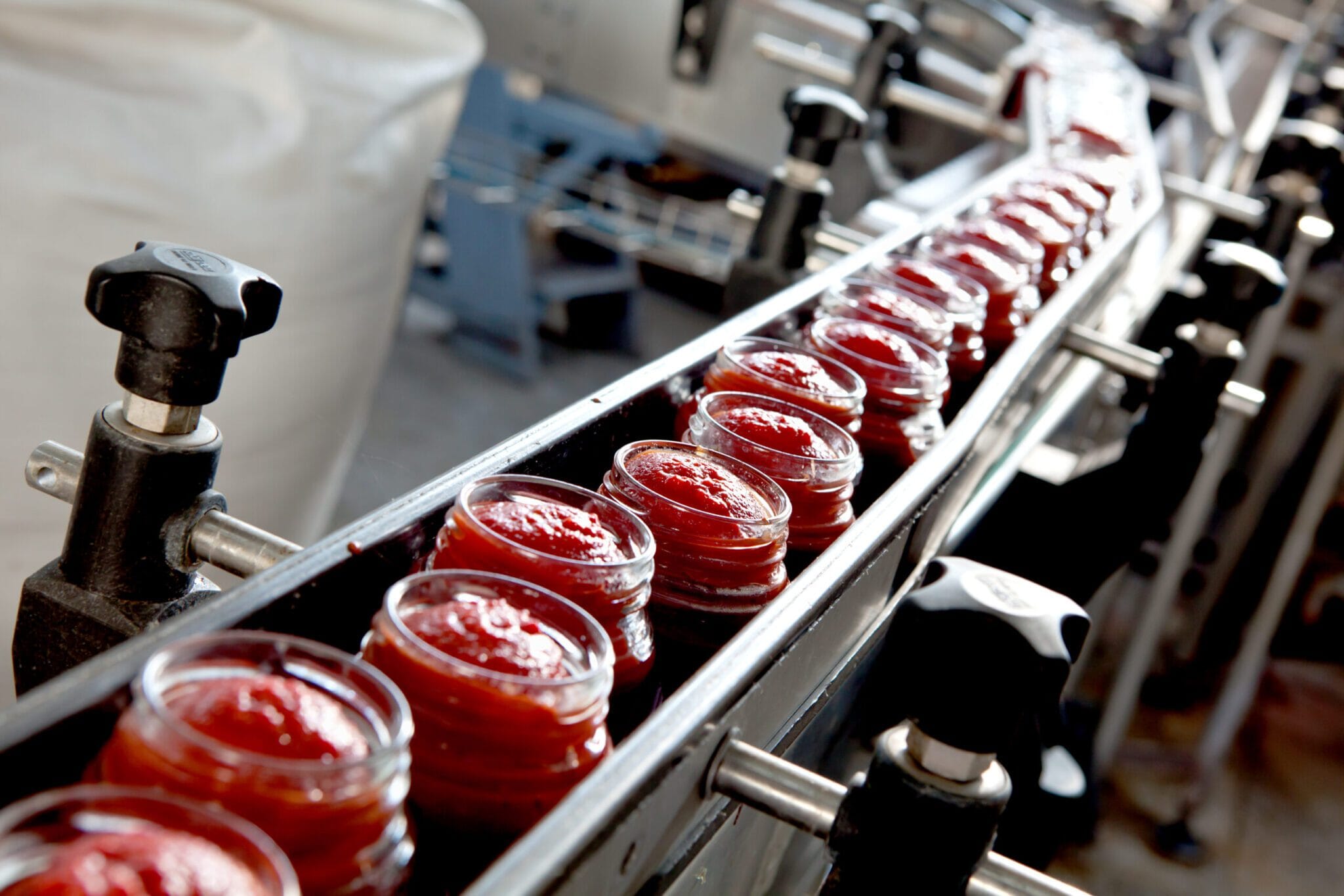
Oil-free compressors are the best choice for food and beverage plants where the compressed air is in direct contact with the product or process.
Food processors must ensure any compressed air contacting food is oil-free, which can be achieved either with an oil-free machine or with an oil-lubricated compressor plus appropriate cleanup equipment. In incidental-contact applications such as packaging and material handling, oil-lubricated machines running food-grade lubricants are acceptable.
Choosing by Pressure and Flow
Two specifications drive the decision more than any other, and buyers routinely confuse them.
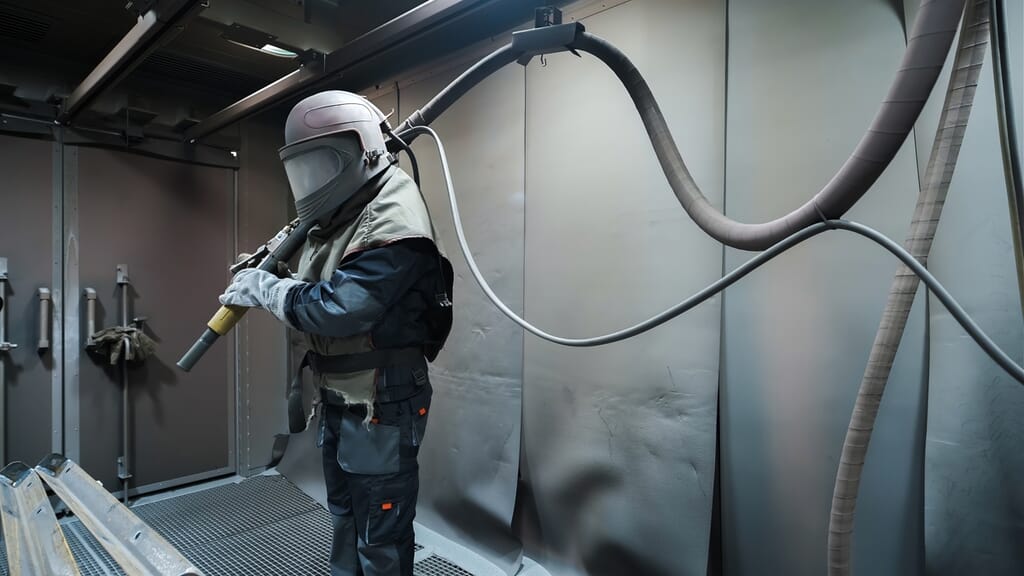
Pressure, measured in PSI, is force. Sandblasting and painting both require substantial pressure, and some compressor types deliver high pressure far more readily than others. Multi-stage reciprocating compressors reach the highest pressures in the category. Centrifugal machines need multiple stages just to clear 100 PSIG.
Flow, measured in CFM, is volume. Most companies focus on pressure and underweight flow, and that produces a specific and very common failure. Customers tell us they need more pressure when what they actually need is more flow. Here is why the symptom looks the same: if you do not have enough flow, pressure drops. Pull more air than the compressor can deliver and the pressure gauge falls, which looks exactly like a pressure problem and is not.
If flow is driving your choice, the guideline is straightforward:
- Above 6,000 CFM, a centrifugal compressor is the most cost-effective option.
- Below 20 CFM, a reciprocating compressor is the best choice.
- Between those two thresholds, rotary screw compressors are generally the right answer.
- For continuous high demand, or where demand varies substantially, a combination of centrifugal and rotary screw machines may be the most appropriate configuration.
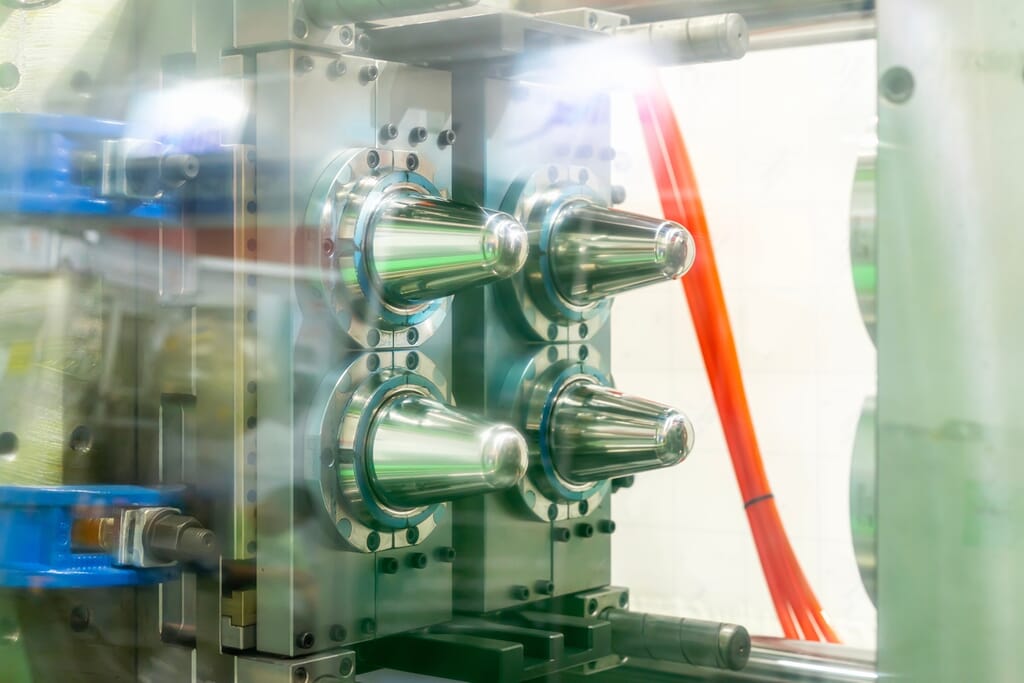
Pressure and flow narrow the field, but they rarely settle it on their own. Energy efficiency, maintenance cost, initial investment, reliability, air quality and noise all factor into the final decision, and they frequently point in different directions. The three tables that follow are built to make those tradeoffs explicit.
Air Compressor Types Compared
The table below summarizes the tradeoffs across the three types used in most industrial installations. No single type wins on every axis, which is precisely why the decision requires knowing your own duty profile first.
| Reciprocating | Rotary Screw | Centrifugal | |
|---|---|---|---|
| Typical HP range | .25-1,000 HP | 5-600 HP | 500 HP and up |
| Duty cycle | 50% or less | 100% continuous | 100% continuous |
| Upfront cost | Lowest | Moderate | Highest |
| Energy efficiency | Lower | High, especially with VSD | Highest at high volume |
| Performance at partial load | Adequate | Good, excellent with VSD | Poor |
| Air quality | Oil slug risk, no prevention system | Under 3 PPM after separation | Oil-free by design |
| Air flow character | Pulsed | Steady | Steady |
| Noise | Typically above 85 dBA | Low, commonly enclosed | Moderate |
| Maintenance | Frequent, straightforward | Moderate, routine | Infrequent, requires expertise |
| Best suited to | Intermittent, low-volume, high-pressure work | Continuous and variable industrial demand | Very high continuous volume |
Choosing by Objective
Sometimes the driving constraint is a business goal rather than a technical specification. This table works backward from the objective.
| If your objective is | Consider | Notes |
|---|---|---|
| Lowest upfront cost | Reciprocating | Lowest purchase price, highest cost per hour of runtime |
| Lowest total cost of ownership | Rotary screw | Energy efficiency and service life usually outweigh the price gap |
| Maximum efficiency at very high volume | Centrifugal | Only above roughly 6,000 CFM |
| Quietest operation | Rotary screw or scroll | Sound-dampening enclosures are standard on most screw packages |
| Cleanest possible air | Centrifugal or oil-free screw | Oil-free by design beats oil-free by filtration |
| Handling widely variable demand | Variable-speed rotary screw | Motor speed tracks actual demand rather than cycling |
| Continuous 24/7 operation | Rotary screw or centrifugal | Both are rated for 100% duty cycle |
| Highest achievable pressure | Multi-stage reciprocating | Reaches pressures no other type matches |
If the answer still is not obvious, a compressed air audit is a productive first step. It measures what your facility actually demands rather than what anyone assumes it demands, which is frequently a different number.
Frequently Asked Questions
Key Takeaways
- A significant decision. Choosing the right type of air compressor could help you build competitive advantage for your company.
- Two parent categories. Every air compressor is either positive displacement or dynamic. Positive displacement machines are better at pressure; dynamic machines are better at volume.
- No easy answers. There are many factors to consider, including energy efficiency, maintenance cost, initial investment, reliability and noise, to name a few.
- Rule of thumb. Centrifugals usually are the best choice for high-volume applications, recips work well for smaller uses, and everything in between is usually screw compressors.
- Flow, not just pressure. If you do not have enough flow, pressure drops. Customers frequently ask for more pressure when what they need is more flow.
- The most popular choice. Because of their reliability and efficiency, rotary screw machines are the air compressors of choice for most industrial applications.
We Can Help
Choosing the right type of air compressor is a balancing act, and the tradeoffs land differently in every facility. The tables above narrow the field. Matching a specific machine to your actual pressure, flow and duty profile is where a local expert earns their keep.
We partner with independent, local distributors because it is the best way to serve you. Unlike large corporate suppliers, there is no red tape here. Our independent distributors offer expert guidance, faster response times and personalized support tailored to your needs. They do not just sell compressors. They build relationships, ensuring you get the right system, reliable service and quick access to parts when you need them most.
With factory-trained technicians and a deep understanding of industrial applications, they help maximize efficiency and minimize downtime. So when you buy through Kaishan, you are getting more than a product. You are getting a local partner who cares about your business and seeing it succeed.
If you need help deciding which type of air compressor is right for you, get in touch with the experts at Kaishan. Contact us today.