
When it comes to powering hand tools in an industrial setting, you have three main options:
- Plug-in electric tools. Corded tools that draw power directly from a wall outlet.
- Cordless battery tools. Portable tools powered by rechargeable lithium-ion batteries.
- Pneumatic tools. Tools driven by compressed air delivered through a hose from a central compressor system.
And while plug-ins and cordless electric models have their advocates, there are many applications where nothing beats an air tool. Occasions where it absolutely, positively must be compressed air. Like hazardous or harsh environments.
Hazardous or Harsh Environments
Heat, dust and debris make a typical industrial plant a hostile environment for electric tools. But air-powered tools perform well in harsh environments with high levels of dirt and dust.
It’s less risky to use air-powered tools around volatile substances, conductive materials or flammable liquids.
And they withstand temperature extremes (from 45°F-180°F). Or wet applications, such as underwater sanding and grinding.
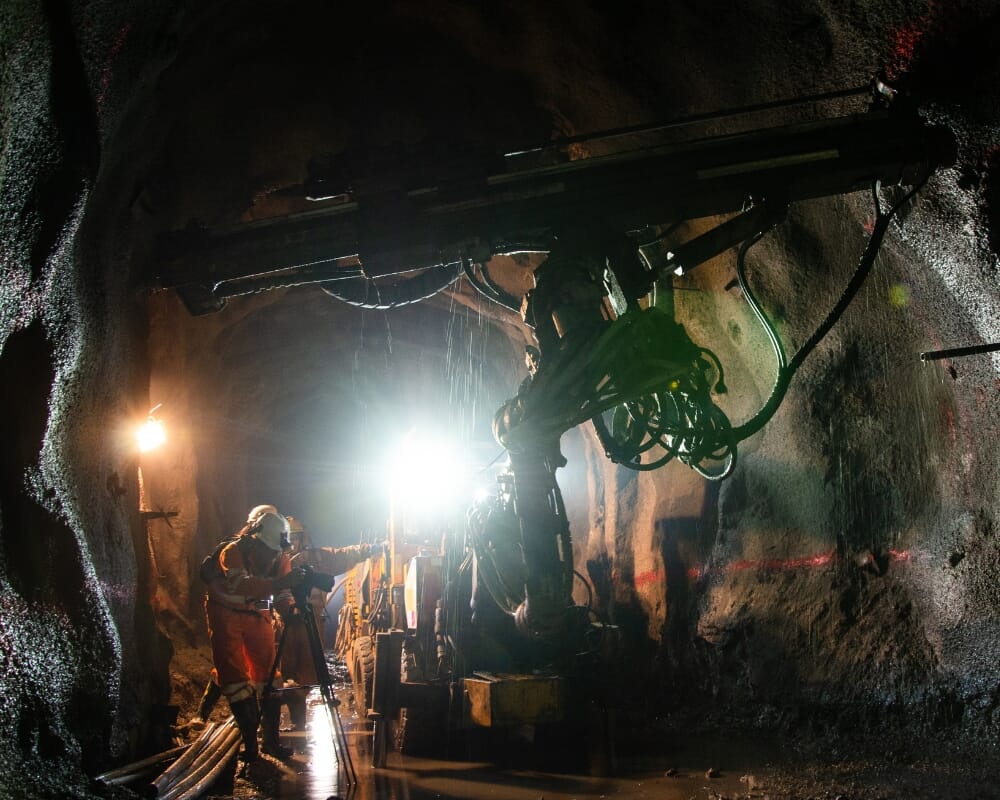
That’s why air-powered tools have become the preferred alternative in challenging environments like mining and oil and gas sites.

In fact, you can use air-powered tools almost anywhere there is compressed air available. And, since you can easily swap out the tools you’re using, you can power any number of tasks, from high-pressure sandblasting to low-pressure cleaning.
Another application issue is safety.
A Clear Winner on Safety
As mentioned, there are many situations in which it is not safe to use electric power. In addition, wires or cords can become damaged or frayed, increasing the risk of electric shock.
Air-powered tools, on the other hand, run cooler. They don’t generate sparks or fires. They also don’t become overloaded or overheated.
They are intrinsically safe in hazardous environments:
- Zero electrical shock hazard (critical in wet environments or around metal structures)
- Spark-free operation (mandatory in paint booths, chemical plants or anywhere explosive vapors are present)
In many industries, pneumatic tools aren’t just preferred—safety regulations require them. Ask your safety manager what they prefer, and air-powered tools win hands down.
Safety Under Load: The Stall-Out Advantage
What happens when a tool binds up?
With an electric tool, the motor draws a high amperage and overheats. It can also kick back violently or burn out, although newer tools have an anti-kickback feature.
In a pneumatic tool, the air motor simply stalls out. The air stops moving, and there’s no overheating, no violent kickback and no internal damage. The operator can safely back the tool out and continue working.
This stall-out protection makes pneumatic tools inherently safer in high-torque applications where binding is a risk.
A third key advantage of air-powered tools is maintenance.
Air-Powered Tools Need Less Maintenance
The average electric tool has a maintenance interval of 100 hours or less. Repairs require specialized motor repair shops, replacement parts that may be discontinued and diagnostic expertise. That’s why most shops treat them as throwaways.
Air tools, on the other hand, are easier to repair and have a longer life. They can be serviced by any competent technician with basic hand tools. Parts are standardized, widely available and inexpensive. And tools can go several thousand hours without servicing.
Pneumatic hand tools also have several other advantages.
Other Pneumatic Hand Tool Benefits
Pneumatic tools offer several additional advantages, including:
- Initial cost. Pneumatic air-powered tools have simple designs, no batteries or motors and fewer moving parts, so they’re less expensive to acquire. A pneumatic nailer, for instance, costs less than a heavy-duty electric or cordless model and handles mass-production environments much better.
- Power consistency. The longer you use a battery-powered tool, the more the battery drains, so the more the torque declines. Air-powered tools, on the other hand, deliver 100% torque from the beginning of your shift until the end.
- Continuous use. In applications requiring continuous use—like sanders, grinders, spray guns and sandblasters—electrical equipment overheats quickly. Or, for cordless tools, you are constantly replacing batteries. Their motors don’t handle such grueling work well. Air-powered tools, on the other hand, hold up much better under constant use.
- Lifespan. The more straightforward design of air-powered tools means they experience less overheating, less wear and fewer breakdowns and generally have a longer useful life.
- Ergonomics. Because pneumatic tools don’t have a motor or a battery, they are lighter. Without the weight of a motor or batteries, they’re also smaller and more maneuverable. Easier to grip and pivot. That gives the operator better control over the tool. Lower vibration levels mean less fatigue and, in the long term, fewer work-related injuries and less sick leave.
- Strength and speed. Pneumatic tools deliver higher torque and more revolutions per minute than cordless or electric tools of similar size.
- Cleanliness. With the right compressed air systems and filtration, you can achieve purity that meets strict ISO 8573-1 (2010) Class 0 standards.
Let’s see how some of these benefits become more apparent in specific tool applications.

Pneumatics vs. Electric Hand Tools
So how do these advantages play out in the real world? Let’s walk through some specific applications, such as a belt sander, nail gun or an impact wrench.
Impact Wrench
| Cordless impact wrenches have a limited runtime. Torque drops as the battery drains. | Air-powered impact wrenches deliver 100% power from the first fastener of the shift to the last. No mid-shift battery swaps, no gradual loss of torque. |
Industrial Belt Sander
| A battery-driven sander is heavy, and it may slow down under load and burn out from fine dust. | An air-driven belt sander is lightweight, stays cool, maintains a consistent speed and won’t overheat even during extended use. The exhausted air also helps clear dust from the work surface. |
Production Nail Gun
| A cordless or electric nail gun will experience cycle-time delays and heavy battery fatigue. | An air-driven nail gun fires as fast as you can pull the trigger. Pneumatic nail guns fire instantly, with zero delay between shots, and weigh significantly less than battery-powered alternatives. |
And then there’s the challenge of infrastructure.
Navigating the Infrastructure Challenges
Each of the choices—battery-operated, electrically powered and pneumatically driven air tools—has unique infrastructure requirements. Let’s review how they differ, starting with battery tools.
Battery Tool Infrastructure
At first glance, cordless tools seem like the ultimate convenience—no cords, no hoses, just grab and go. But in a production environment with dozens or hundreds of tools in rotation, the reality is far more complicated.
Managing a fleet of battery-powered tools requires:
- A revolving inventory of expensive lithium-ion batteries. Each tool needs at least two batteries (one in use, one charging), and batteries cost $159 each.
- Dedicated charging infrastructure. Charging stations take up valuable bench space and require electrical capacity planning.
- Staggered degradation. Batteries lose charge capacity over time. A battery that once lasted a full shift might only last half a shift after 300–500 cycles. This creates unpredictable performance gaps.
- Mid-shift downtime. If a worker grabs a half-charged battery, production stops mid-task while they hunt for a fresh one.
Plug-in electrical tools have some additional requirements.
The Electric Tool Infrastructure
Adding high-draw electric tools to a production line often requires:
- Dropping new electrical circuits to meet demand.
- Upgrading electrical panels to comply with local codes.
- Managing fire and shock risks in compliance with OSHA and NEC standards.
The infrastructure needs for air tools are simply access to compressed air.
Compressed Air Infrastructure
If your plant already has a centralized compressor room with a distributed header pipe system, adding a new pneumatic tool is as simple as:
- Threading a pipe drop to the workstation
- Clicking in a quick-connect coupler to connect the tool to the compressed air system
- Handing the tool to the operator
You will, of course, want to weigh the impact of any new additions on your system. You can find more details in our blog post, “Adapting Compressed Air Systems to Production Changes.” You’ll probably need a Filter Regulator Lubricator (FRL) for most pneumatic hand tools, since they don’t operate at typical plant pressures (100 PSIG or greater).
For facilities without existing compressed air infrastructure, the initial investment in a compressor system does require capital planning. However, once installed, the system scales effortlessly as your tool fleet grows.
Admittedly, if you only have one or two tools you use occasionally, it’s probably not worthwhile to go with air-powered tools. But you may find you can service many different tools with a single rotary screw compressor. And avoid the maintenance, replacement and battery use of small electrics.
The Hidden Advantage: Infinite Adjustability
One of the most underrated benefits of pneumatic hand tools is their infinite adjustability.
On the one hand, most electric tools offer limited speed or torque settings—low, medium, high or a stepped dial. Once you select a setting, that’s what you get.
With air tools, on the other hand, you can control speed and torque on the fly. Simply adjust the inlet air pressure and feather the trigger for fine control.
For example, a pneumatic die grinder can be dialed down for delicate finishing work or cranked up for aggressive material removal—all with the same tool, no mode switching required.
That infinite adjustability is becoming increasingly attractive in the age of robotics.
Next-Gen Applications
Compressed air is powering the next generation of precision industrial equipment:
- Semiconductor and electronics: cobot grippers. Collaborative robots (cobots) in semiconductor fabs are increasingly adopting pneumatic vacuum grippers and parallel grippers. These grippers are lightweight and low-inertia (don’t weigh down the robot arm). They are capable of rapid, high-frequency sorting of delicate silicon wafers and microchips. And they are gentle enough to handle fragile components without damage.
- Healthcare: high-speed surgical drills. In neurosurgery and orthopedics, pneumatic high-speed surgical drills are the standard because they generate zero internal heat (critical for avoiding tissue damage), are immune to electromagnetic interference from advanced operating room telemetry and deliver consistent, controllable speed even under load.
In fact, industrial designers increasingly are turning to compressed-air-driven pneumatics to power the latest robotic technology. Find out more in our blog post, “How the Right Air Compressor Enables the Soft Touch that Makes Pneumatics So Valuable.”
The ROI Winner: Pneumatics by a Landslide
While it’s true that compressed air is an expensive utility to generate, pneumatic hand tools often win in terms of return on investment or total cost of ownership.
The combination of a 100% duty cycle (the ability to run 24/7) without overloads or burnout, the greater torque and speed, the reduced operator fatigue and the lower tool costs all translate into greater productivity and a lower total cost of ownership for air-powered tools.
In lifespan alone, you can measure the useful life of an air tool in decades, not years. Meanwhile, electric tools are often considered throwaways. For example, a pneumatic impact wrench can be completely rebuilt in 15 minutes with a $20 kit, restoring it to like-new performance. Try doing that with a burned-out electric motor.
When you weigh the factors that matter most in a production environment—reliability, power consistency, safety, longevity and operational simplicity—pneumatic hand tools come out ahead. Way ahead.
Pneumatically Driven Air Tools: The Advantages
| Factor | Pneumatic Advantage |
| Harsh environments | Air-powered tools withstand temperature extremes, moisture, dirt and dust. And it’s less risky to use them around volatile substances, conductive materials or flammable liquids. |
| Safety | Pneumatic hand tools present zero shock hazard and have spark-free operation and safe stall-out under load. |
| Maintenance | Air tools are easier to repair and have a longer life. Parts are standardized, widely available and inexpensive. |
| Initial cost | Air tools cost less than comparable electric or cordless models and handle a mass production environment much better. |
| Power consistency | Pneumatic tools deliver 100% torque from first use to last with no performance degradation. |
| Continuous use | Electrical equipment overheats quickly and motors don’t do well with grueling work. Air-powered tools hold up much better under constant use. |
| Lifespan | Air tools typically have a decades-long operational life with simple, inexpensive rebuilds. |
| Ergonomics | Air tools are significantly lighter than battery or electric equivalents. |
| Strength and speed | Pneumatic tools offer improved torque levels and deliver more revolutions per minute (RPM) than cordless and electric devices. |
| Cleanliness | With the right compressed air systems and filtration, pneumatic equipment can meet strict ISO 8573-1 (2010) Class 0 standards. |
| Infrastructure | Integration is easy if a compressed air system already exists. No batteries, no charging stations, no mid-shift downtime. |
| Adjustability | Air tools offer infinite speed/torque control via pressure adjustment and trigger feathering, giving you a “soft touch.” |
| ROI and TCO | Pneumatic hand tools have lower long-term or lifetime costs. |
The key points: no electrical permits. No panel upgrades. No fire marshal inspections. No charging stations. No cords. No drop-off in tool performance.
Need Help Optimizing Your Hand Tool Strategy?
If you’re evaluating your facility’s hand tool strategy—or looking to reduce downtime, improve safety and lower long-term costs—compressed air deserves a serious look.
Your team deserves tools that work as hard as they do. And the best place to start is with your local compressed air professional.
Kaishan USA works with a nationwide network of independent distributors, who can provide on-site help and consultation as needed.
Kaishan distributors have decades of experience helping customers find compressed air solutions and deploying systems and applications that maximize efficiency and minimize downtime.
In short, when you buy through Kaishan, you’re getting more than a product—you’re getting a local partner who knows today’s work environment. And what you need to succeed. Find the one closest to you or feel free to contact us directly.
Further Reading
“How the Right Air Compressor Enables the Soft Touch that Makes Pneumatics So Valuable.” Find out more about why machine designers prefer pneumatically driven tools for their cutting-edge robotic devices.
“Adapting Compressed Air Systems to Production Changes.” Whether you’re expanding your plant or adding new equipment, you’ll want to consider the impact on your compressed air system.
Frequently Asked Questions
Cordless tools, by contrast, are limited by battery capacity. A typical cordless tool might give you 30 minutes to a few hours of runtime before the battery needs recharging. If you're running multiple shifts or tackling heavy-duty work, you'll either need multiple battery sets or extended downtime for charging. For high-volume operations, pneumatic tools deliver better uptime and productivity.
If you need to install a new compressor system, the initial investment is higher, but it's important to look at the total cost of ownership over 5-10 years. Most facilities recoup that investment through lower tool maintenance costs, reduced battery replacements, fewer tool failures and improved operational efficiency. Contact a Kaishan USA specialist to evaluate your specific situation and get a clear picture of costs and ROI.
In hazardous atmospheres (such as chemical plants or refineries with explosive vapors), pneumatic tools are often the preferred choice because they're intrinsically safe—there's no risk of electrical sparking. However, if you're working in very cold environments, compressed air can become less efficient, and moisture in the air lines can freeze. In these cases, proper air line preparation and moisture management become important.
For the vast majority of maintenance and manufacturing operations, pneumatic tools are safe and effective. Always follow proper safety protocols, maintain your equipment and ensure your team receives adequate training.
Basic maintenance includes occasional lubrication (many pneumatic tools have built-in oilers), checking hose connections for leaks and replacing worn seals if needed. Most tools can be serviced in-house with simple tools and replacement parts. Compare this to electric tool maintenance, which often requires specialized technicians or factory repairs.
Your compressed air system requires regular maintenance—dryer maintenance, filter changes and periodic inspections—but this is a one-time investment that supports all your pneumatic tools simultaneously, making it highly cost-effective.
The advantage is that you can easily adjust the power output of pneumatic tools by regulating air pressure. Need less power for delicate work? Turn down the pressure. Tackling heavy-duty bolts? Increase the pressure. This adjustability means you get more versatility from fewer tools.
Additionally, pneumatic tools don't experience power loss over time like cordless tools do as batteries drain. You get consistent, full-power performance from start to finish of your shift.
However, most facilities minimize this risk by investing in reliable compressor systems with good preventive maintenance schedules. Regular maintenance, proper sizing of your compressor for your operation's needs and monitoring for issues prevent most failures.
Many larger operations also consider backup compressor capacity or rental arrangements with local suppliers to address worst-case scenarios. The key is to treat your compressor system as critical infrastructure and maintain it accordingly. A well-maintained compressor rarely fails unexpectedly.
They're particularly valuable if your maintenance team is already familiar with compressed air systems, as training and adoption are straightforward. The combination of lower upfront cost, minimal maintenance, excellent durability and consistent performance makes pneumatic tools the smart choice for most industrial and manufacturing facilities.
Listen to the Podcast Version



The Harsh-Duty Reality of Shop Floor Hand Tools
So I- I- I was out on a foundry floor last week, right? And this guy is standing next to a grinding station, holding this, uh, this dead cordless grinder like it- like it personally insulted him. He tells me it's the third electric motor they've burned through this month. Third one! Because the fine iron dust just gets sucked right into those vents, and boom—short circuit, total meltdown.Three in a single month? That- that is just a massive waste of money. But, wait, aren't the newer electric ones supposed to be sealed, or- or at least have some kind of dust protection?
They- they claim they do, Lisa, but the reality of a high-production shop floor is just... it's brutal. You've got extreme heat, abrasive dust, moisture... I mean, pneumatic tools, they don't care about any of that. They can run all day in temperatures from forty-five degrees all the way up to a hundred and eighty degrees Fahrenheit. Try doing that with a lithium-ion battery without it literally shutting down to save itself.
A hundred and eighty degrees? Wow. That's, uh, that is seriously hostile. And I guess with air tools, there's no actual motor inside to burn out, right? It's just air pressure spinning the rotor.
Exactly, it's just a simple air motor. No windings to melt, no delicate circuit boards to fry. If you plug the vents, it just, you know, it just keeps pushing through. Or worse-case scenario, if the tool binds up completely—say, a big drill bit grabs a piece of structural steel—an electric tool is going to draw massive amperage, get hot, and try to wrench your wrist off with that violent kickback.
Oof, yeah, the kickback. I've- I've felt that. It- it can really twist your arm if you aren't ready for it.
Right! But with a pneumatic tool, if it binds? It just stalls. The air just... stops moving. There's no buildup of electricity, no violent kickback, no damage to the internal parts. You just back the tool out, and you're good to go. It's built-in stall-out protection.
So it's intrinsically safer. And I'm thinking about wet environments too. If you're doing, say, wet sanding or working around conductive metal structures, the- the absolute last thing you want is a corded electric tool or even a high-voltage battery near water.
Oh, absolutely. Zero electrical shock hazard. None. And no sparks either, which is why you see them everywhere in paint booths, chemical plants, oil rigs... anywhere where a single tiny spark could, uh, well, blow the whole place sky-high.
Right, explosive vapors. That makes complete sense. But what about the people actually holding these things for eight hours a shift? Because I've picked up some of those heavy-duty cordless impact wrenches, and after ten minutes, my wrists are already feeling it.
They are massive, Lisa! You're lifting a heavy electric motor and a huge, clunky battery pack. Air tools don't have either of those. They're significantly lighter, smaller, and way more maneuverable. So the operator isn't fighting the weight of the tool all day, which means less fatigue, fewer repetitive strain injuries, and honestly, just a lot less sick leave on the books.
The True ROI and Infrastructure of Air Power
Okay, but let's play devil's advocate here. Because if you go cordless, you just pop a battery in and go. No hoses to drag around, no big compressor system to buy. Isn't managing a bunch of hoses its own kind of, uh, nightmare on a busy floor?It's a common argument, but let's look at the actual infrastructure of a battery fleet. Say you have fifty workers. To keep them running continuously, you need a revolving inventory of expensive lithium-ion batteries. You need at least two per tool—one in use, one on the charger. And those batteries cost what, a hundred and fifty-nine dollars each?
A hundred and fifty-nine dollars? For just one battery? Jeez, that- that adds up fast. Especially when they start degrading after a few hundred cycles and don't even hold a full shift's charge anymore.
Exactly! You get this staggered degradation where worker A gets four hours of runtime, worker B gets two, and suddenly people are wandering around hunting for a fresh battery, stopping production mid-task. With a central air system, if you already have the pipe drops, you just thread a drop to the workstation, click in a quick-connect coupler, and boom—you have infinite runtime at one hundred percent torque from the start of the shift to the end.
And you're powering all of this off of a central compressor room, right? Like those big rotary screw air compressors we always talk about for heavy industrial setups.
Yes, exactly. A reliable rotary screw air compressor is the heart of the whole shop. It delivers that steady, continuous volume of air you need so the tools never lose pressure. And the adjustability is incredible. You don't have to cycle through low, medium, high digital settings. You just adjust the inlet pressure or feather the trigger, and you can dial in the exact speed or torque you need on the fly.
So you get that "soft touch" for delicate work, but you can still crank it up for aggressive grinding with the exact same tool. That is actually incredibly versatile.
It is! And when an air tool finally does need maintenance—which is usually after thousands of hours, not the hundred hours or so you get with electric—you don't throw it in the trash. Any basic technician can rebuild a pneumatic impact wrench in fifteen minutes using a simple twenty-dollar seal kit. Try doing that with a burned-out brushless electric motor.
A twenty-dollar kit versus buying a whole new electric tool because the parts are discontinued. Yeah, when you look at the lifespan spanning decades instead of years, the ROI on pneumatics is just a landslide. Alright, I'm sold. Let's head down to the shop floor and check out those quick-connects.