For decades, two-stage rotary screw compressors have largely been out of reach for small- and medium-sized companies.
Major air compressor manufacturers simply didn’t make a two-stage rotary screw air compressor below 125 horsepower.
And that denied most small- and medium-sized companies the reliability and energy efficiency that two-stage units have been delivering for larger companies for decades.
That is the case no longer.
Kaishan offers four KRSP2 premium rotary screw air compressors in the lower-horsepower range, including 30-HP, 50-HP, 75-HP and 100-HP variable-speed models.
The technical advance that makes small two-stage compressors even more attractive is that they are permanent magnet motor air compressors.
Permanent Magnet Motors
Most rotary screw compressors currently have traditional induction motors, which use alternating current to convert electrical energy into mechanical energy through electromagnetic induction. They are efficient, reliable and flexible.
They are asynchronous—the rotor spins more slowly than the magnetic field created by the stationary stator’s wire coils, causing a lag or slip. Single- and three-phase induction motors are used most often in industry today, especially in air compressors.
However, more and more manufacturers are considering permanent magnet motors because of their efficiency, small size and greater reliability. The electric vehicle industry, for example, is all in on PMs, most likely leading to a higher adoption rate as the obvious advantages overcome the initial skepticism stemming from some early failures.
Most observers point out that PM motors are the industry’s best hope of complying with the global efficiency standards that go into effect soon.
The Move to Permanent Magnet Motor Compressors
Unlike induction or asynchronous motors, permanent magnet motors rotate at the same speed as the stator’s magnetic field, so there is no slip.
The PM motor’s magnets are made of rare earth elements and are at least twice as powerful as those used in induction motors, allowing them to exceed the power density and efficiency of more traditional units.
Greater Turndown Capability
You can spin the motor at higher and lower speeds than an induction motor, improving the turndown capability. They work well with variable-speed drives.
And while the efficiency of an induction motor declines rapidly as the motor speed is reduced, the efficiency of a PM motor stays more stable across its entire speed range. As a result, it stays more efficient as it matches declining part-load demand.
In addition, the PM motor’s speed control is cleaner, so the compressor’s VSD “hunts” less as it matches production demand.
The result? A VSD compressor with a PM motor has greater turndown capability.
The four PM-motor-driven units are part of the industry’s largest line of two-stage rotary screw compressors.
The Advantages of Two-Stage Rotary Screw Compressors
A single-stage compressor like Kaishan’s KRSP premium rotary screw air compressor uses one compression chamber to compress air to the desired pressure, generating a compression ratio of 7.8 to 1 to create 100 PSIG of pressure.
On the other hand, a two-stage air compressor like the KRSP2 premium rotary screw air compressor splits a 100-PSIG discharge workload into two separate stages, dividing that work into a first stage of 2.8 to 1, followed by a second stage of 2.8 to 1.
Plus, before the second stage, the air passes through an interstage cooling step, removing some of the heat of compression and building efficiency. This video shows it in action.
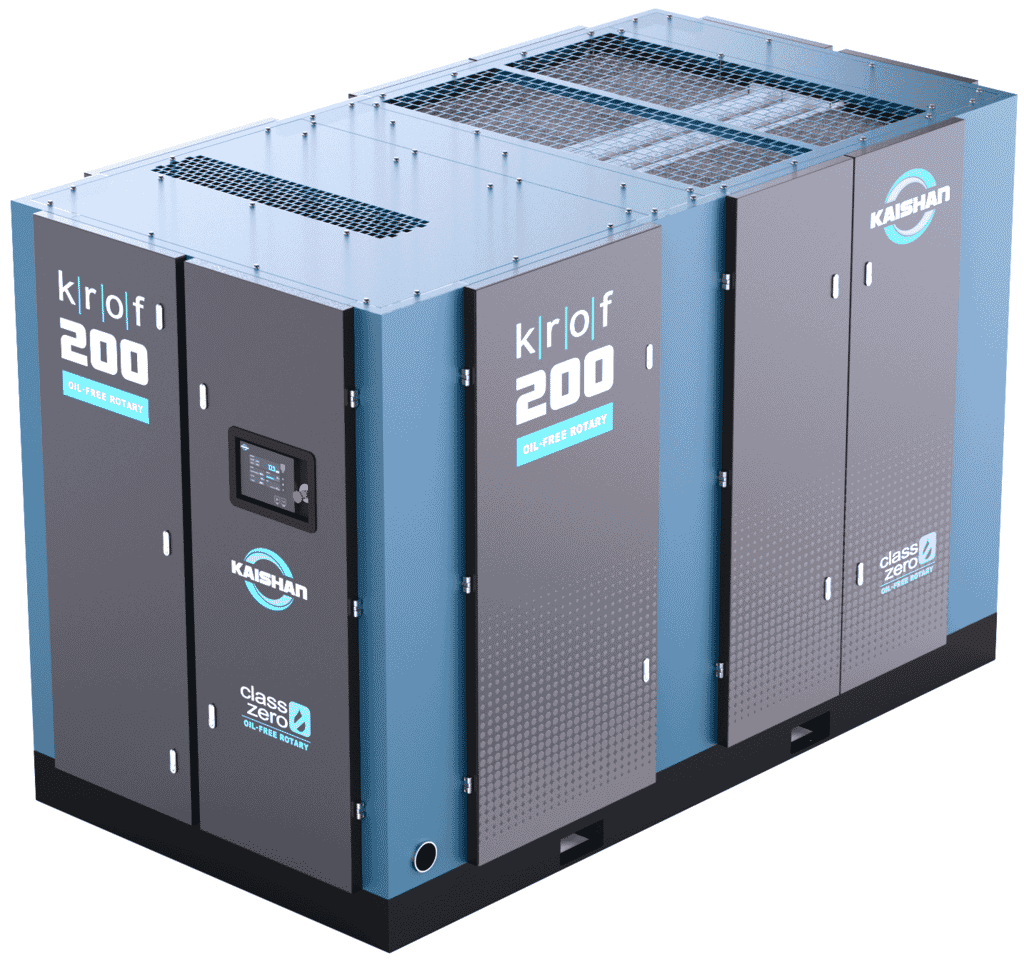
Our KROF two-stage, oil-free rotary screw air compressor also offers some of the smallest sizes in two-stage, oil-free compressors, serving the food and beverage, semiconductor, healthcare and electronics industries.
There are several critical reasons why our two-stage air compressor is a better value.
Energy Efficiency
By building on the pressure generated in the first stage, the KRSP2 generates more compressed air for less energy. As a result, a two-stage air compressor generates up to 15 to 20% more flow than a single-stage compressor of the same size (HP). Paybacks on energy costs alone may be less than two to three years.
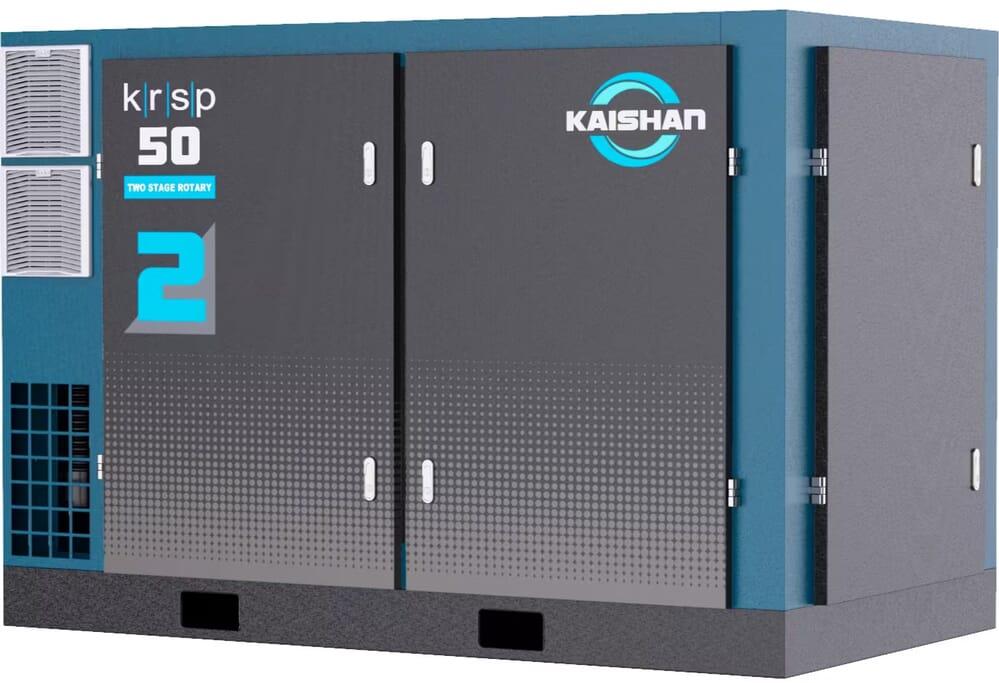
Equipping your KRSP2 with a variable-speed drive adds even more efficiency at part loads. As noted, our VSD version of the KRSP2 is one of the only two-stage units that are available in sizes as small as 30 HP.
Reliability and Lifespan
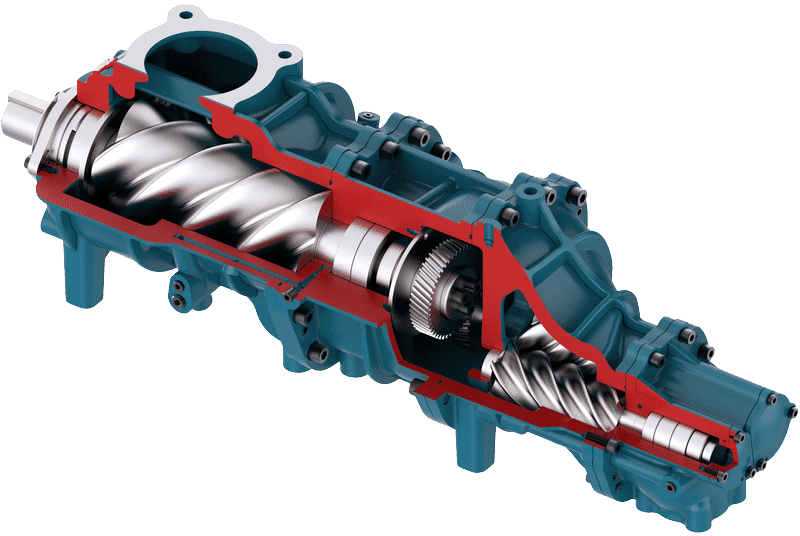
Using two stages reduces mechanical stress and heat, reducing wear and tear and extending component life. Similarly, the KRSP2 spreads the work over two stages with four discharge bearings on the first stage (the same as our KRSP single-stage unit) and three additional bearings on the second stage. As a result, those bearings are subjected to less stress than the two bearings that carry the entire thrust load in a typical single-stage unit.
Lower forces and more bearings result in less downtime, less frequent replacements and longer life. The KRSP2 is built to last, enabling us to offer an industry-leading lifetime airend warranty.
Lower Operating Cost
Lower electricity costs, reduced lifetime maintenance and fewer part replacements make operating costs for a two-stage rotary screw compressor lower than for a single-stage unit.
You can save even more money by using the KRSP2’s increased air flow to select a compressor with a lower horsepower rating. Because a two-stage compressor generates 15 to 20% more compressed air flow than a comparable single-stage unit, you may be able to replace a 300-HP single-stage compressor with a 250-HP two-stage KRSP2. That could cut the initial cost gap by 15 to 20%.
It’s all about matching the compressor horsepower-to-CFM ratio that fits your needs.
Lower Total Cost of Ownership
Admittedly, a two-stage unit has a higher initial cost than a single-stage unit. But with reduced energy costs and downtime and the ability to select a smaller compressor, a two-stage compressor delivers long-term benefits.
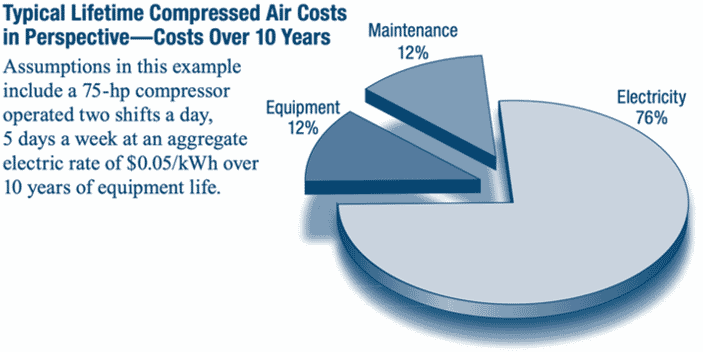
Remember, acquisition costs amount to only 12% of the total cost of ownership, according to the U.S. Department of Energy. You pay the initial cost one time. You’ll be paying the power and maintenance costs for the life of the compressor.
Is a Two-Stage Compressor Right for You?
There are many ways that plants can take advantage of the reliability and energy efficiency that a two-stage rotary-screw air compressor provides. Especially the smaller, PM-motor-driven units in the KRSP2 lineup.
But you’ll want to work with a trusted compressed air professional to determine whether a two-stage compressor will be a cost-effective addition to your compressed air system.
A trusted pro can evaluate your operation and determine whether a two-stage unit would make sense. Then, if it does, they can help you size and equip it appropriately.
Kaishan USA works with a nationwide network of independent distributors, who can provide on-site help and consultation as needed.
Key Takeaways
- Two-stage rotary screw compressors have largely been out of reach for small- and medium-sized companies.
- That denied most small- and medium-sized companies the reliability and energy-efficiency benefits that two-stage units have delivered for larger companies.
- Kaishan offers four KRSP2 premium rotary screw air compressors in the lower-capacity range, including 30-HP, 50-HP, 75-HP and 100-HP variable-speed models.
- The technical advance that makes it all possible is that these units are permanent magnet motor air compressors.
- A PM motor exceeds the power density and efficiency of traditional motors, allowing them to be 20%-50% smaller than a comparable induction unit.
- allowing them to exceed the power density and efficiency of more traditional units.
- Unlike induction motors, the efficiency of a PM motor stays more stable across its entire speed range, so it stays more efficient at part load.
- A VSD compressor with a PM motor has greater turndown capability due to a wider and flatter torque curve across the RPM range.
The Local Help You Need
We partner with independent, local distributors because it’s the best way to make sure you get the right system, reliable service and quick access to parts when you need them most.
With factory-trained technicians and a deep understanding of industrial applications, they help maximize efficiency and minimize downtime.
Our distributors offer expert guidance, faster response times and personalized support tailored to your needs. They don’t just sell compressors—they build relationships, ensuring you get the right system, reliable service and quick access to parts when you need them most.
So, when you buy through Kaishan, you’re getting more than a product—you’re getting a local partner who cares about your business and wants to see it succeed. Contact us today.
Further Reading
“How Variable Speed Drive Rotary Screw Air Compressors Save You Money.” More information on the advantages of variable-speed drives.
“Single-Stage vs. Two-Stage Air Compressor: Five Critical Differences.” A comparison of the advantages of single- and two-stage rotary screw compressors.
Frequently Asked Questions
Listen to the Podcast Version



Why Two Stage Stopped at 125 Horsepower
Welcome to the Big Dog Podcast. I'm Jason Reed.And I'm Lisa Saunders. Today we're talking about bringing the advantages of two stage compressors to the middle market. Jason, for a long time that phrase would have been a contradiction.
It would have. If you ran a plant with a 30 or 50 horsepower machine, two stage simply wasn't on the menu. The major manufacturers didn't build a two stage rotary screw compressor below 125 horsepower. So small and midsize shops got single stage, whether their duty cycle called for it or not.
So let's start with why anyone cares. What does two stage actually do differently?
It comes down to how much squeezing happens at once. A single stage machine reaching 100 PSIG does it in one chamber, and that's a compression ratio of about 7.8 to 1. That's a lot of work in one step, and it brings heat and mechanical stress with it.
Two stage splits that job. The first stage runs at about 2.8 to 1. Then the air passes through an interstage cooler that pulls out a good chunk of the heat of compression. The second stage takes that cooler air and goes another 2.8 to 1.
Right, and 2.8 times 2.8 lands you right around that 7.8 overall. Same destination, easier route. Cooler air is denser, so the second stage does less work. The payoff is up to 15 to 20 percent more flow than a single stage machine of the same horsepower.
There's a mechanical side too, and I think people overlook it. In a typical single stage airend, two discharge bearings carry the entire thrust load. In a two stage design you can have four discharge bearings on the first stage and three on the second. Seven bearings sharing the work.
Less force on each bearing means less heat and less wear. For a maintenance manager, that's the part that shows up as fewer surprises. But here's what I'd ask you, Lisa. If two stage has been around for decades on big machines, why did it take this long to shrink it?
A big piece of the answer is the motor. Most rotary screw air compressors use induction motors. They're reliable, and they're flexible. But the rotor lags behind the rotating magnetic field in the stator. That's the slip.
And slip hurts you when you slow down. Put an induction motor on a variable speed drive, and as the speed drops, its efficiency falls off quickly. The drive also tends to hunt, bouncing around as it chases the demand.
A permanent magnet motor behaves differently. The magnets are rare earth, at least twice as strong as what's in an induction motor. The rotor turns in step with the field, so there's no slip. Efficiency stays much steadier across the speed range, and the speed control is cleaner.
And they can be 20 to 50 percent smaller than a comparable induction motor. That compact size matters when you're trying to fit more machinery into a package for a mid sized machine room.
So today you can find variable speed two stage machines at 30, 50, 75 and 100 horsepower. There are also two stage oil free designs for places where contamination is a real risk. Think food and beverage, healthcare, electronics and semiconductor plants.
The Payback Math and When Single Stage Still Wins
Let's talk money, because that's where the argument gets settled. A two stage unit carries a premium of roughly 30 percent over a comparable single stage machine. And the cabinet is a bit larger because there are more components inside.Thirty percent sounds like a lot until you look at what the Department of Energy says about lifecycle cost. Buying the compressor is only about 12 percent of what it costs to own it over ten years. Electricity is roughly 76 percent. Maintenance is about 12.
So you pay for the machine once, and you pay the power bill every month. Now here's a measured example. In one plant case, a single stage variable speed unit was replaced with a two stage variable speed unit. Total energy use dropped 27 percent, and measured efficiency went from 4.76 cfm per kilowatt to 6.1.
I want to be careful with that one, because it's one plant. Savings depend on duty cycle, operating hours and your electricity rate. But when the plant runs steadily, a payback of two to three years on the premium is a reasonable expectation.
There's also a sizing angle. If you get 15 to 20 percent more air per horsepower, you might replace a 300 horsepower single stage machine with a 250 horsepower two stage one. That shrinks the price gap by 15 to 20 percent right at the purchase.
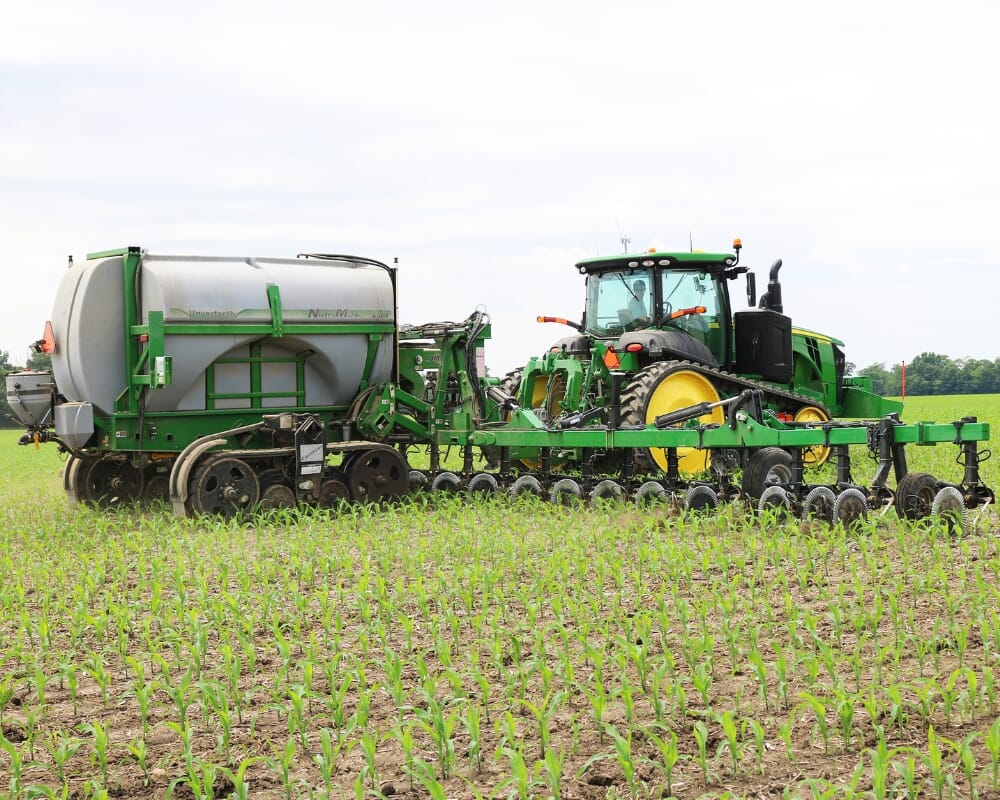
I like the Unverferth Manufacturing story for showing right sizing. It's an agricultural equipment manufacturer. They run two 150 horsepower two stage machines for full production. Then they added two 30 horsepower two stage units just to cover the much smaller weekend workloads.
That's smart, because a big compressor running a light load is an expensive way to make a little air. Match the machine to the demand, and the energy goes where the work is.
Now the honest part. Two stage isn't always the answer.
No, it isn't. Its strength is continuous, steady base load with a lot of running hours. If your plant runs intermittent shifts, or demand swings widely, or the compressor sits lightly loaded for much of the year, that 30 percent premium is hard to justify.
In that case a single stage machine wins. The first cost is lower, the footprint is smaller, and a good single stage control handles swinging demand well. If the unit runs only a small share of the time, there just aren't enough hours to earn the premium back.
So the question to ask is simple. How many hours does it run, and how steady is the load? Pull your data before you pull a quote. An independent assessment, like the product neutral training CAGI's Compressed Air Challenge offers, is a good place to build that understanding.
Well said. That's our time for today. Thank you for tuning in to the Big Dog Podcast. I'm Lisa Saunders.
And I'm Jason Reed. Thanks for listening, and we'll catch you next time.