
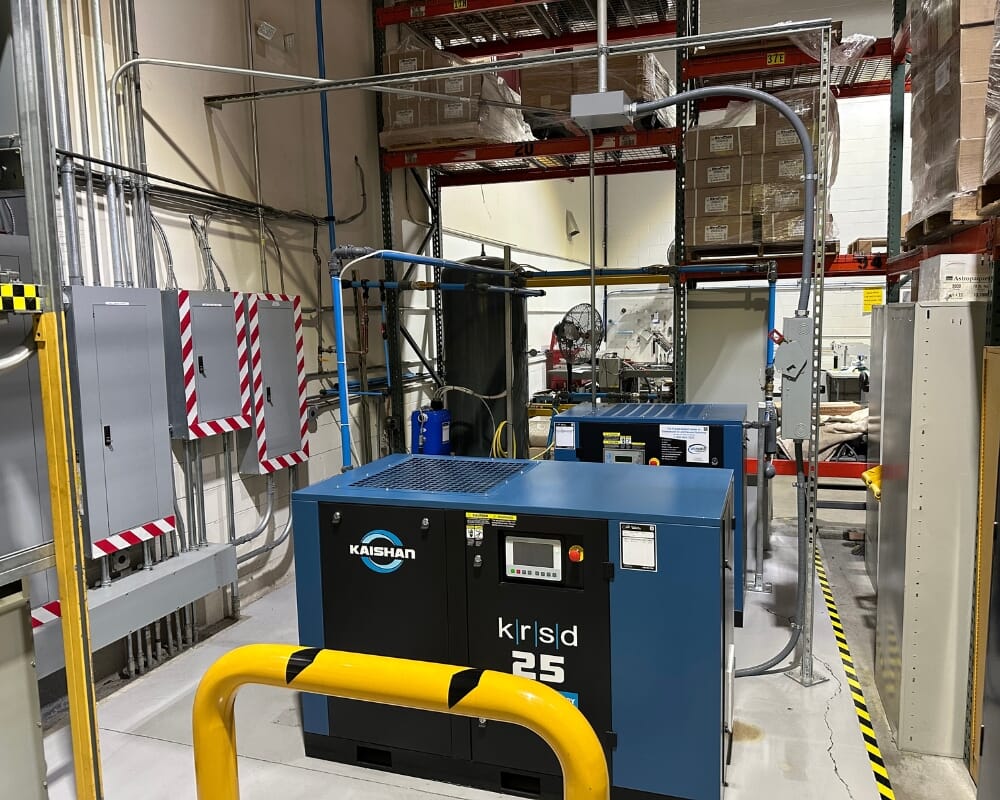
I’m sure you’ve seen it in your own facility. Industrial equipment is getting smarter. More sophisticated. More electronic controls.
And now, today’s seven-figure machines often incorporate robotics and connect to building management systems, enterprise resource planning systems and other enterprise-wide software systems. Not to mention the world at large, through the Internet of Things.
And lest you think that electric drives will take over in this brave new world, rest assured that many of the most advanced robotic and automation systems feature pneumatic actuation, controls and end-of-air tooling driven by compressed air.
As we’ve described previously, machine designers still value the many advantages pneumatics has to offer, from strength and light weight to precision and rapid response. Plus, they value the “soft touch” you just can’t get from an electrically controlled device.
All those computer-driven systems, however, need clean air. Not always ISO 8573-1 Class 0 air. But air that is clean, dry and delivered at a consistent pressure.
As a result, higher-quality compressed air is no longer confined to obvious segments, such as food and beverage, electronics, healthcare, and semiconductors. It’s now becoming more necessary in a much wider swath of the industrial landscape, such as the automotive, metallurgy and aerospace industries.
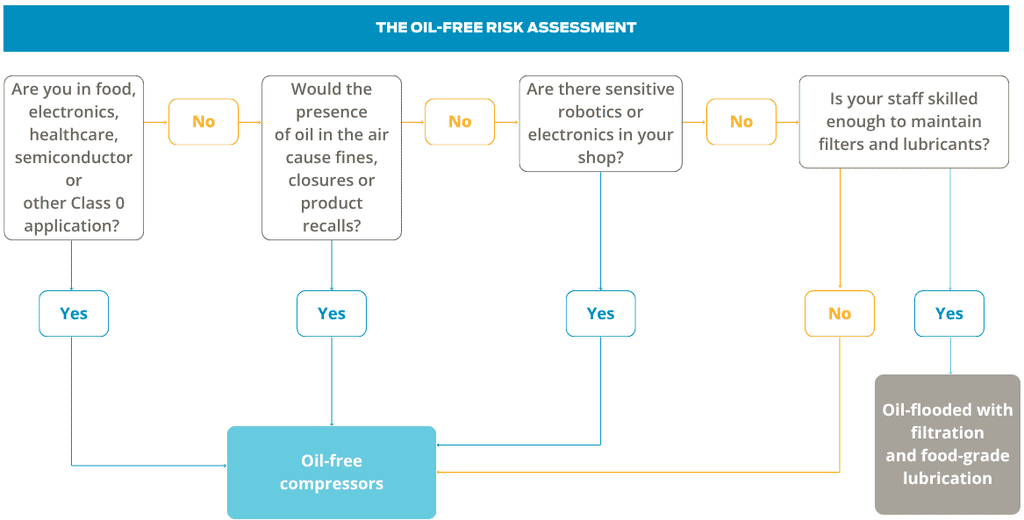
Facility and plant managers, as a result, face an important risk assessment: can they use traditional compressed air systems using advanced filtration and food-grade lubricants? Or do they need to implement oil-free?
Let’s review the advantages of each alternative.
Oil-Lubricated Rotary Screw Compressors: The Advantages
Oil-flooded rotary screw air compressors have been a mainstay of industrial and commercial power generation since their introduction in the 1930s. They deliver:
- Lower initial cost. Their initial cost is approximately $300-$400/HP for a fixed-speed unit and $500-$600/HP for a variable-speed drive compressor, while a new fixed-speed oil-free compressor can cost $600-$800/HP and $800-$1,000/HP for a VSD.
- Great energy efficiency. They have a higher CFM/HP.
- Lower energy costs. The improved energy efficiency reduces electrical costs by about 5%.
And they can be equipped with filtration that reduces oil levels to 2 PPM—not good enough for food or semiconductor applications, perhaps. But more than adequate in many other uses.
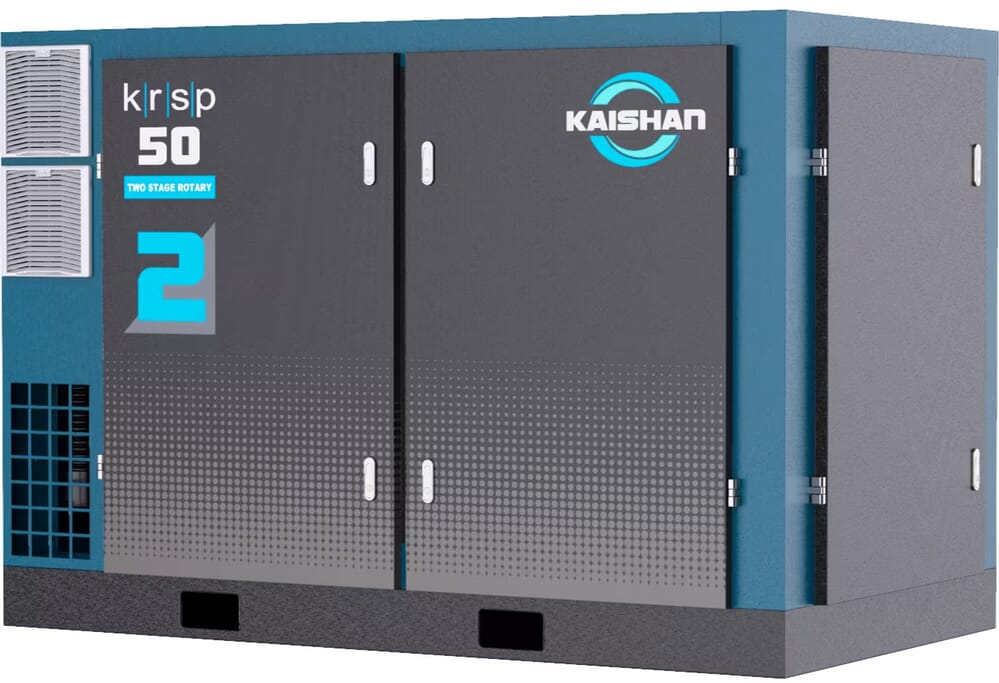
For companies who cannot risk oil contamination, compressor manufacturers have developed oil-free air compressors.
Oil-Free Compressors
Oil-free units, including centrifugal air compressors and oil-free rotary screw compressors, do not introduce oil into your air flow.
Centrifugal Compressors
Centrifugals are inherently oil-free and are extremely cost-effective at delivering the thousands of cubic feet of air per minute required by the largest manufacturing companies.
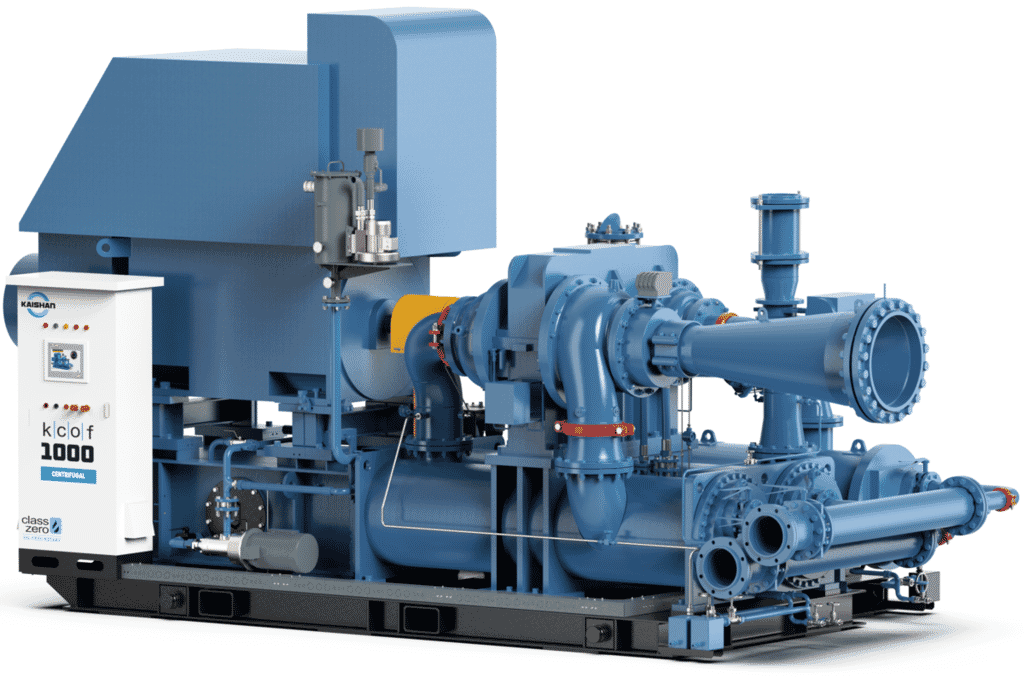
With centrifugal air compressors, the larger the demand, the more efficient centrifugals become. They tend to deliver the best return on investment and are the best choice for projects 400 HP and over, but can also be an oil-free alternative in smaller sizes.
As a result, many facility managers who require extremely pure air are turning to oil-free rotary screw compressors to meet the growing demands of compressed air for robotics and other modern equipment.
Oil-Free Rotary Screw Air Compressors
As noted, an oil-free compressor does not introduce oil into its compression chamber. Instead, manufacturers use a combination of specialized materials and coatings and manufacture components to extremely tight tolerances.
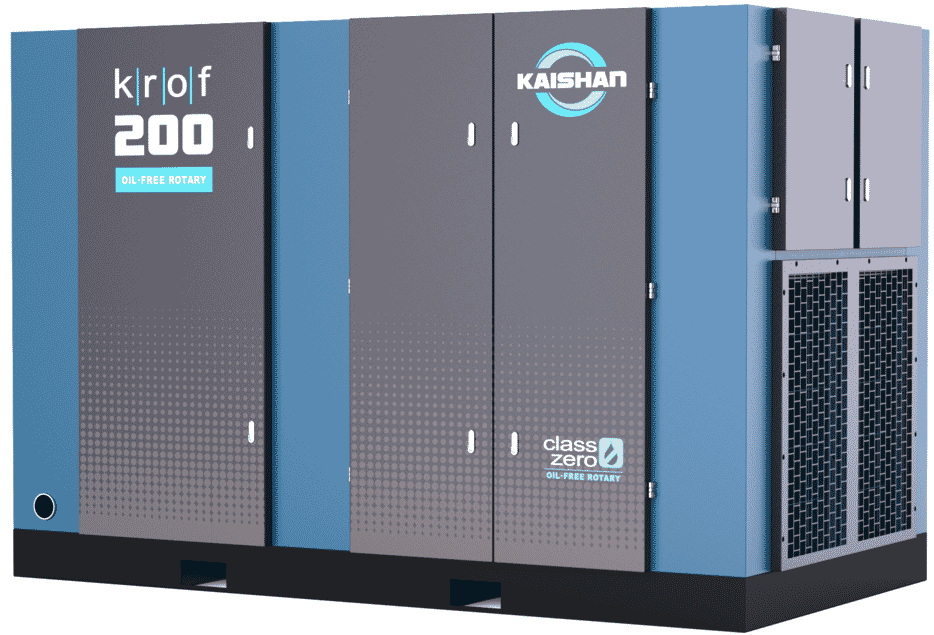
They offer some of the energy-efficiency, reliability and lifespan advantages of their oil-lubricated cousins. And they’re a known quantity in the world of industrial maintenance.
For more details on our manufacturing process, read our blog post, “State-Of-The-Art Manufacturing of Oil-Free Rotary Screw Air Compressors.” Or watch the KROF video.
The Choices
Oil-free? Or oil-flooded?
The key point? Risk.
How Much Risk Do You Want to Assume?
If oil carry-over contamination occurs, what are the implications for your business?
- Would you lose an entire batch of products, as might happen in bakeries, food-processing plants or semiconductor fabs?
- Would your plant face fines, closure or product recalls due to oil contamination in a food product?
- Would the presence of oil in your compressed air distribution system require a complete replacement?
For many plants in the most sensitive food, healthcare and semiconductor applications, the savings don’t justify the risk. As a result, those companies have concluded that oil-free is the way to go. Especially if there are potential losses like the ones above.
But many applications are less sensitive to oil mist. Even a food plant has end uses such as packaging, air tools, grinders, impact wrenches, pneumatic equipment and material handling, where a small amount of oil in the air would have relatively minor impact.
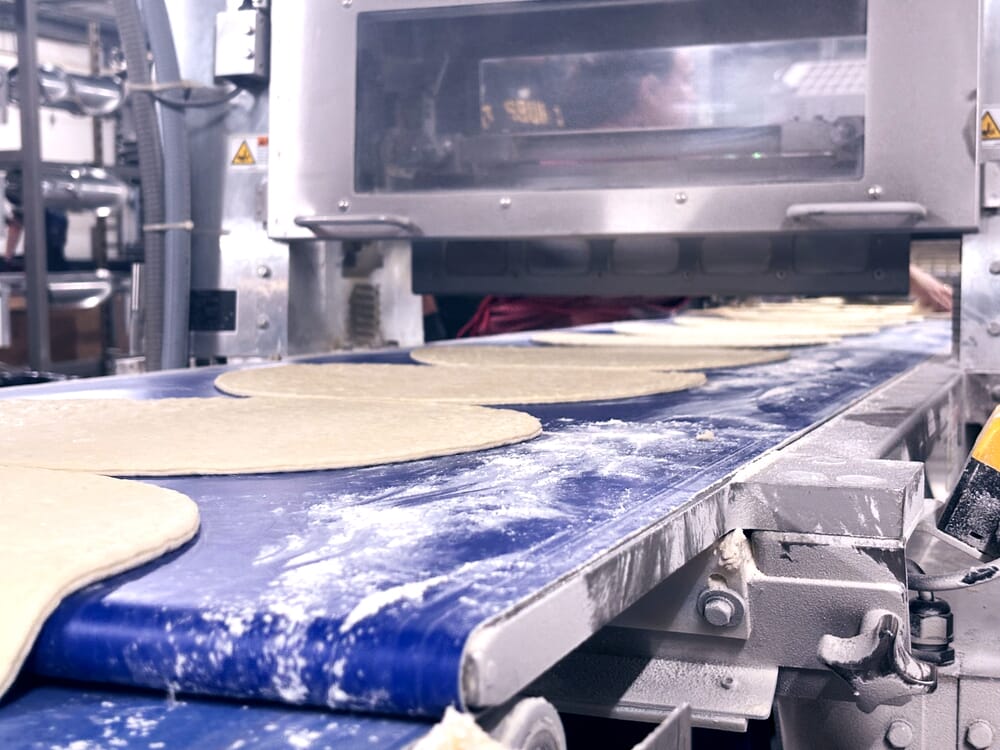
Because of the cost savings, some manufacturers choose oil-flooded rotary screw air compressors paired with food-grade lubricants for applications that don’t involve direct contact with the product, especially for foods or beverages consumed by people.
A Key Point: Maintenance
The critical consideration for the oil-lubricated approach is filter maintenance. Clogged filters will impede and eventually block airflow, causing unnecessary and avoidable energy loss. So, you’ll need to replace filter elements regularly. Finer filters, after all, capture more particulates, so service intervals are typically more frequent, and scheduled change intervals need to be adjusted for the installation.
You’ll also want to cascade filters—using coarser filters upstream to catch the larger particles that would prematurely clog a finer filter downstream.
In addition, larger manufacturing facilities sometimes use both oil-free and oil-flooded air compressors. However, they separate the two air distribution systems, each with its own headers, storage and air treatment. Admittedly, maintaining dual systems requires significant effort.
Because of these additional considerations, most companies can use some help in selecting which path to take. And in implementing their decisions.
As a result, the best way to get the quality compressed air for robotics you need is to work with a local compressed air professional.
The Help You Need to Get High-Quality Compressed Air for Robotics
If you need help deciding how to deliver compressed air to your sensitive applications, your local compressed air professional is the place to start. Our approach is to help you understand the risks and costs associated with each option. The goal: Making sure you have the right products for your applications.
We have developed close relationships with a nationwide network of independent distributors, who can help you assess your needs and determine the best solution for your products, your location and your company. They can help you weigh the alternatives and move forward with confidence.
Key Takeaways
- Today’s advanced machines often need higher-quality air, free from oil, water and other impurities.
- Facility and plant managers face an important risk assessment: can they get by with traditional compressed air systems using advanced filtration and food-grade lubricants? Or do they need to bite the bullet and go oil-free?
- In bakeries, food processing plants or semiconductor fabs, the risk of contamination may well be too great, and they often turn to oil-free compressors.
- In other cases, plant managers may turn to oil-lubricated rotary screw compressors with advanced filtration and food-grade lubricant because of their many cost and maintenance advantages.
- If you need help deciding how to deliver compressed air for robotics, your local compressed air professional is the place to start.
Local Help in Getting the Compressed Air for Robotics You Need
We partner with independent, local distributors because they can offer expert guidance, faster response times and personalized support tailored to your needs.
And, after you’ve made your decisions, they can help you at every step, from installation and startup to ongoing maintenance and repair. Their factory-trained technicians have a deep understanding of industrial applications, helping maximize efficiency and minimize downtime. So, when you buy through this dealer network, you’re getting more than a product—you’re getting a local partner who cares about your business and wants to see it succeed.
Find a compressed air professional near you. Or contact us directly.
Further Reading
“The Role of Compressed Air in Robotics and Automation.” Find out why designers of some of our most advanced devices, including robotics and automation equipment, are turning to pneumatics.
“How the Right Air Compressor Enables the Soft Touch that Makes Pneumatics So Valuable.” We explain the emerging role of the “soft touch” in product design.
Frequently Asked Questions
Listen to the Podcast Version



The High-Tech Shop Floor and the Pneumatic Touch
Welcome to the show everybody! I'm Jason Reed, here with Lisa Saunders. And Lisa, picture this: you walk onto a modern shop floor today, and you're looking at a seven-figure piece of machinery. It's fully automated, connected to the cloud, talking directly to the ERP system, and running advanced robotics. But if you look closely at what's actually moving those robot arms, it isn't some high-tech electric servo. It's good old-fashioned compressed air.Right, which seems almost counterintuitive at first. You have these hyper-advanced computer-driven systems, but they're still relying on pneumatics. But when you talk to machine designers, they'll tell you that electric drives just can't match that pneumatic "soft touch." If a robot needs to pick up a delicate piece of glass or run a rapid-response sorting line, pneumatics gives you that perfect blend of high strength, lightweight speed, and compliance.
Exactly. If you jam an electric actuator, you burn out the motor. If you jam a pneumatic cylinder, it just stops. It's got that natural give. But here's the catch that's catching a lot of plant managers off guard: these modern, smart machines are incredibly sensitive. They're packed with miniature proportional valves, delicate sensors, and electronic controls. They might not all need ISO Class 0 absolute oil-free air, but they absolutely demand dry, clean air delivered at a dead-steady pressure.
And that is a major shift. It means high-quality air isn't just a concern for food processing or pharmaceutical plants anymore. We're talking about heavy industries like metallurgy, automotive assembly, and aerospace having to treat their air systems like cleanrooms. If your pressure fluctuates or a tiny drop of moisture hits a pneumatic controller on a robotic welder, the whole line goes down.
Oh, I've seen it happen. Look at Adams Direct & Media Services. They brought in an advanced Canon varioPRINT iX3200 printer. Beautiful, high-end machine, but it required precise pressure and humidity control to function. To protect that investment, they had to upgrade their whole air setup. They went with a twenty-five horsepower direct-drive model with a variable-speed drive—specifically a Kaishan KRSD—and paired it with a twenty horsepower belt-drive KRSB as a backup, plus serious extra filtration.
A varioPRINT iX3200. That's a serious piece of precision gear. And it shows that even in commercial printing, you can't just hook up whatever old shop compressor you have sitting in the corner and hope for the best. You need a stable system designed for precision. But this brings us to the big debate every plant manager is wrestling with: do you try to clean up your existing lubricated system, or do you bite the bullet and go completely oil-free?
The Oil-Flooded vs. Oil-Free Dilemma and Managing Risk
And that's where the rubber meets the road, Lisa. Because if we look at rotary screw air compressors, the classic oil-flooded units are the workhorses of the industry for a reason. They have a lower upfront cost. We're talking maybe three hundred to four hundred dollars per horsepower for a fixed-speed unit, or five hundred to six hundred for a variable-speed drive.Wait, let's contrast that with oil-free. An oil-free fixed-speed can run you six hundred to eight hundred dollars per horsepower, and a VSD oil-free is easily eight hundred to a thousand dollars per horsepower. That is basically double the initial capital investment!
Double. Plus, oil-flooded units are generally about five percent more energy-efficient because the oil helps seal and cool the compression chamber, giving you a higher CFM per horsepower. And with modern filtration, you can knock the oil carryover in a lubricated system down to about two parts per million. For a lot of robotic tools, packaging lines, or metal fab work, two PPM is actually clean enough.
Sure, two PPM sounds tiny, but here's where the risk assessment comes in. If that downstream filter fails, or if a technician misses a maintenance cycle, what does that two PPM turn into? If you're a food plant or a semiconductor fab, a single drop of oil carryover can ruin an entire batch of product. You're looking at massive recalls, potential regulatory fines, or even having to rip out and replace your entire contaminated piping distribution system. In those cases, the savings on a lubricated compressor just don't justify the risk, which is why they choose systems like the KROF two-stage oil-free rotary screw that guarantees Class 0 air.
Oh, absolutely. If you're in microchips or pharmaceuticals, you don't play games. But if you're not in direct contact with the product, there are smart ways to save money. Take The Fire Roasted Crust Company in Wexford, Pennsylvania. They needed compressed air to power an oven conveyor belt. Now, since the air doesn't touch the crusts directly, they used a direct-drive oil-lubricated compressor, but they filled it with food-grade lubricant. That way, if there ever is a mechanical seal failure, the risk to the operation is managed, but they didn't have to pay the premium for an oil-free machine.
Food-grade lubricant as a safety net. That's a smart compromise. But if you do stick with an oil-lubricated system for your robotics, you have to be absolutely religious about your filter maintenance. You need to use cascading filters—coarse filters upstream to catch the big particles, then progressively finer filters downstream so you don't clog your expensive elements immediately.
And if you're a really large facility, you might actually run both. You keep a large centrifugal compressor—like a Kaishan KCOF, which are inherently oil-free and incredibly efficient above four hundred horsepower—for your sensitive process lines, and then run standard lubricated rotary screw air compressors for your general shop tools. But you have to keep those piping headers completely separate.
Dual distribution systems. That is a lot of extra piping and maintenance to manage, but it saves you from running the entire plant on expensive high-purity air. Ultimately, it all comes down to evaluating your specific tolerance for risk versus your budget, and working with a local professional to map out the system. It's not just about buying a compressor anymore; it's about designing an air quality strategy that keeps those million-dollar robots running without a hitch.
Well said, Lisa. That's our take for today. Keep those filters clean, watch your pressures, and we'll catch you on the next episode of The Big Dog Podcast.
See you next time!