



Compressed Air on a Budget: Four Golden Rules
December 24, 2025
Electric Portable Air Compressors: A Smart Alternative to Diesel
January 7, 2026Five Quick Wins That Add Value to Your Compressed Air System
Kaishan USA | December 31, 2025 | Uncategorized

Even in applications as sensitive as electronics manufacturing, you don’t need to launch major overhauls to improve system operation. In fact, there are many quick wins you can score with some easy-to-implement tactics.
Compressed air keeps your plant moving. But it tends to fly under the radar until something goes wrong.
If you’re a maintenance manager, you know the drill—production wants more flow at stable pressure, finance wants lower energy costs and you want a system that runs reliably without constant intervention.
The good news is you don’t need a total overhaul to unlock major gains. Small, smart changes in how you run, maintain and monitor your compressed air system can deliver big wins in compressed air system efficiency, quality and uptime.
In this post, we’ll walk through practical ways to add value fast, organized into five key areas: compressed air system efficiency, air quality, reliability, system-level design and locally managed parts.
These are quick wins you can start building into your PMs and walk-throughs. If you’re growing or planning changes, we’ll also highlight areas to think ahead—so your next step sets you up for lower costs and fewer headaches later.
You can take advantage of these quick wins whether you’re working with a centrifugal air compressor or a rotary screw compressor.
We’ll start with compressed air system efficiency.
Compressed Air System Efficiency
Fix Leaks
Nothing burns money like air leaks. A typical plant loses 20%-30% of its compressed air to leaks and it’s even higher in some facilities.
Start with the usual suspects—quick connects, flex hoses, drain valves, regulators and old FRLs.
Build a quarterly leak detection and repair routine into your PM plan. Then tag every leak, prioritize the biggest offenders and track savings. Every CFM you save is a CFM you don’t have to produce.
Fixing leaks reduces compressor run time, lowers energy use and extends equipment life. Best of all, it often reduces pressure complaints because your system no longer starves downstream tools during peak demand.
Read more about leak detection in compressed air systems.
Header Pressure: Step Down Slowly
Header pressure is one of the most expensive set points in your plant. For every 2-PSIG increase in discharge pressure, a compressor can consume roughly 1% more energy.
Get started with this low-risk experiment: each week, lower your system pressure by 1 PSIG and see how far you can go before users notice.
Communicate the plan to production, watch end-of-line tools and critical applications and stop once you reach the lowest stable set point.
Pair this with best practices for air storage tanks and good controls (more on both topics below) to buffer demand events. Small reductions add up—lowering pressure by 5-10 PSIG could save significantly on your energy bill.
Grow into Direct Drive or Coupled Units
As your facility expands, stepping up from belt-drive to direct-drive or gear-coupled compressors can cut maintenance and improve compressed air system efficiency.
Belt wear introduces slip and heat, which wastes energy and demands more frequent adjustments.
On the other hand, direct-drive units like Kaishan’s KRSD direct-drive rotary screw air compressors eliminate belt-related losses and generally provide higher efficiency at full load.
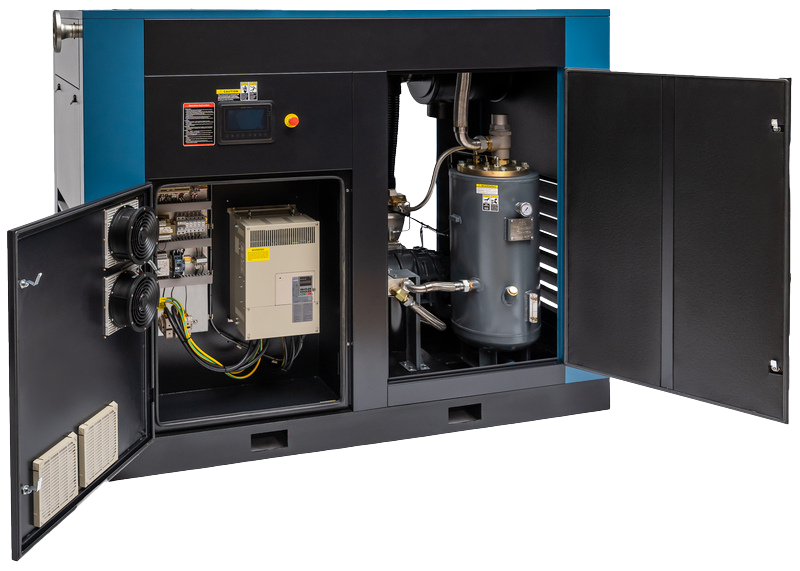
Direct-drive units like Kaishan’s KRSD direct-drive rotary screw air compressors eliminate belt-related losses and generally provide higher efficiency at full load than belt-drive compressors.
When it’s time to add capacity or replace an aging unit, look at total cost of ownership for air compressors—energy plus industrial air compressor maintenance—not just the purchase price. Over 10 years, the energy line dwarfs the capital line for most compressors. For more on the topic, read our post, “Six ‘Gotchas’ That Turn Low Sticker Prices into High Lifetime Costs.”
Heat Recovery Pays
Air compressors can also be great space heaters—up to 90% of the electrical energy they consume becomes heat. You’ll want to capture it. Duct warm discharge air for space heating in winter or preheat makeup air for process needs.
On projects we’ve seen, heat recovery can offset a meaningful chunk of winter utility bills, improving compressed air system efficiency and payback. It’s one of the easiest sustainability wins in a plant.
The next quick win? Improving air quality.
Air Quality
Air Intake Matters
Start at the source. Clean, cool, dry intake air improves compressor performance and downstream air quality. If your compressor sits near a hot process line or dusty area, consider relocating the intake or ducting it to a cleaner, cooler area. Every 20°F rise in intake temperature reduces flow and compressed air system efficiency. Keep the intake path short, sealed and filtered appropriately.
Filters: Right Grade, Right Place
Your process defines your filtration. General plant air may only need a particulate and coalescing filter ahead of dryers.
Instrument air will likely require tighter coalescing and possibly activated carbon for oil vapor.
Sensitive applications such as electronics, semiconductors, healthcare or food and beverage often require point-of-use filtration in addition to header filtration. And perhaps even an oil-free unit like Kaishan’s KROF two-stage, oil-free, rotary screw air compressor.
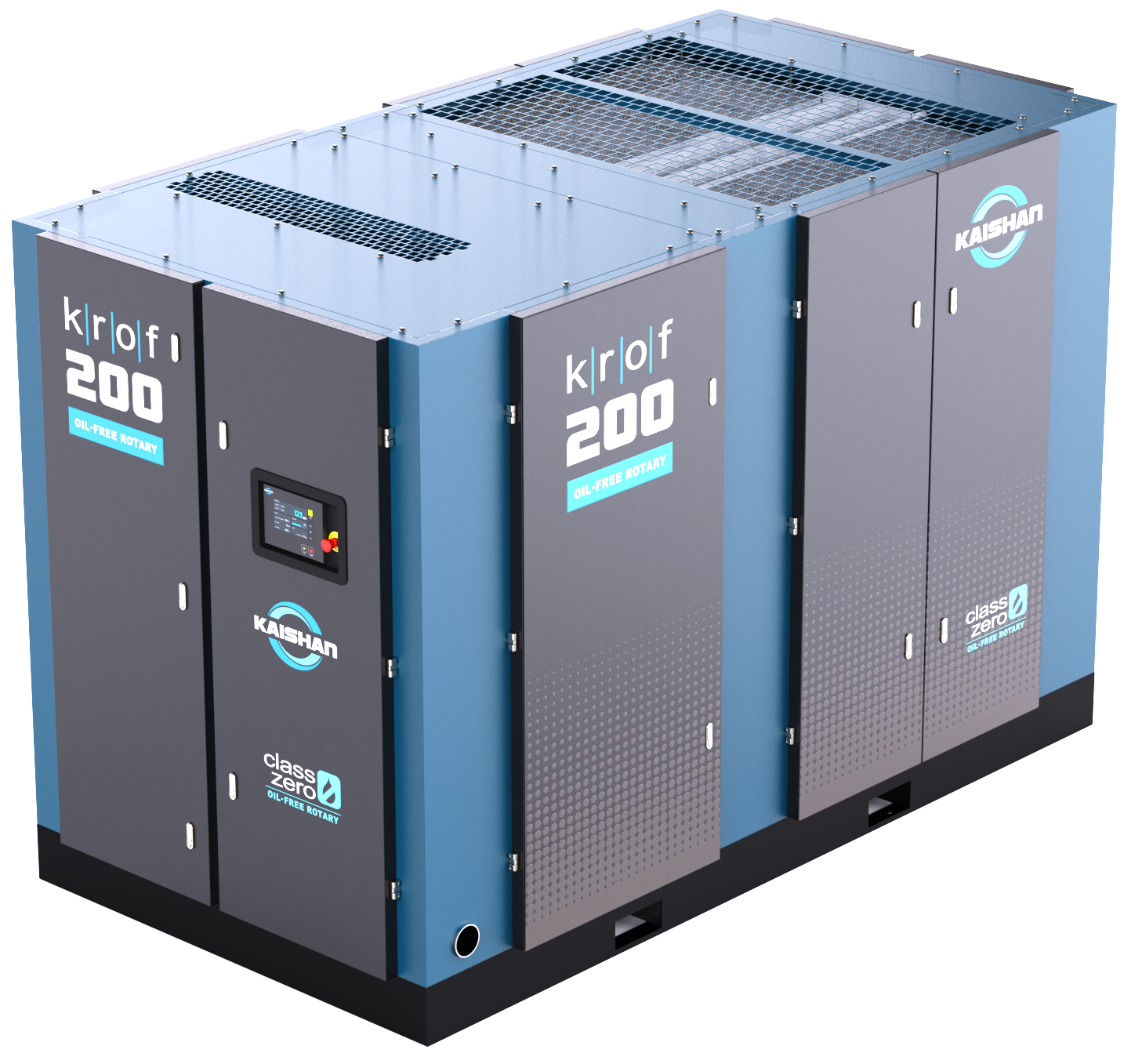
Kaishan’s KROF two-stage, oil-free, rotary screw air compressor may be required for sensitive applications such as electronics, semiconductor, healthcare or food and beverage.
Size filters for peak flow and pressure drop. A clogged filter drives up energy cost and starves tools. Add differential pressure gauges so you can change elements before they become clogged.
Our next quick win is reliability.
Reliability
Backups Keep You Running
If production stops when your main compressor stops, you need redundancy. A simple backup strategy—one extra compressor capable of carrying critical load—can be the difference between a minor blip and a costly shutdown. Even if it’s only a smaller backup that can support essential lines while you deal with a problem in your main unit.
Quick Connects for Electric Portable
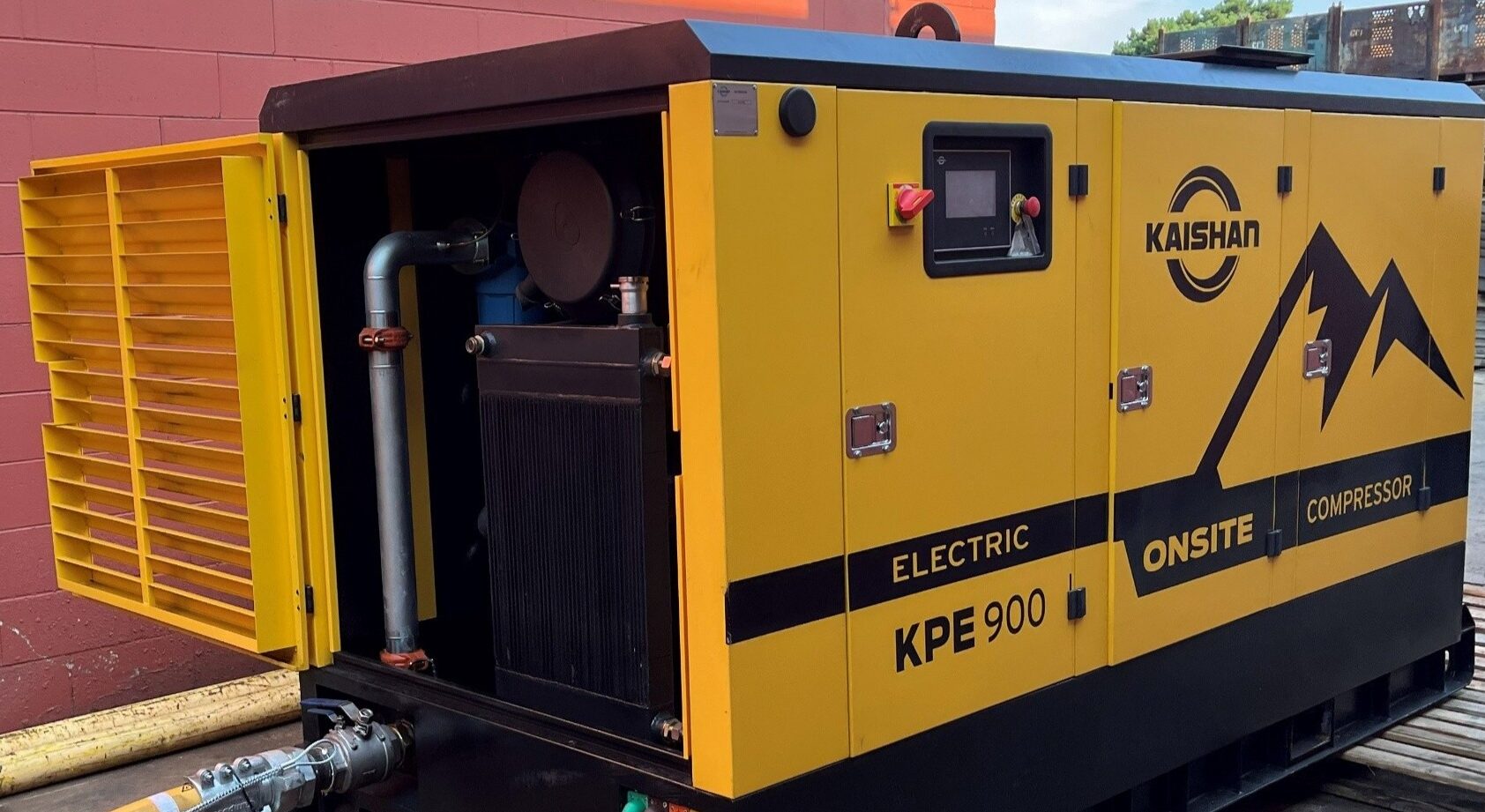
Kaishan’s KPE electric portable compressors can be a lifesaver when a main unit goes down.
Plan for the worst day. Install a quick-connect tie-in for an electric portable compressor near your header or main distribution point. Label the connection, verify voltage and amperage and test the procedure. When a failure hits or maintenance takes a unit offline, you can roll in a temporary machine and keep running. That’s cheap insurance.

Anticipating the worst-case scenario, it’s always a good idea to install a quick-connect tie-in for an electric portable compressor.
System Design: Go Multi-Compressor
A multi-compressor system offers flexibility, efficiency and resilience. Use a mix of fixed-speed and variable-speed drive (VSD) compressors so the VSD can trim load while the fixed-speed units handle base demand. This reduces short cycling, stabilizes pressure and cuts energy use. It also spreads run hours across machines, extending service intervals and component life.
Direct Monitoring: Use Connected Data
Modern compressors and dryers can share real-time data over common protocols and cloud solutions. Monitor key parameters—pressure, temperature, dew point, power draw and alarms. Set thresholds, receive alerts and trend performance.
Remote monitoring lets you catch issues before they escalate—rising temperature indicating a cooling problem, creeping pressure drop across filters or a dryer not hitting dew point. Use the data to schedule industrial air compressor maintenance based on condition and runtime, not just calendar days.
The next quick win requires looking at your system more broadly.
System Considerations
Optimizing Compressed Air Piping Systems: Size and Layout
Compressed air needs clear sailing. Use appropriately sized main headers to keep velocities moderate and reduce turbulence. A looped header can improve pressure stability and distribute flow more evenly than a dead-end run. Keep drops short, avoid unnecessary elbows and slope lines to drain points.
Pressure Drops: Measure and Minimize
Every pound of pressure lost to restrictions is another pound your compressor has to produce. Map your system from discharge to the farthest point of use. Measure pressure at key nodes during peak demand and look for big hitters—undersized filters, long runs of small pipe, restrictive regulators or congested manifolds.
Fixing pressure drop often lets you lower compressor discharge pressure without starving tools. It’s a virtuous cycle—less drop means less energy lost. And lower electricity bills.
Controls: Make Machines Talk
Coordinated control is where multi-compressor systems shine. Use a master control strategy—lead-lag, cascaded set points or an integrated network controller—so machines stage efficiently and maintain a tight pressure band. The goal is fewer starts and the VSD doing the trimming while fixed-speed units carry base load.
When two or more machines communicate, you reduce overlap, avoid multiple units idling and hold pressure steady. That boosts both compressed air system efficiency and product quality. For more information on controls, read our blog post, “Everything You Need to Know About Compressed Air Controls.”
Storage: The Unsung Hero
Air receivers are shock absorbers for your plant. Properly sized storage helps you ride out short, high-demand events without spiking pressure or kicking on another compressor. Place receivers both in the compressor room and strategically near high-flow uses.
As a rule of thumb, more dynamic systems benefit from more storage. Combine storage with smart controls, and you get tighter pressure control and fewer starts. For more on best practices for air storage tanks, read our blog post, “A Quick Guide to Accurately Size Air Compressor Tanks.”
And for more on compressed air system design best practices, download our white paper, “Air Compressors 101: How Air Compressor Components, Systems and Parts Come Together to Make Compressed Air.”
Our final quick win is parts availability.
The Parts You Need, When and Where You Need Them
Sensors You Can Swap Fast
Keep common sensors on hand—pressure, temperature and dew point. After all, an inexpensive sensor can prevent a $50,000 downtime event if you can swap it in within minutes. Store them labeled, protected and logged by part number and compatible models.
Filters You’ll Actually Replace on Time
Stock filter elements for your compressors, dryers and point-of-use housings. Track differential pressure and replace elements based on condition or at recommended intervals. If your team has to wait for a shipment, replacements get deferred and energy costs creep up.
The Right Oil on the Shelf
Use the specified lubricant for your compressors and keep a small buffer stock. Mixing or substituting oils can shorten component life and void warranties. Log batch numbers and change intervals so you have traceability. Pair oil changes with a quick oil analysis program if you’re chasing maximum uptime.
Need a bonus quick win? Here’s a big one: having expert help available when you need it.
Small Moves, Big Gains
You don’t have to rebuild your air system to make it better. Start with a leak program, step your pressure down slowly, clean up intake air and coordinate your controls.
Add storage where it helps, set up a quick-connect for emergencies and monitor the right data points so you see issues before they hit production.
Most of these steps cost little but pay major return in uptime, peace of mind and energy savings in compressed air systems.
All of these quick wins can benefit from the help and guidance of your local compressed air professional. Ask them to perform an air compressor system audit or at least schedule regular walk-throughs. A second set of eyes can spot pressure drops, sizing gaps or control opportunities that are easy to miss in the day-to-day.
Kaishan USA partners with a nationwide network of independent distributors who can be on site when you need them. These factory-trained compressed air specialists service full systems and support advanced technologies without a hassle. They build relationships, helping you choose the right system for your application.
We work with local, independent distributors because it serves you better. There’s no red tape—just expert guidance, faster response and support tailored to your operation. They don’t just sell compressors; they build relationships.
With factory-trained technicians who understand real-world industrial demands, they help you boost compressed air system efficiency and cut downtime. When you buy through Kaishan, you get more than equipment—you get a local partner invested in your success.
Key Takeaways
- Fix leaks first—every CFM saved reduces energy, run time and pressure complaints.
- Lower header pressure gradually to the lowest stable set point for quick savings.
- Consider direct-drive or coupled units as you grow to cut industrial air compressor maintenance and improve compressed air system efficiency.
- Improve air quality at the source with better intake placement, right-size filtration and matched drying.
- Design for reliability with redundancy, quick-connects for temporary units and multi-compressor control.
- Reduce pressure drops by better optimizing compressed air piping systems, headers and storage.
- Monitor with connected data so you can act on trends, schedule condition-based industrial air compressor maintenance and prevent downtime.
Let Us Help
Adding value in small ways means creating a higher level of compressed air system efficiency that can be critical to the operation of all the processes that rely on that system. If you need help improving your compressed air system, get in touch with the experts at Kaishan. Contact us today.
Listen to the Podcast Version



Efficiency Upgrades That Make a Difference
Hey, everyone, welcome back to The Big Dog Podcast! I’m Lisa Saunders, and as always I’m here with Jason Reed. Today, we’re gonna dig into five practical quick wins for making your compressed air system way more efficient—no major overhauls, no nonsense. Sound good, Jason?Yeah, let’s get right into it, Lisa. You know, it’s funny—so much of what we see, especially on the shop floor, comes down to just doing the basics better. First thing: leaks. If you’ve heard us before, you know I talk about it a lot, but it’s wild how often it’s ignored. You can lose up to—what—the stats say like 20 to 30% of your compressed air to leaks. So that’s basically just money flying out of your plant.
I mean, and it really adds up fast. Leaks can crop up anywhere—those quick connects, old hoses, drain valves, regulators… sometimes even those ancient FRL units nobody checks. Building leak detection and repair into your regular PMs is honestly one of the fastest ways to rack up savings. Just tag the big leaks, fix the worst ones first, and keep score. I’ve seen plenty of facilities drop their energy bills just by doing that one routine.
Yeah, and not only are you saving energy, you’re reducing run time and extending equipment life. If you fix leaks, you’re not running your compressors as hard and your downstream tools aren’t starving for air during peak demand. I mean, we talked about this a bit in our episode on optimizing compressed air on a budget, but it really can’t be overstated.
Totally. And then, the other big one: step your system pressure down, but do it slow. Every 2 PSI you dial up on your header? That’s about a 1% hit to your energy costs. So, instead, experiment—just drop your system pressure by a PSI each week, keep an eye on production and tools, and settle at the lowest stable set point. It literally takes so little effort and pays off right away.
And, pairing that with proper storage and controls makes a difference, too, but we’ll get into that in a minute. But Lisa, I gotta tell the story from that Midwest plant I visited—
Go for it!
So, they had these old belt-driven units in place, running them ragged. We swapped in direct-drive rotary screws, right? Maintenance calls, which used to be this weekly nightmare, got cut in half within a year. Belt wear was gone, energy use was down, the machines just ran smoother. The trick is always looking at total cost—not just purchase price, but all those maintenance headaches, too. That’s where direct-drive and gear-coupled units shine as you grow.
So, honestly, small steps: fix the leaks, dial down the pressure, and, when the timing’s right, upgrade to something efficient like direct-drive. You don’t need a new system—just some smart changes.
Air Quality and Reliability Fast-Track
That leads right into quality and reliability, which might sound less glamorous, but are non-negotiable if you want to keep things running. Let’s kick off with air intake—Jason, you wanna walk through why that’s such a game changer?Yeah, for sure. Think of air intake as the starting line. If your compressor’s pulling in dirty, hot, or humid air, you’re just stacking problems for yourself—and for your filters, and aftercoolers, and, really, everything downstream. The cleaner and cooler the intake, the less your compressor works just to keep up. If you’re near a hot process or in a dusty corner, move or duct that intake to a better spot—cut twenty degrees off the intake, and you’re winning on efficiency right there.
And don’t just slap any old filter on it. Your process decides what filtration you need. Plant air? Sure, basic particulate and coalescing filter. But if you’re running, say, instrumentation or something even more sensitive—semiconductors, electronics, food—you might need tight coalescing or even a Kaishan KROF oil-free compressor. Especially for facilities that just can’t risk any oil or vapor in their end product.
Filtration size matters, too. Regular checks on filter differential pressure? That saves your energy bill and your equipment. And point-of-use filtration for the really delicate spots, don’t neglect it. Trust me, a clogged or undersized filter adds costs and headaches.
Speaking of headaches, one thing no one wants is a plant shutdown. Redundancy is your lifeline—a backup compressor isn’t just an “extra,” it’s your insurance policy for production. Even a smaller one that can cover your critical lines is game-changing.
Yeah, and quick-connect tie-ins for electric portable units? That’s money well spent. Just label it, make sure your voltages and amperages match, and rehearse the procedure. When something fails, you don’t want to be fumbling. Kaishan’s KPE electric units are built for this—easy to deploy fast, no drama.
This actually reminds me of an electronics plant I worked with—massive high-dollar production, everything’s just humming along. Main compressor trips, so they’re two minutes from panic. Luckily, backup was already piped and ready to go with a quick-connect. They swapped it over, kept their pressure, and the line never even missed a beat. Could’ve been so much worse.
Yeah, and if you get nothing else from this: have a plan for the worst day, because it’s not “if,” it’s “when.” Backup, quick-connect, redundancy—not flashy stuff, but absolutely essential.
System-Wide Enhancements and Smart Parts Management
So, looking at the whole system now—piping, storage, controls, the works. One place folks drop the ball often is piping layout. Too many elbows, long runs of skinny pipe, dead-ends—it just kills your pressure and stacks up those hidden losses. Going up a size on headers and keeping everything looped and tidy can make a surprisingly huge difference.Totally. A looped or properly sized main header keeps velocities steady and pressure stable across the shop, which means less energy to overcome all that chaos you just described, Jason. It’s all about getting clear flow with minimal restriction—if you start measuring pressures at far-end drops during peak, you’ll spot your pain points right away.
And storage—don’t sleep on storage. Air receivers are like shock absorbers for your system, letting you ride out short surges without pressure plunging or firing up another compressor unnecessarily. Place your storage tanks smart, not just in the compressor room but near big demand points, too.
Same story with controls and remote monitoring—use master controllers or even simple cascaded set points to make sure your compressors talk to each other. One VSD for trimming, base load units steady, all coordinated. I know we hit this in our earlier episodes on multi-compressor systems, but it’s worth repeating: predictive maintenance and energy savings live or die by how well your controls are set up. Remote monitoring catches trends you’d never spot just by walking by the panel.
And while we’re on maintenance: keep the right parts in stock, and don’t get bit by the little stuff—a bad sensor, a missing filter, or the wrong oil can turn a little hiccup into a massive downtime event. Label your parts, know which sensor fits where, keep a buffer stock on the shelf, and log everything. Trust me, you’ll thank yourself when something goes sideways at 2 AM.
So if you can optimize your piping, improve storage, tie everything together with smart controls, and keep your parts—like sensors, filters, and oil—organized and on hand, you’re way ahead in uptime and efficiency. Plus, less stress when the heat is on.
Yeah, crazy how small moves just stack up to really big gains. And if you’re ever stuck, just reach out to your local compressed air pro—they’ve probably seen it all before. Anyway, I think that’s a solid wrap for today. Lisa, anything else before we close?
Nope, I think that covers it. Thanks for hanging with us, everyone—hope these tips help make your next PM walk truly count. Jason, always good talking shop with you.
You too, Lisa. Alright folks, we’ll catch you on the next episode of The Big Dog Podcast. Don’t be afraid to hit us up with your toughest questions—see ya!
Bye, everyone!