



How Water Gets into Your Compressed Air System. And What It Does When It Gets There.
December 10, 2025
Compressed Air on a Budget: Four Golden Rules
December 24, 2025Air Compressor Intake Air: The Original GIGO
Kaishan USA | December 17, 2025 | Uncategorized

Airborne sand and dust create significant problems for air compressors. Especially in applications that require cool, clean, dry air.
During the early days of the electronics revolution, the phrase garbage in, garbage out, or GIGO, was popular with the computer set. It was a not-so-subtle reminder that the quality of the output wasn’t going to be very good if the input was poor.
Long before those dot-com days, however, savvy users of compressed air discovered the same thing: the air they got out of their compressor wasn’t going to be any better than the air they put in.
In fact, it was worse. The compression process being what it is, the dirt particles and other pollutants you suck into your compressor come out the other end concentrated. More junk per cubic inch. Much more.
Here’s how that works out: a compressor might generate a compression ratio of 8 to 1 to create 100 PSIG of pressure (assuming atmospheric pressure of 14.5 PSIA). That means not just the air, but also the dirt, water and pollutants are eight times more concentrated.
The compression process, in essence, takes good air and makes it less good. And takes bad air and, well, you get the idea.
Let’s review the different types of problems with the incoming air. We begin with dust and dirt.
Dust and Dirt
Whether you are drawing in sandy, dusty desert air or capturing indoor air from dirty industrial environments, airborne dirt is a problem.
It will quickly clog air compressor air filters, block air flow and cause pressure drop. And when dirt and dust particles become concentrated during compression, they cause abrasion and wear throughout the compressor. Undermining long-term reliability and equipment longevity.
Plus, in oil-flooded compressors, most of the dirt that gets past the air filter becomes entrained in the lubricant, potentially contaminating the lubricant reservoir and shortening the life of the coalescing filter and oil filter element.
Moisture
The humidity in the air can cause all kinds of damage to your compressor, too, causing rust, damage and contamination throughout your machine.
It causes even more trouble in your entire compressed air system, including oil degradation, blockages, capacity reduction and component failure. Water can also emulsify in some lubricants, creating clogs in lubrication passages and scavenger tubes. And it can spoil or contaminate your end products.
Exhaust Fumes
Diesel fumes from the loading dock can decrease air compressor air quality, clog air compressor air filters and damage valves and filters.

You’ll want to make sure your compressor isn’t drawing in diesel fumes from your company’s loading dock. Diesel fumes can decrease air compressor air quality, clog air compressor air filters and damage valves and filters.
Not even oil-free compressors are immune. Don’t forget: while oil-free compressors do not add oil in the compression cycle, they’re not immune to incoming air quality. So, they also can be victims of poor incoming air.
Organic Matter
Bacteria, mold spores and even viruses can pass through standard compressed air filtration systems, causing contamination. It’s especially a problem with food and beverage, pharmaceutical production and medical applications.

If it is allowed to enter your compressed air stream, organic matter in the incoming air can contaminate food products.
Temperature
Heat often comes into your compressor from the outside air, especially during summer. Hot air is less dense than cooler air, making your compressor work harder.
Heat is the sworn enemy of an air compressor, shortening the life of the oil and the compressor itself. It thus increases all your costs, including electricity bills and maintenance expenses. It can even result in poor air quality, including the pass-through of oil and water.
Air that is too hot will also damage end-use tools and equipment, degrading lubricants and seal materials. In addition, the water vapor in hot air can cause corrosion and scale buildup and may even result in freezing in colder climates.
So, drawing 100°F-plus into your compressor gets you off to a bad start—105°F desert air isn’t going to get any cooler during the compression process, that’s for sure.
Air Pressure
Even the pressure of the air entering your compressor can’t be taken for granted. Atmospheric air pressure varies greatly depending on elevation.
For example, a compressor in New Orleans might produce 1,000 CFM of air while the same unit in Colorado, with the same settings, would deliver only 600 CFM. See our blog post to learn more about “Altitude Considerations: High-Elevation Operation of Rotary Screw Compressors.”
A lot is riding on the quality of your input air. So, it makes sense to supply your compressor with air of the highest quality.
How should that happen? We’ll start with the air entering your compressor.
How Air Enters Your Compressor
In most units, air enters through the air compressor inlet valve, one of the more proprietary parts of a rotary screw air compressor.
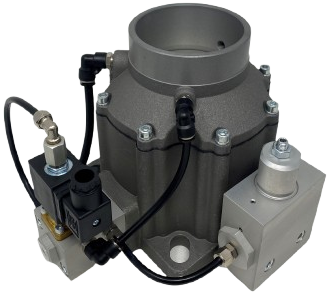
The air inlet compressor valve is the gatekeeper for a rotary screw air compressor.
It is the gatekeeper for the compressor, regulating two significant functions:
- The air entering the compression cycle. If the volume of air entering the chamber is not sufficient, your compressor will struggle to provide enough air pressure. If, on the other hand, the air compressor inlet valve fails and doesn’t close properly, it could bring too much air into the chamber and cause over-pressurization, damaging the compressor and nearby equipment.
- The oil lubricating the airend. When an oil-flooded rotary screw compressor compresses air, the air pressure also functions as a fluid-motion device, creating oil pressure. Even when your compressor is in the unload state, you need to keep the oil flowing to the airend. That, of course, is not required for oil-free compressors, which have lubrication pumps.
Because the air compressor inlet valve is so important, you should inspect it annually. Inspect the intake filters regularly (at least every 2,000 hours) and change them every 4,000 hours or per manufacturer’s recommendation or service indicators. Or what the site conditions require.
Find out more about this special device in our blog post, “What Is the Air Compressor Inlet Valve, and How Does It Work?"
Incoming Air Best Practices
To ensure the highest-quality air enters your compressor, follow these best practices.
1. Location, Location, Location
In more moderate climates, such as the southeastern and southwestern United States, you can locate an air compressor outside. However, you’ll need to protect it from the elements, covering it with a roof and enclosing it on at least three sides, away from direct sunlight.
As a result, air compressor location best practices favor indoor settings. Unfortunately, the air inside many factories can also create problems. It may introduce airborne dust and dirt, and the equipment room may be too small or lack adequate ventilation. Plus, there might be other equipment, like chillers or boilers, that put heat into the air.
The best of both worlds, for anything larger than 25 HP, is to locate your compressor indoors, in an enclosed room. Then install a remote air intake to draw clean, fresh, outside air through a forced-air and duct system. You’ll want to avoid placing that intake near your truck loading dock to avoid sucking diesel exhaust into your compressor. And prevent dust in your air compressor.
You’ll also want to make sure you don’t incorporate too many direction changes, especially 90° turns, which can cause a pressure drop. Here’s why: a 90° bend is equivalent to adding about three times the pipe length. So, for a three-inch pipe, that’s another nine inches of length. And putting two of them in the pipe adds the equivalent of 18 inches of length, just for two elbows. The best idea is to move up to a four- or six-inch pipe to offset that pressure drop.
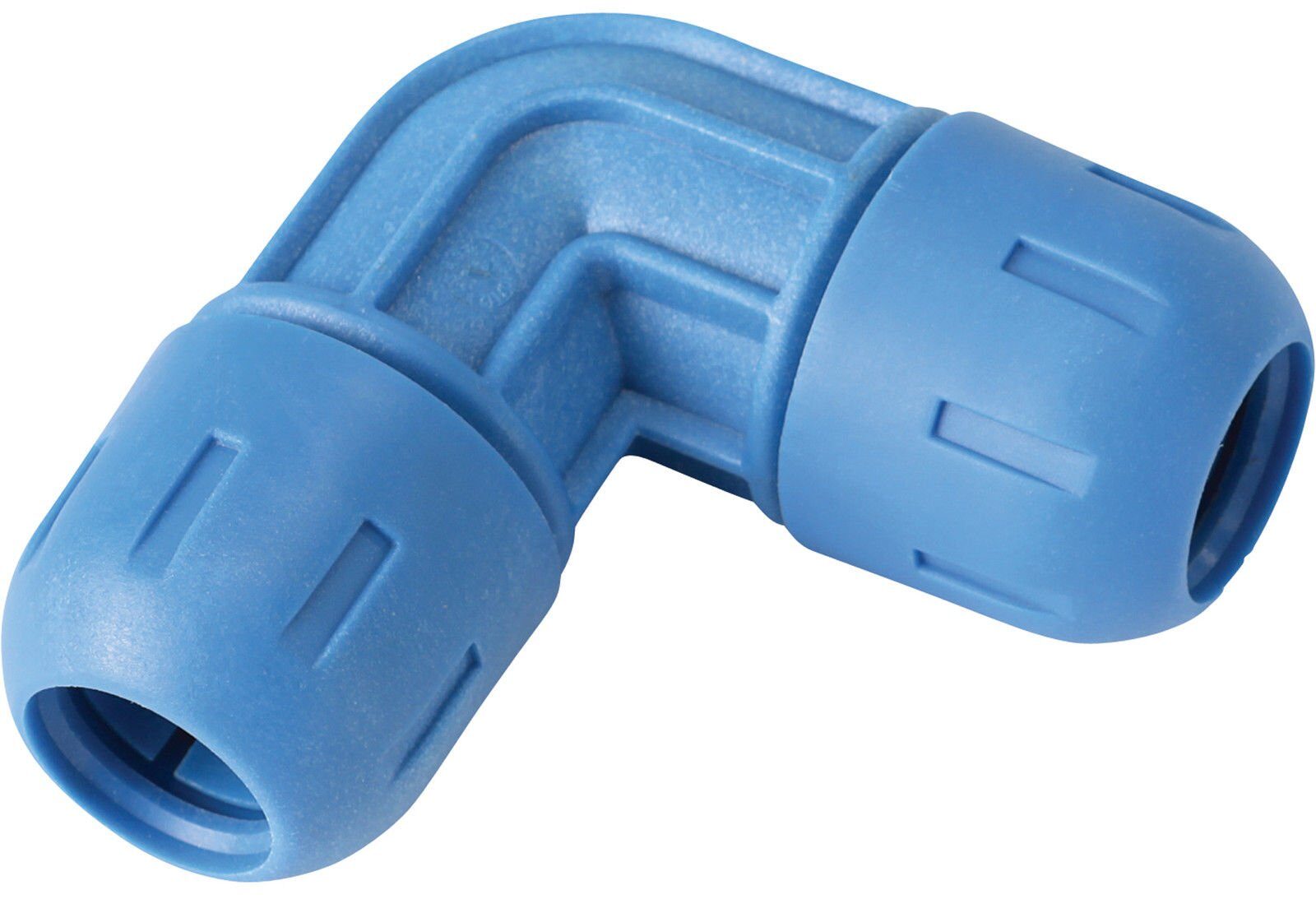
You’ll want to avoid making 90° turns in your incoming air pipes because they can cause pressure drop.
2. Pay Attention to Compressor Ventilation Requirements
Because air compressors generate significant heat, ventilation is one of the most critical factors for the operation and longevity of your compressed air equipment. The goal is to ensure all that heat generated during compression is removed and does not recirculate back into the room.
And, if you have more than one compressor in the enclosure, you’ll want to add the ventilation requirements together to determine the total ventilation needed. So those two 100 HP compressors will require the same ventilation as one 200 HP compressor, since the heat generated will be the same. An alternative is to give each compressor its own air intake.
3. Air Compressor Air Filters
Air compressor air filters remove particulates from the air flow. Dirty filters increase the pressure drop, making your system less efficient. Even a two-PSIG pressure drop caused by blocked filters will raise your energy consumption by an average of 1%. Fortunately, a Kaishan compressor’s control system will monitor the pressure differential in your compressor intake air filter.
You should inspect air filters every 2,000 hours and replace them every 4,000 hours or per the manufacturer’s recommendations or service indicators. Include them in your routine inspection.
Most of all, follow your manufacturer’s recommendations. In most cases, that means using air compressor air filters from the original equipment manufacturer, rather than pirated or off-brand filter media. Our OEM filters, for example, are designed to reduce pressure drop and maximize the performance of our units. For more details, read our blog post, “How to Maintain Your Air Compressor with Genuine Spare Parts.”
4. Air Treatment
Finally, air treatment, including more advanced filtering, may be required for more demanding applications, such as food and packaging, semiconductor and pharmaceutical applications.
ISO 8573.1 standards provide the details, of course. But it’s best to work with an expert.
Local Help in Taking the Garbage Out
Having the best possible air compressor air quality begins with the incoming air. And that’s hard to analyze and fix remotely. To get it right, you need a local compressed air expert.
We work with a nationwide network of independent distributors, to provide the on-site help and consultation you need to get your incoming air sources just right.
We partner with independent, local distributors because it's the best way to make sure you have access to the expertise you need. In your facility.
These factory-trained air compression experts can analyze your system and provide expert guidance, faster response times and personalized support tailored to your needs. They don't just sell compressors—they build relationships, ensuring you get the right system, reliable service and quick access to parts when you need them most.
With factory-trained technicians and a deep understanding of industrial applications, they help maximize efficiency and minimize downtime. So, when you buy through Kaishan, you're getting more than a product—you're getting a local partner who cares about your business and wants to see it succeed.
Key Takeaways
- As with data processing in the 1990s, the quality of the air coming out of your compressor will not be good if the input is poor.
- Problems with incoming air include dust and dirt, moisture, exhaust fumes, organic material, temperature and pressure.
- One of the most proprietary parts of a rotary screw air compressor is the air compressor inlet valve, which regulates the air entering the compression cycle and the oil lubricating the airend.
- Best practices to improve incoming air quality include location, ventilation, filters and air treatment.
Let Us Help
Making sure you start with cool, clean, dry air is critical to the operation of your compressed air system and all the processes that rely on it. If you need help pulling the best possible air into your compressor, get in touch with the experts at Kaishan. Contact us today.
Listen to the Podcast Version



Why Intake Air Quality Matters
Alright folks, welcome back to The Big Dog Podcast! I’m Jason Reed, holding it down with my co-host Lisa Saunders. Today, we’re talking about something that kind of gets overlooked, but it’s absolutely critical if you want your compressor to last: the air you feed it. And I’m not talking about just any air—this is about what happens when you suck in everything from dust and dirt, to humidity and even exhaust from that old diesel truck out at the dock.Hey everyone—so glad you’re here. We always say in this business, “garbage in, garbage out,” but with compressors, it gets even worse. Whatever junk that’s floating in the air outside—or inside your plant—ends up way more concentrated after it goes through the compression process. Like, eight times more concentrated if you’re running 100 PSI. It’s actually kind of wild to think about.
Yeah, and that’s something I see way too often. I remember visiting this shop out in Arizona, right—middle of the summer. They were pulling in 105-degree air straight off the desert. All that airborne sand and fine dust? It didn’t just clog their filters; it was tearing up their compressor from the inside out. The wear on those components was, honestly, brutal. They thought it was “just hot air,” but that heat was destroying oil life too—not to mention energy costs went through the roof.
And it’s not just about heat or dirt. Think about places like food plants and pharma, where even a little bit of contamination can mess up an entire batch. If your compressor’s near a loading dock and pulling in diesel fumes? You’re setting yourself up for filter clogs and valve problems, but even worse—you’re risking your product quality. There’s just so much that can go wrong if you’re not paying attention to that intake air.
Totally, and it’s easy to forget that the compressor can only give you what you put in—or, like we said last episode, you can have the fanciest equipment out there, but if the air going in is trash, you’re basically sabotaging your own operation.
Key Contaminants and Their Effects
So let’s dig into what you actually need to be watching out for. First up—dust and dirt. We touched on it, but it really deserves its own spotlight. If you’re in an environment with a lot of particulates, they’ll end up clogging your filters super fast. And that’s just the beginning. Once they’re past the filter, those particles cause actual abrasion inside the compressor. Wear, tear, and sometimes straight-up failures.Exactly, and for oil-flooded compressors? If dirt sneaks through, it’ll get into your lubricant. That messes with coalescing filters and can contaminate your oil system. Suddenly you’re not just dealing with air quality issues, you’re looking at a much shorter lifespan for all those critical parts. It hits efficiency and bumps up your maintenance costs too. Nobody wants that.
And then there’s moisture. You’ve heard us talk about moisture mayhem in our earlier episodes—it’s the classic system killer. Humidity not only leads to rust and corrosion in the compressor, it hits your lines, blocks things up, and even degrades the oil. If you get water mixing with your lubricant, you’re pretty much guaranteed some downtime sooner or later.
Right, and hey, if you missed our “Moisture Mayhem” episode, go check it out—it’s a big one. But moving on: organic matter. People don’t always think about this, but especially if you’re in food, beverage, or medical production, tiny things like bacteria and mold spores can actually get pulled in and pass right through a basic filter. It’s no joke when all it takes is a little contamination to ruin your product.
That’s actually a perfect segue. I worked with a bakery once that learned that lesson the hard way—a whole batch of bread ruined because a couple of mold spores made it through their air system. Their filters were just standard-issue, not really designed for that level of filtration. You could see the mold spots plain as day. It was a total loss.
And don’t even get me started on exhaust fumes. Diesel from the loading dock? That’ll clog your filters, damage valves, and even mess up oil-free compressors. Nobody’s immune. So, all those factors—dirt, moisture, organics, exhaust, even just high temps—they pile up. And, like we always say, the problems multiply once you compress it.
Best Practices for Clean Intake Air
The good news is, you don’t have to just live with it. There’s a decent checklist of best practices that’ll keep your intake air clean, and your system running better, longer. First up: location. If you can, keep your compressor indoors, away from sources of dust and exhaust. But that’s not always enough—sometimes indoor air isn’t all that clean either, especially if the room’s small or not ventilated right.Yeah—if you do set up inside, you want that compressor in its own enclosed space, but with solid ventilation. Don’t forget, every extra compressor adds to the heat, so your vent requirements scale up fast. If you go the extra mile and draw fresh, outside air in through a duct system, just make sure you’re nowhere near the loading dock. No one wants diesel exhaust in their lines.
And let’s talk piping for a second. Avoid sharp 90-degree bends if you can. Each one acts like adding way more pipe length, which means pressure drop and less efficiency. If you’re stuck with bends, upsize your pipe to compensate, but really, minimizing those turns makes a big difference.
And this can’t be said enough: inspect those filters. Every couple thousand hours minimum. Follow what your manufacturer tells you, and stick with OEM filters instead of the budget “almost fits” variety. Even a slightly clogged filter can raise your energy bill by a percent or two, and it snowballs from there.
Exactly, and don’t sleep on air treatment, especially if you’re in a clean or regulated industry. Sometimes you need more advanced filtration to hit those ISO 8573.1 standards. That’s when it’s worth working with someone who really knows what they’re doing—your local factory-trained expert, for example.
And the payoff’s real. I remember a plant that was always calling in for maintenance—over and over. Once they got serious about intake air and worked with a qualified pro, they cut their maintenance visits in half within a year. Less downtime, less wasted money, happier operators—that’s just good business sense, right?
Yeah, and that’s what we’re about here—practical stuff that works. So, don’t forget: clean, cool, dry air is the starting point for everything else your compressor does. Take care of your intake and you’re setting yourself up for better reliability and lower costs down the line.
Couldn’t have said it better, Jason. If you’re listening and you want to go deeper, reach out to your local experts—or Kaishan’s team, honestly—it’s worth it. That’s it for today. Thanks for hanging out with us!
Alright, Lisa, always good to have your stories and perspective. We’ll be back next time with another no-nonsense look at what really matters in compressed air. Take care out there and keep those compressors running smooth. See you, Lisa.
See you, Jason. Bye everyone!