



Three Myths about Centrifugal Compressor Manufacturing and Testing
March 25, 2026Five New Air Compressors Trends to Watch in 2026 and Beyond
By Manhar Grewal, Product Manager | April 1, 2026 | Uncategorized

What does the future hold for compressed air technology? Only time will tell. In the meantime, we have a few ideas.
The compressed air industry will grow at a 4.47% combined annual growth rate through 2032, according to Mordor Intelligence, as a result of rising investments in energy-efficient production lines, rapid energy infrastructure build-outs and stricter contamination standards.
Much of that growth will occur in Latin America, fueled in part by increased domestic manufacturing in the United States, as companies repurpose compressed air systems to meet changing demands in EV battery and overall vehicle categories.
The compressed air industry is thus alive with innovation that will lead to several important new developments in compressed air technology in the near future. Staying on top of those trends will help you optimize your compressed air system and drive efficiency throughout your operation.
We review those air compressor trends below, starting with the market’s continuing interest in energy efficiency.
Trend No. 1: Compressed Air Energy Efficiency
Compressed air energy efficiency remains the central driver in compressor innovation, with evolving motor standards and drive technologies leading product development.
New Motor Standards
The effort to make compressors more efficient will continue. We can expect new IE4 motor efficiency standards from the International Electrotechnical Commission (IEC) by mid-2027. As a result, air compressors with IE4 motors will not only save energy but also comply with the coming standards.
In addition, there may be upgrades to China’s Guobiao (GB) standard. And the EU Energy Efficiency Directive (EU) 2023/1791, published in September 2023, requires EU countries to reduce their energy consumption by 11.7% by 2030, compared to 2020.
Variable-Speed Drives
The application of VSD technology to rotary screw air compressors has enabled many companies to save significant amounts of energy. And energy savings are not the only benefit. VSD compressors allow soft starts and offer better control of your compressed air system. They are also an energy-efficient way to address rapid cycling.
And now, enhanced durability features, such as liquid-cooled VSD drives, will address harsh environments. While a traditional VSD-driven air compressor can overheat when dust, dirt and airborne contaminants clog the drive’s heat sink and fans, newer liquid-cooled VSD drives quickly remove heat, reducing failures from improper maintenance and improving reliability for end users.
We expect that the use of variable-speed drives will continue to be supported by rebates from energy utilities, states and municipalities.
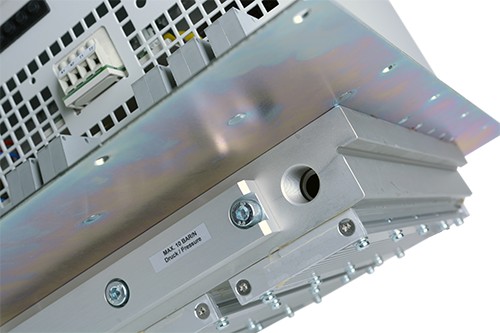
A liquid-cooled VSD can dissipate heat using water, glycol or other appropriate coolant. Because liquids have superior heat-dissipation capabilities, a liquid-cooled VSD is smaller than an air-cooled model.
For more on the pros and cons of VSDs, see our blog post, “When To Use a VSD on a Rotary Screw Air Compressor.”
Permanent Magnet Motors
Next-generation compressors will increasingly use permanent-magnet motors, potentially liquid- or oil-cooled, improving motor longevity by reducing dust and heat-related wear.
Unlike traditional induction or asynchronous motors, permanent magnet motors rotate at the same speed as the stator’s magnetic field, so there is no slip.
The PM motor’s magnets are made with rare-earth elements, including neodymium (Nd), praseodymium (Pr), dysprosium (Dy), and terbium (Tb) and are at least twice as powerful as those in induction motors, allowing them to exceed the power density of induction units. They are more expensive as a result.
We believe PM motors are the wave of the future and may be the only way the industry can comply with the evolving global efficiency standards mentioned previously.
Variable-Discharge Ports
We are developing our variable discharge port technology for use in our oil-flooded rotary screw compressors, following our success in applying it to our award-winning KRSV rotary screw vacuum pump.
The Kaishan KRSV’s variable-discharge port automatically adjusts on the fly, increasing volumetric efficiency and performance. The port allows a rotary screw vacuum pump to operate efficiently at any point within its range, making it especially beneficial for applications where the vacuum level varies over time.
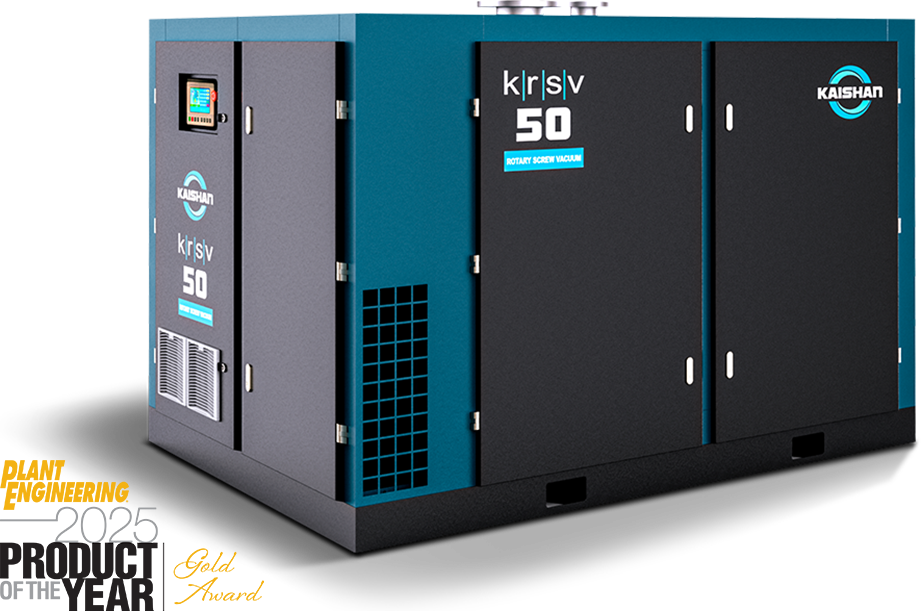
Plant Engineering magazine named Kaishan’s KRSV rotary screw vacuum pump its Product of the Year in 2025. With the help of its variable discharge port, it delivers the most CFM per horsepower at every vacuum level.
The next trend is the market’s increasing interest in oil-free compressors.
Trend No. 2: Oil-Free
The shift to oil-free rotary screw compressors is driven by the desire to eliminate filter-related risks and reduce maintenance complexity, especially in industries such as food and beverage, semiconductor, electronics and medical, where air purity is critical.
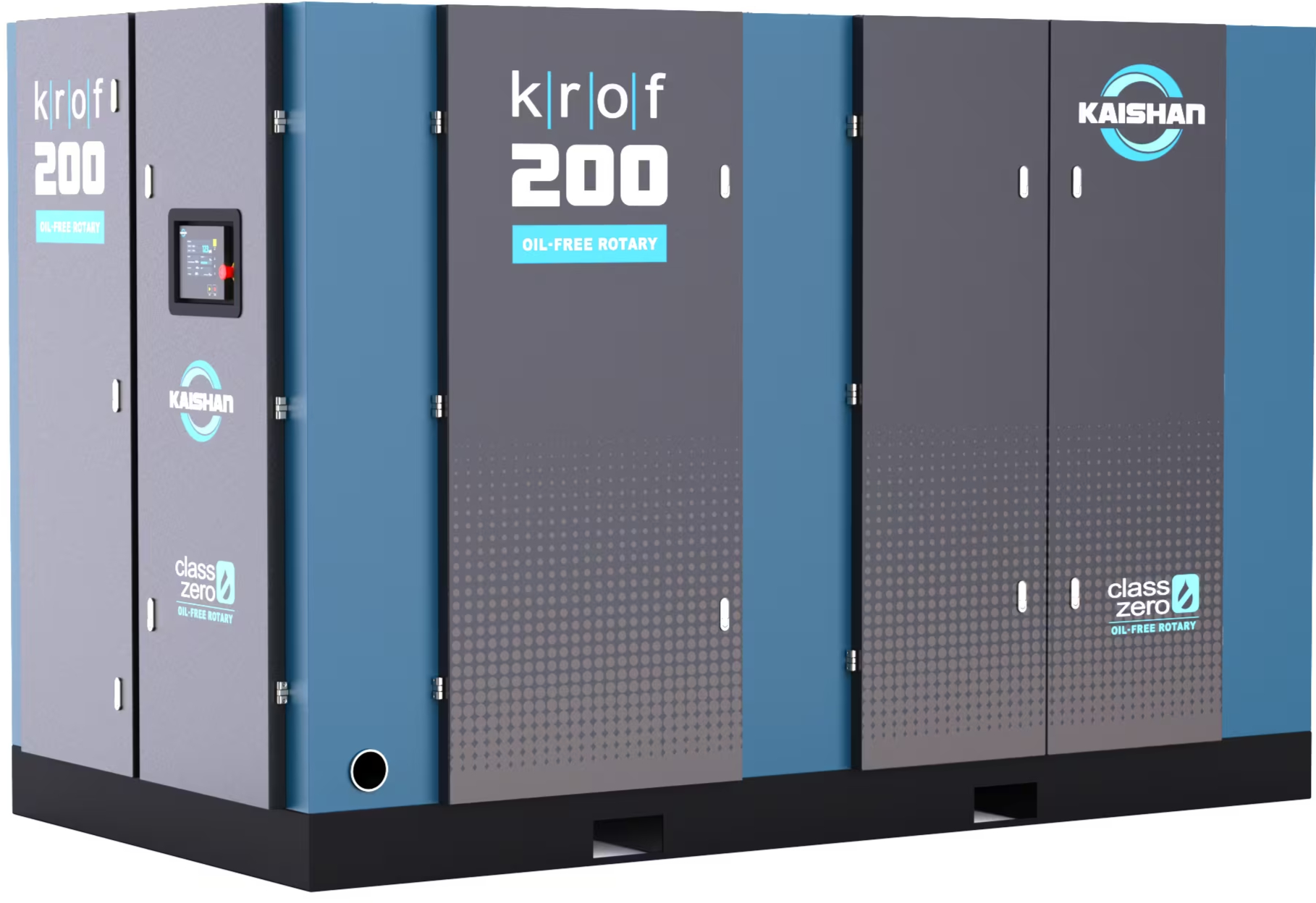
Kaishan’s KROF two-stage oil-free compressor is an excellent choice for facilities that need high-quality compressed air.
Increasing government scrutiny and customer demand for cleaner, greener products are pushing large companies toward oil-free solutions, marking a clear market transition.
Kaishan plans to launch a 30-HP to 60-HP oil-free rotary screw compressor by year-end, positioning it as a cost-competitive, more efficient and more reliable alternative for small applications such as breweries and bakeries.
We expect more compressor manufacturers to expand their oil-free portfolios within the next two years, providing customers with better technology and simpler service.
While some traditional users still employ oil-flooded compressors in food production, the trend toward oil-free options will intensify, especially in new markets such as battery manufacturing and high-tech industries.
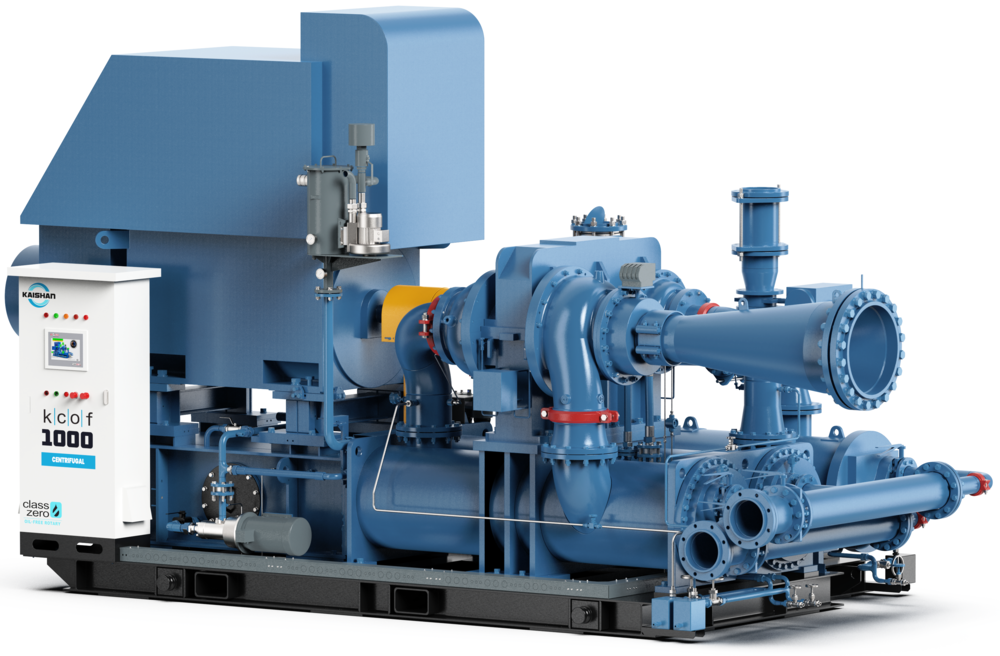
Because they are inherently oil-free, centrifugal compressors, such as Kaishan’s KCOF, are an excellent choice for compressed air users who need high volumes of quality compressed air.
In addition to the oil-free segments, other product advances are emerging.
Trend No. 3: Other Product Innovations
In addition to the product developments mentioned previously, Kaishan is focusing on distinctive features and expanding its portfolio to meet evolving user needs.
Electric Portables
Kaishan’s KPE electric portable air compressor is engineered for versatility, durability and ease of use in industrial environments. It has the reliability and performance the industry has come to expect from Kaishan rotary screw compressors.
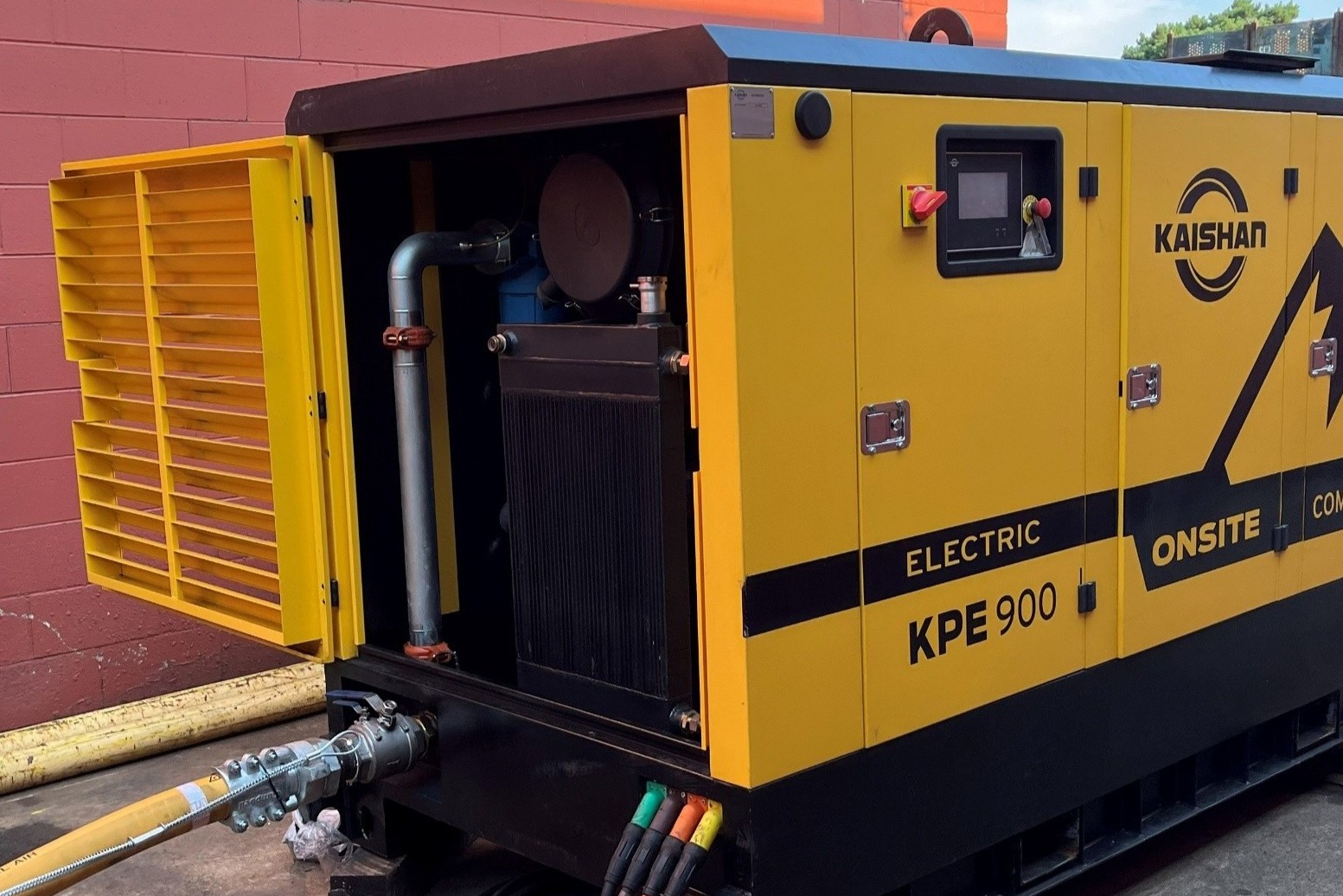
With its glycol-cooled VSD and wide range of applications, Kaishan’s KPE electric portable air compressor is a game-changer for facilities seeking alternatives to portable diesel compressors.
We will soon introduce electric portable compressors in the 100-HP to 400-HP range, targeting temporary plant expansions and equipment downtime, replacing traditional diesel portables for cleaner energy use.
Higher-Pressure Compressors
We are developing a prototype rotary screw air compressor capable of reaching 200 PSIG. That new product will target the growing demands from the laser, robotics and automation sectors. It will be in testing soon, with a full launch by mid-year.
Heavy Metal
We’re seeing more of our competitors using thicker materials and heavier components in their products.
Our products are already among the heaviest on the market, with stainless steel precoolers designed to withstand thermal shock. That reduces long-term replacement costs.
Next up: connectivity.
Trend No. 4: Connectivity
More sensors will be integrated into compressed air systems to track parameters like pressure drops across filters. That should help improve data quality and allow preventive and even predictive maintenance.
It’s just part of a larger trend of capturing and sharing the data generated by your compressor.
Integration with Building Management Systems
There’s a growing trend enabling compressor controllers to communicate with BMS and other factory or enterprise communications systems, using protocols such as Modbus or SIM-enabled IoT controllers.
Connecting with these systems can help you save money, cut downtime, improve reliability, optimize performance, extend equipment life and enhance safety. For more information, read our blog post, “What You Need to Know about Air Compressor BMS Integration.”
Predictive Maintenance
As predictive maintenance evolves, we’ll soon see the use of vibration analysis, oil sampling and sensor monitoring to predict failures in bearings, motors and oil condition. That should help reduce downtime and maintenance costs.
A previous blog post, “Twelve Reasons Why You Should Be Monitoring Air Compressor Data,” provides more detail on the benefits of capturing, analyzing and applying the insights from air compressor data.
Our final trend is customization.
Trend No. 5: Custom Compressor Solutions and New Service Models
Original equipment manufacturers are increasingly offering custom compressor solutions features to meet updated electrical codes and improve safety and usability. Options include control panels with disconnect switches or amperage or kW meters. These features not only enhance safety but also make it easier for maintenance teams to manage their equipment effectively.
Compressed Air as a Service
Another industry innovation is the emergence of "compressed air as a service," which allows companies to pay for the air they use rather than purchasing and maintaining their own compressors.
This subscription-based service can reduce upfront costs and ensure that companies have access to the latest technology.
The focus on custom compressor solutions and innovative service models signals a shift in how companies approach their air compressor needs, prioritizing flexibility and efficiency. And recognizing the difficulty of maintaining increasingly sophisticated compressed air systems with a shrinking maintenance workforce.
Key Takeaways
- Compressed air energy efficiency is paramount: New IE4 motor standards and variable-speed drives are leading the way in energy-efficient compressor designs.
- Oil-free compressors are gaining popularity: The demand for clean air applications is driving interest in oil-free rotary screw and centrifugal compressors.
- Connectivity enhances monitoring: Integration with BMS and IoT technologies allows for real-time monitoring and predictive maintenance.
- Predictive maintenance is evolving: advanced algorithms are improving its accuracy, helping avoid costly downtime.
- Custom compressor solutions meet safety needs: OEMs are offering tailored features to comply with updated safety standards and enhance usability.
- New service models offer flexibility: The "compressed air as a service" model allows companies to access technology without the burden of ownership.
- Innovation is driving the future: Continuous advancements in technology and service models are shaping the future landscape of the air compressor industry.
Need a Crystal Ball?
The choices you make when selecting future technologies could determine your company’s success in achieving broader objectives, such as reliability, compressed air energy efficiency and cost efficiency.
Fortunately, Kaishan USA works with a nationwide network of independent distributors, who can provide the local expertise to guide your choices and provide a level of service that meets your needs.
No matter what industry you’re in or what your management goals are, you can always benefit from expert help in selecting the right systems for your application. If you need help, get in touch with the experts at Kaishan. Contact us today.
Frequently Asked Questions
Listen to the Podcast Version



Why 2026 Looks Different for Compressed Air
Welcome back to The Big Dog Podcast. I'm Jason Reed, here with Lisa Saunders, and today we're talking about where compressed air is headed in 2026 and beyond. And look, this matters because the job's gotten tougher. Plant managers, maintenance managers, engineers—they're getting squeezed from both sides. Cut energy use, don't lose uptime, and by the way, explain every capital dollar before anybody signs off.Yeah, and that's the part I think people outside the plant miss. It isn't just, hey, go buy a more efficient compressor. It's, can you lower operating cost, avoid surprise downtime, meet cleaner air requirements if your process needs it, and do all that with lean staffing? That's a lot.
Exactly. Compressed air's one of those utilities everybody depends on, but a lot of facilities still treat it like background equipment until it causes pain. Then it becomes the most important machine in the building for about six miserable hours.
[laughs] Right. Suddenly everybody's an air system expert. But the trends we're seeing are actually bigger than single machines. They're really shifts in how plants will buy, run, and maintain compressed air systems. The source material we're working from lays out five big ones: efficiency, oil-free growth, product innovation, connectivity, and more flexible service models.
And we're gonna start with efficiency because, let's be honest, operating cost still matters more than brochure specs. I don't care how shiny the controller is or how pretty the enclosure looks. If the machine burns money every hour it's running, that's the story.
Totally. The article points out the industry is expected to keep growing, driven by more energy-efficient production lines, energy infrastructure build-outs, and tighter contamination standards. So this isn't some niche trend. Plants are changing, and compressed air is changing with them.
And leaders are being pushed by outside forces too. Newer efficiency standards are coming globally. Utilities and local programs may keep supporting certain efficiency upgrades. Customers want cleaner production. Governments want lower energy use. Whether you love that or hate it, it's shaping equipment decisions.
I also think capital planning is changing. Maybe five or ten years ago, somebody could justify a compressor mostly on upfront cost. Now? People are asking tougher questions. What's the lifecycle cost? How does it handle variable demand? What's the maintenance burden? Can it integrate with the rest of the facility? If my team is already stretched thin, is this thing going to help us or annoy us?
That's a big one. Because if you're short on labor—and a lot of places are—you don't want equipment that looks efficient on paper but gets cranky in the real world. Dust, heat, lousy maintenance access, weird demand swings... that's where the good and bad designs separate fast.
So as we go through these trends, that's really the lens. Not future for future's sake. More like: what changes are practical for a U.S. plant trying to stay running, manage energy, and avoid buying the wrong thing?
Yep. And one more point before we move on—compressed air is still expensive to make. CAGI talks a lot about system efficiency, training, reliability, and the cost of compressed air for a reason. If you don't understand what your system is costing you, you're kind of flying blind.
And that's why education keeps coming up in this space. Product-neutral training, system assessment, certification—those things matter because the smartest move isn't always just replacing a machine. Sometimes it's understanding demand, controls, pressure, maintenance practices... all the unglamorous stuff that affects your bill and your uptime every single day.
[matter-of-fact] That's the shop-floor truth. Before you chase trends, know what problem you're solving. But once you do that, some of these newer technologies are getting a lot more serious than they were even a few years ago.
Efficiency Tech Is Getting More Serious
So let's get into that. The first bucket is efficiency tech, but not in the vague marketing sense. The article talks about higher-efficiency motors, variable-speed drives, permanent-magnet motors, and even variable-discharge-port technology. That's a pretty meaningful stack of changes.Yeah, and the motor side matters. New IE4 motor efficiency standards are expected by mid-2027, according to the piece. So if you're making equipment decisions now, you're not just choosing for today's energy bill. You're also trying to stay aligned with where standards are headed.
And then there are VSDs—variable-speed drives—which, honestly, most people have heard about by now. But the practical point is still worth repeating: they adjust to real demand better, can reduce energy use, allow soft starts, and help deal with rapid cycling.
Right, but here's where I get cranky. People hear VSD and think automatic win. Not always. The source makes a good point that durability and thermal management matter just as much, especially in dirty environments. Traditional air-cooled VSD setups can overheat when dust and junk clog the heat sink and fans.
Which is why newer liquid-cooled VSDs are interesting. They move heat out faster and may reduce failures tied to improper maintenance. And I like that because it's not just an energy conversation. It's a reliability conversation. If your plant is hot, dusty, or just rough on equipment, better cooling can be a very real advantage.
Exactly. Energy savings don't impress me if the drive is down. Reliability first, then efficiency. Or really both together. Same story with permanent-magnet motors. The article argues those are likely a big part of the future because they can improve power density and help meet evolving efficiency standards.
They're more expensive, though, which means buyers have to do the grown-up math. Not just purchase price—maintenance expectations, operating hours, energy profile, maybe available rebates. I mean, that's where plant engineers earn their keep.
And where was I going with this? Oh right—application fit. That's the part people skip. Some facilities have pretty stable demand. Some are all over the place. Some are filthy. Some need tighter pressure control. You can't just declare one motor or one drive type the answer for everybody.
The same article also mentioned variable-discharge-port technology in rotary screw vacuum pumps, and the broader point there is important: manufacturers are trying to make machines efficient across a wider operating range, not just at one sweet spot on a data sheet.
That's the real-world win. Plants don't run in brochure conditions. Demand moves. Operations expand. Lines stop and start. If the machine stays efficient and stable across a wider range, that helps the utility bill and the maintenance plan.
And product design is getting more application-specific too. The article points to electric portable compressors coming in bigger horsepower ranges, meant for temporary plant expansions or equipment downtime. That's interesting because it shows users want alternatives to diesel portables in some situations.
Then you've got higher-pressure rotary screw designs, with a prototype targeting 200 PSIG for laser, robotics, and automation demand. That's a signal. Advanced manufacturing users are asking for more specialized compressed air performance, not just generic plant air.
And even the mention of heavier construction—thicker materials, stainless steel precoolers built to handle thermal shock—that's not flashy, but it matters. Fewer replacements, better durability, fewer ugly surprises when conditions get rough.
So the takeaway here is simple: efficiency tech is maturing. It's not just lower kilowatts. It's motors, controls, cooling, pressure capability, and build quality all getting pulled into the same conversation. If you're planning equipment upgrades, you need to evaluate the whole operating environment, not just chase the highest claimed savings.
Air Quality, Connectivity, and Service Models Are Evolving
Now let's hit air quality and connectivity, because this is where the market starts changing how people select equipment. Oil-free adoption is growing, especially where air purity matters—food and beverage, semiconductor, electronics, medical. The article also points to battery manufacturing and other high-tech industries as newer growth areas.And that makes sense. If contamination risk is unacceptable, oil-free gets a lot more attractive. The article frames it as a way to eliminate filter-related risks and reduce maintenance complexity. That's a big deal for facilities that don't want to gamble on air purity.
But again, selection has to follow the application. Not every plant needs oil-free. Some do, absolutely. Some don't. The point is the market is clearly moving toward more oil-free options, including smaller horsepower ranges for operations like breweries and bakeries, and larger inherently oil-free options like centrifugal compressors when high volumes are needed.
And once you start talking about selection, connectivity comes right behind it. More sensors are being built into systems to track things like pressure drop across filters. That seems minor until you realize how useful that data is for maintenance planning.
Yeah. Instead of waiting until somebody complains or a component fails, you can start seeing trends. Pressure loss creeping up. Vibration changing. Oil condition drifting. That's the difference between reactive maintenance and planned maintenance.
The article also talks about integration with building management systems and factory or enterprise communications using things like Modbus or SIM-enabled IoT controllers. And for plant teams, the practical question is not, do I love buzzwords? It's, can I actually see what this system is doing without walking across the plant every hour?
[dryly] Buzzwords don't fix breakdowns. Good data might. If the controller can talk to the rest of your systems, you may be able to cut downtime, improve reliability, optimize performance, and maybe stretch equipment life. That's real.
Predictive maintenance is part of that too. The piece mentions vibration analysis, oil sampling, and sensor monitoring to predict failures in bearings, motors, and oil condition. Not magic—just better information, earlier.
And with smaller maintenance staffs, that matters even more. If you've got fewer people covering more assets, you need the equipment telling you something before it quits. Otherwise you're always in firefighting mode.
Which leads nicely into the last trend: custom solutions and new service models. OEMs are offering more tailored features like disconnect switches, amperage meters, kW meters—things that help with safety, code updates, and day-to-day usability.
I like that trend because it's practical. Custom doesn't have to mean exotic. Sometimes it just means the package actually fits your electrical setup, your safety requirements, and your team's workflow.
And then there's compressed air as a service. Instead of owning the equipment outright, a company pays for the air it uses. The article presents that as a way to reduce upfront costs and access newer technology without full ownership.
That's not gonna be right for everybody, but it does reflect where the market's going—more flexibility, more lifecycle thinking, and honestly, some acknowledgment that not every facility wants to be in the compressor ownership business.
Yeah, especially if labor is tight and systems are getting more sophisticated. Some teams may decide they want performance and reliability without carrying all the maintenance complexity themselves.
So if you boil down this whole episode, it's this: 2026 looks different because the conversation is getting smarter. Better efficiency, cleaner air where needed, more data, more planning, and more ways to buy and support the equipment.
And for plant leaders, that's really the job—figure out which of these shifts solves your actual problem, not just the one with the nicest brochure photo.
[half-laugh] There it is. Lisa, good stuff.
You too, Jason. And we'll keep digging into the practical side of compressed air in future episodes.
Thanks for listening to The Big Dog Podcast. We'll catch you next time.
See you then. Bye, everybody.